
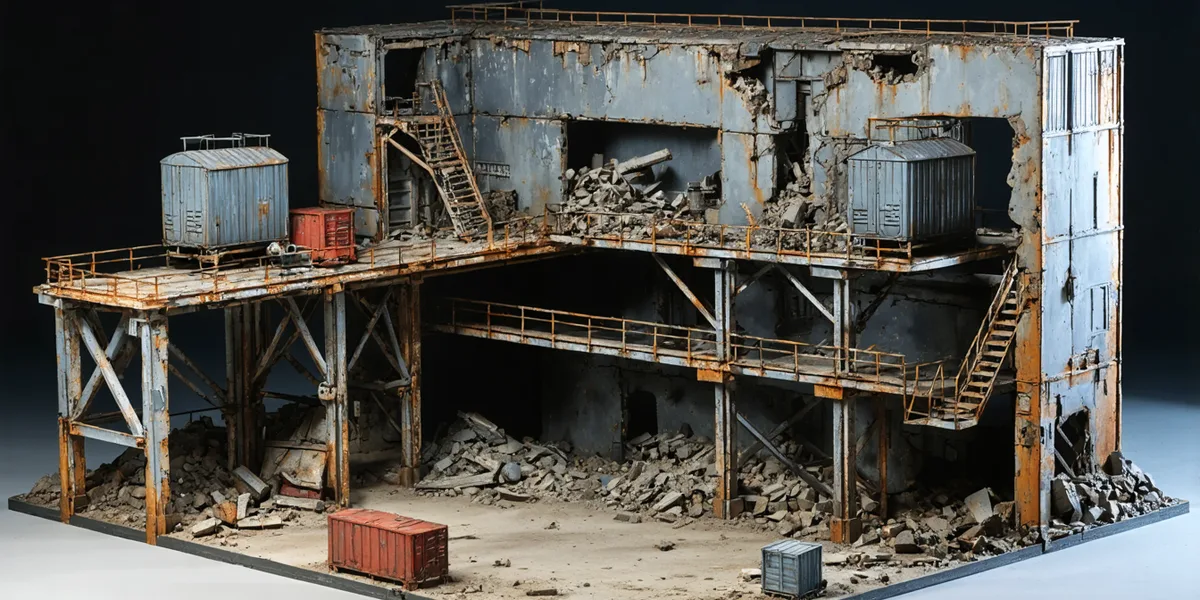
In most wargames the terrain is where the models stand. In Kill Team the terrain is half the game. A team of ten operatives fighting across an empty board is a shooting gallery that ends in two turns; the same ten across a dense killzone is the tense, fiddly, cover-to-cover game the system was designed to be. Nothing else you buy changes how Kill Team plays as much as what you put on the table.
This guide covers what terrain does in the rules, what a killzone actually is, and which boxes get terrain into your hands - the four killzones, the boxed games that come with a board of their own, and the case for building one yourself.
What terrain does in the rules
Kill Team does not treat scenery as an obstacle to be argued about. Every terrain feature is given traits before the game starts, and those traits are what the rules read. The ones that matter most:
- Light - a feature you can see and shoot through, but not cleanly. It grants Cover to an operative behind it. Windows, railings, pipework, chain-link, thin gantries.
- Heavy - solid. It blocks line of sight outright, and an operative behind it can be Obscured, which is far stronger than Cover: it protects against being shot at all beyond close range. Walls, containers, bunker faces, ruin corners.
- Traversable - a feature operatives can climb or cross rather than only walk around.
- Vantage Point - a surface high enough to stand on and shoot down from, with its own rules for what standing up there costs you.
- Insignificant - small clutter that the rules ignore. Rubble piles, barrels, the ornamental bits.
The practical consequence is the one new players miss: Heavy terrain is the game's most valuable resource, and a board without enough of it plays badly no matter how good it looks. This is why a killzone box is a rules purchase rather than a hobby purchase, and why "just use what I have" produces games that feel wrong without it being obvious why.
Trait assignment is done at setup and the current rulebook is the authority on both the trait list and the exact distances involved - the summary above is the shape of it, not a substitute for the book.
A killzone is a defined board, not a pile of scenery
This is the part that makes Kill Team terrain different from terrain in general, and it is the reason "kill team terrain" is a search of its own.
A killzone is a specific, named board: a fixed set of terrain pieces with a fixed layout and its own environment rules. Games Workshop publish Approved Killzones for matched play, and a tournament game is played on one of them rather than on a table somebody dressed by eye. That means the terrain is standardised the way the mission cards are - both players know in advance what cover exists and where.
So a killzone box is not a bag of scenery you top up over time. It is one complete board, bought once, and it is the unit the game is balanced around. The live list of approved killzones changes as seasons turn over, so check the current Approved Ops material before buying for tournament play specifically.
The four killzones Games Workshop currently sell as standalone boxes, and we price all four:


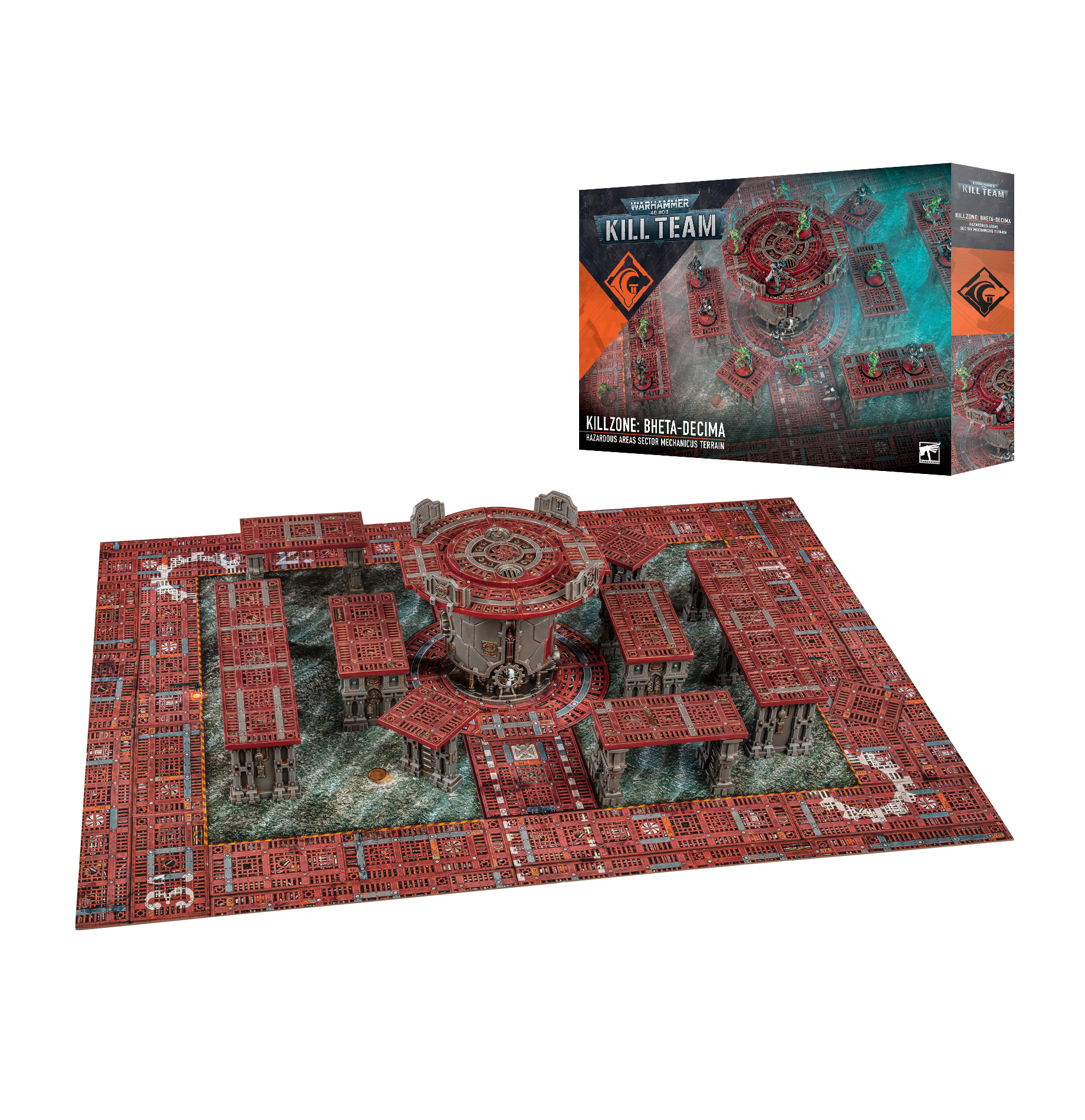

- Killzone: Gallowdark - the interior of a derelict space hulk. Corridors, bulkhead walls and hatchways, played almost entirely at close range. It is the most different-feeling of the four, and the one that most changes which operatives are good. A board and thirty-four pieces.
- Killzone: Volkus - a ruined city block. Broad ruins, rubble and firing positions; the closest to a conventional Warhammer table, and the friendliest first killzone. A board, two buildings, four ruins and eight pieces of scatter.
- Killzone: Bheta-Decima - industrial platforms and gantries raised above the board. The vertical one: vantage points everywhere, and movement that goes up as often as across. A board, a Ferratonic Furnace and eight gantries.
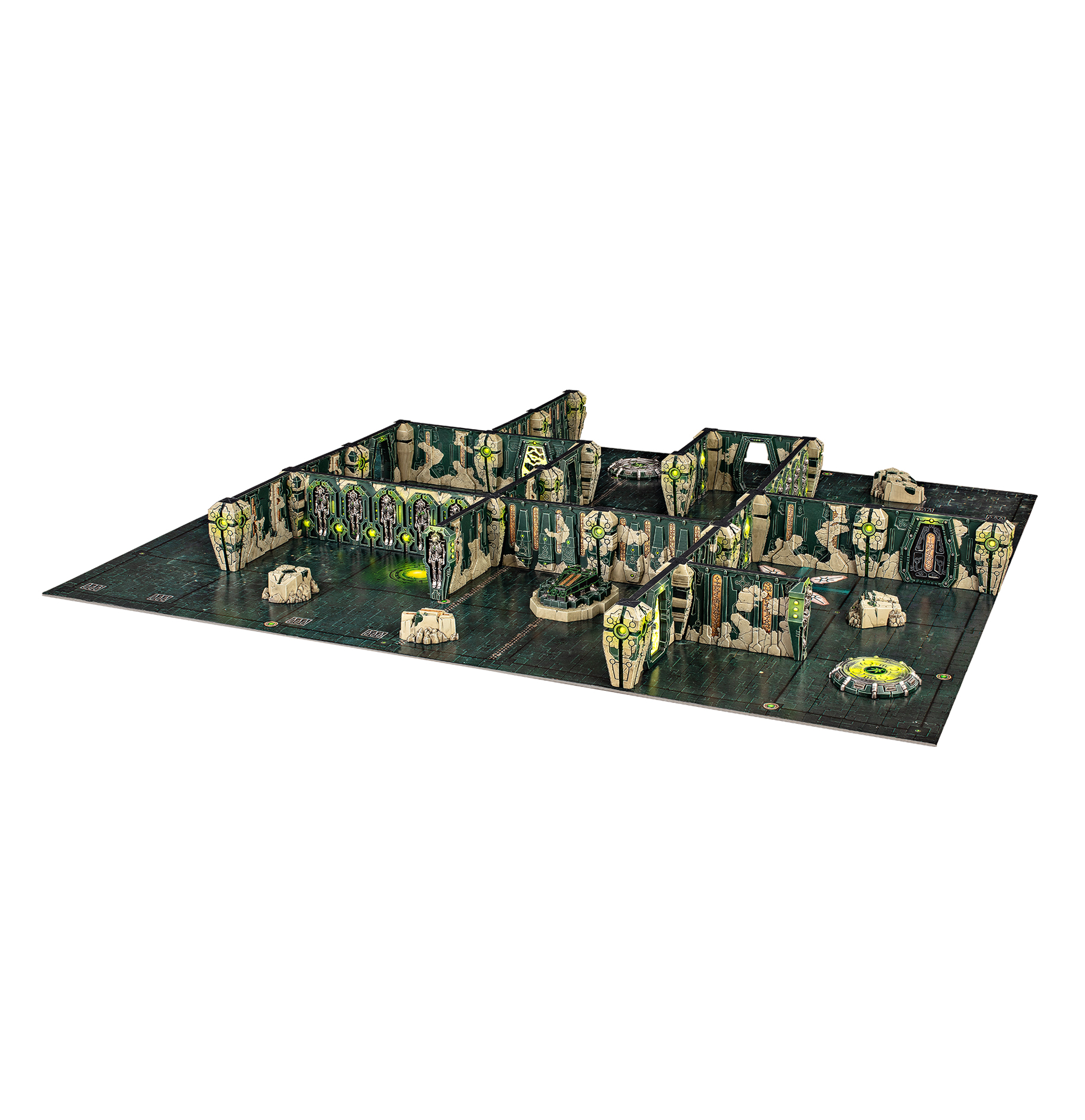
- Killzone: Tomb World - Necron architecture, the most recent of the four. A board and twenty-five pieces, including the sarcophagus and two teleport pads.
All four sit alongside the rest of Games Workshop's boxed 40,000 terrain, which we now price as a group: six boxed sets and fifteen individual kits, with Games Workshop's own price on every card as the benchmark. The best 40k terrain sets guide ranks the six against each other and covers which of these killzones are worth owning if you also play full-size 40,000 - the short version is Volkus.
The other route in is still worth knowing about, and for a lot of people it is the better one.
The boxes we track that come with terrain
Every Kill Team boxed game includes the terrain for its own board. If you are starting, this is how you get models, rules and a killzone in one purchase rather than three.
The one that is still in print:


Kill Team: Starter Set is fourteen operatives - seven Angels of Death and seven Plague Marines - a 64-page handbook, a double-sided board, tokens and dice. Be clear-eyed about its terrain, though: it is three sheets of slot-together MDF, not the plastic scenery of a killzone box. It is enough to learn the game on and it is genuinely a complete starting product, but it is a different material and a different look, and anyone expecting the ruins off the box art of a killzone will be disappointed. As a first purchase it is still the sensible one.
The season boxes, which are out of print and priced accordingly:


Each of these was a two-team boxed game with a full plastic killzone in it, and the terrain is the reason they still sell years after the rules moved on:
- Kill Team: Octarius - eleven Death Korps of Krieg against twelve Ork Kommandos, with 17 plastic terrain pieces, a board and the second-edition core book.
- Kill Team: Into the Dark - Imperial Navy Breachers against a Kroot Farstalker Kinband, and the box that introduced the Gallowdark boarding-action terrain. If you want Gallowdark walls and can find this, it is the same plastic.
- Kill Team: Nachmund - Aeldari Corsair Voidscarred against Chaos Legionaries, with 18 Sector Mechanicus terrain pieces.
- Kill Team: Chalnath - T'au Pathfinders against Adepta Sororitas Novitiates, with Sector Imperialis terrain.
Two honest warnings on these. First, they are discontinued, so the prices are second-hand and collector-market prices - in several cases well above what the box cost new, and above what the current killzone boxes cost. Second, the terrain is the sole reason to buy one for terrain: the rules in them are superseded. Read the price on the card as what one shop is asking today, not as a recommendation.
The third route: build the board yourself
Nothing forces you to buy a killzone. Kill Team's terrain rules are trait-based, which means they work on anything you can agree traits for - and a board of ruined MDF, foamboard offcuts and cereal-box bulkheads plays exactly as well as plastic, provided it has enough Heavy on it.
The rule of thumb that fixes most home-made boards: you want line of sight broken across the middle of the table in most directions from most places. If an operative can stand still and see half the board, add walls. Density beats detail in Kill Team by a wide margin, and this is the one place where the cheapest option is not a compromise.
Painting it
Terrain is the best painting practice in the hobby, because the standard required is low and the surface area is enormous. Spray, drybrush, wash, done - a board that would take a week at miniature standard takes an evening at terrain standard and looks better on the table for it.
Two things worth getting right. Keep the terrain quieter than the models. A killzone painted in strong colours competes with the operatives standing on it; muted greys, oxides and dust let the models read. And paint the board and the scenery to the same palette, because a mismatch between them is the single most visible tell on an otherwise good table.
Our Kill Team paints guide covers the model side, and the basing guide covers the textures and pigments that also do the work on a terrain base. For the fastest possible route, the drybrushing and washes and shades guides are the two techniques that carry a whole board.
Tips
- Buy density before you buy detail. Enough Heavy terrain matters more than how good it is.
- A killzone is one board, bought once. It is not a collection you build up, and it is the unit the game is balanced around.
- The Starter Set's terrain is MDF. Know that before you order it, not after.
- The season boxes are collector-priced. Their terrain is real and the plastic is the same; the price is not what it was.
- Check the current Approved Killzones before buying for tournaments - the list turns over with the seasons.
- Paint the terrain quieter than the models. The board is the stage, not the cast.
Shop Kill Team boxes
Kill Team boxed games, compared across every shop we track.
We earn a small commission from qualifying purchases at no extra cost to you.