
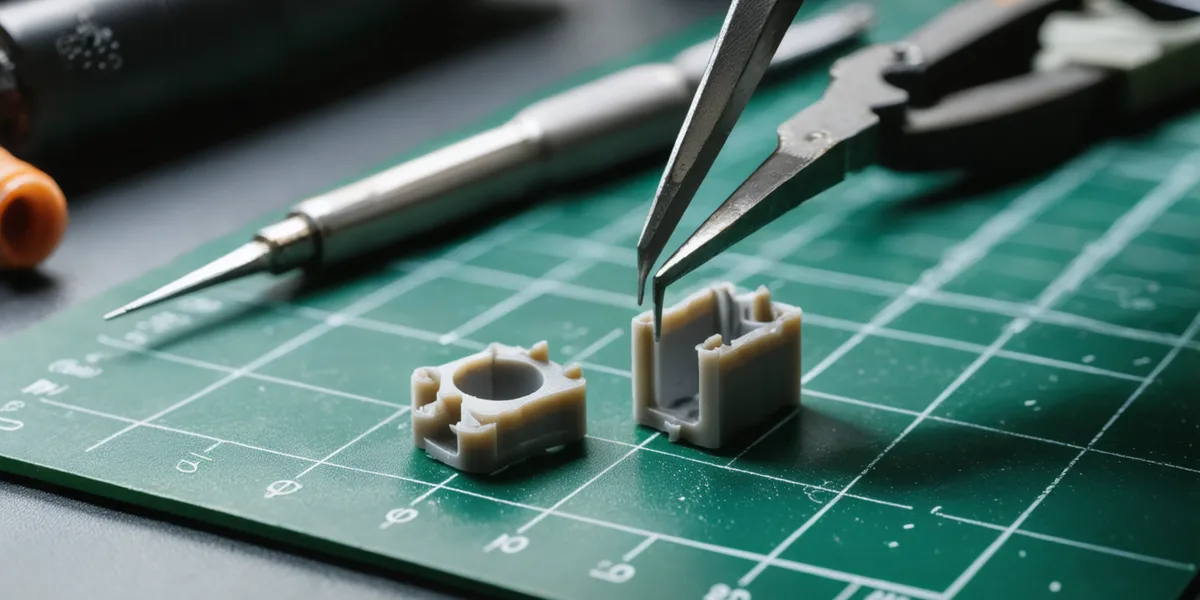
Almost every joint that snaps off a finished model was glued with the wrong thing. Miniatures come in three materials and there are three adhesives, and they do not overlap: get the pairing right and the joint outlives the paint job. This is what each one actually does, which bottle is the hobby default and why, and what to buy for the awkward cases - resin, metal, magnets and clear parts.
Plastic cement is not glue
This is the piece most people arrive without. Plastic cement contains a solvent that softens polystyrene on contact. Press two softened faces together and the plastic re-hardens as one piece - a weld, not a bond. There is no layer of adhesive in the joint at all, which is why a properly cemented arm is as strong as the arm.
It follows that cement only works on the plastic it can dissolve. On polystyrene - Games Workshop kits, Tamiya and most historical plastics - it is unbeatable. On resin, metal, 3D prints and the harder plastics used for some board game figures it does nothing whatsoever. A part that will not stick with cement is usually not a technique problem; it is the wrong material.
Cements come in two consistencies, and the difference matters more than the brand:
- Extra thin - watery, applied to an already-closed seam. Hold the parts together, touch a loaded brush to the join and capillary action pulls the solvent along the whole length of it. Nothing squeezes out onto detail, because nothing was on the surface to squeeze.
- Standard or tube cement - syrupy, painted onto one face before assembly. Slower, messier, and useful precisely because it has body: it can bridge a small gap that thin cement would simply run out of.
Experienced modellers reach for thin almost every time. The whole shelf is on our glues and adhesives page, with current prices from every shop we track.
Why Tamiya Extra Thin is the default
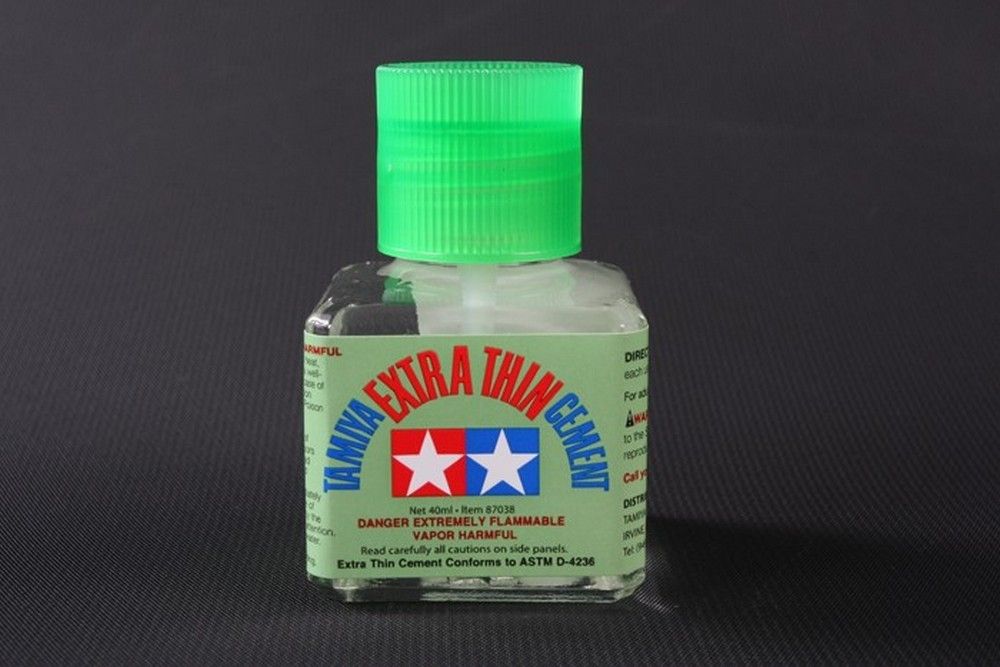
Tamiya Extra Thin Cement is the most-recommended adhesive in the hobby and deserves it. The 40ml square bottle carries a long, soft brush in the cap that holds a bead of solvent without flooding, and the cement itself is thin enough to wick the length of a shoulder seam from a single touch. You assemble dry, check the fit, and only then commit - which is the opposite of how tube glue makes you work.
The rest of the family is worth knowing before you buy the wrong one:
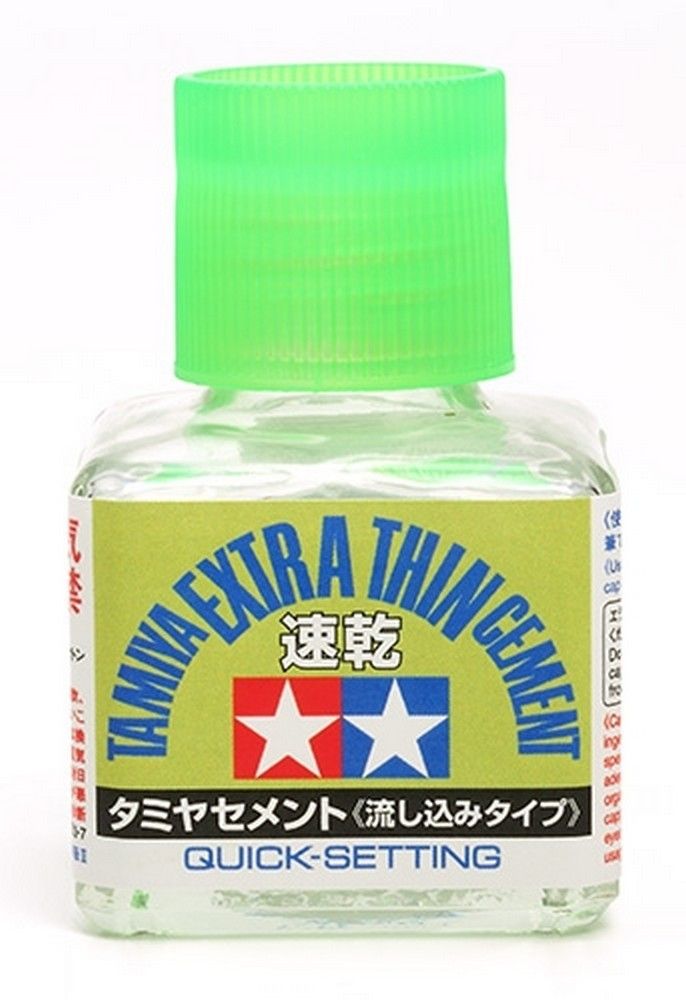
- Extra Thin Quick Set (the green cap) grabs far faster. Right for small parts you cannot hold for thirty seconds; wrong for a long hull seam you need time to align.
- Extra Thin Low Odour trades some bite for a much less aggressive smell. The sensible choice if you build at the kitchen table.
- Tamiya Liquid Cement in the hexagonal bottle is the thicker, older product - the gap-bridging one, not the capillary one. It is not the same thing as Extra Thin, and it is the bottle people buy by mistake.
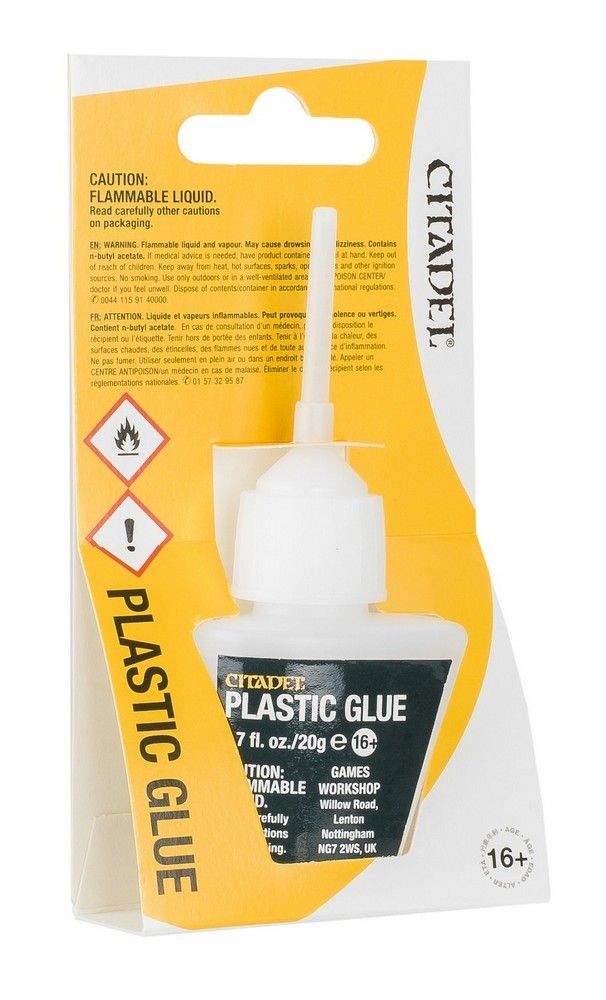
If you would rather stay with the brand on the box, Citadel Plastic Glue is a medium-bodied polystyrene cement with a needle applicator, and it welds Games Workshop plastic exactly as it should. Army Painter Plastic Glue is its direct equivalent, and their Thin Plastic Glue is the capillary version.


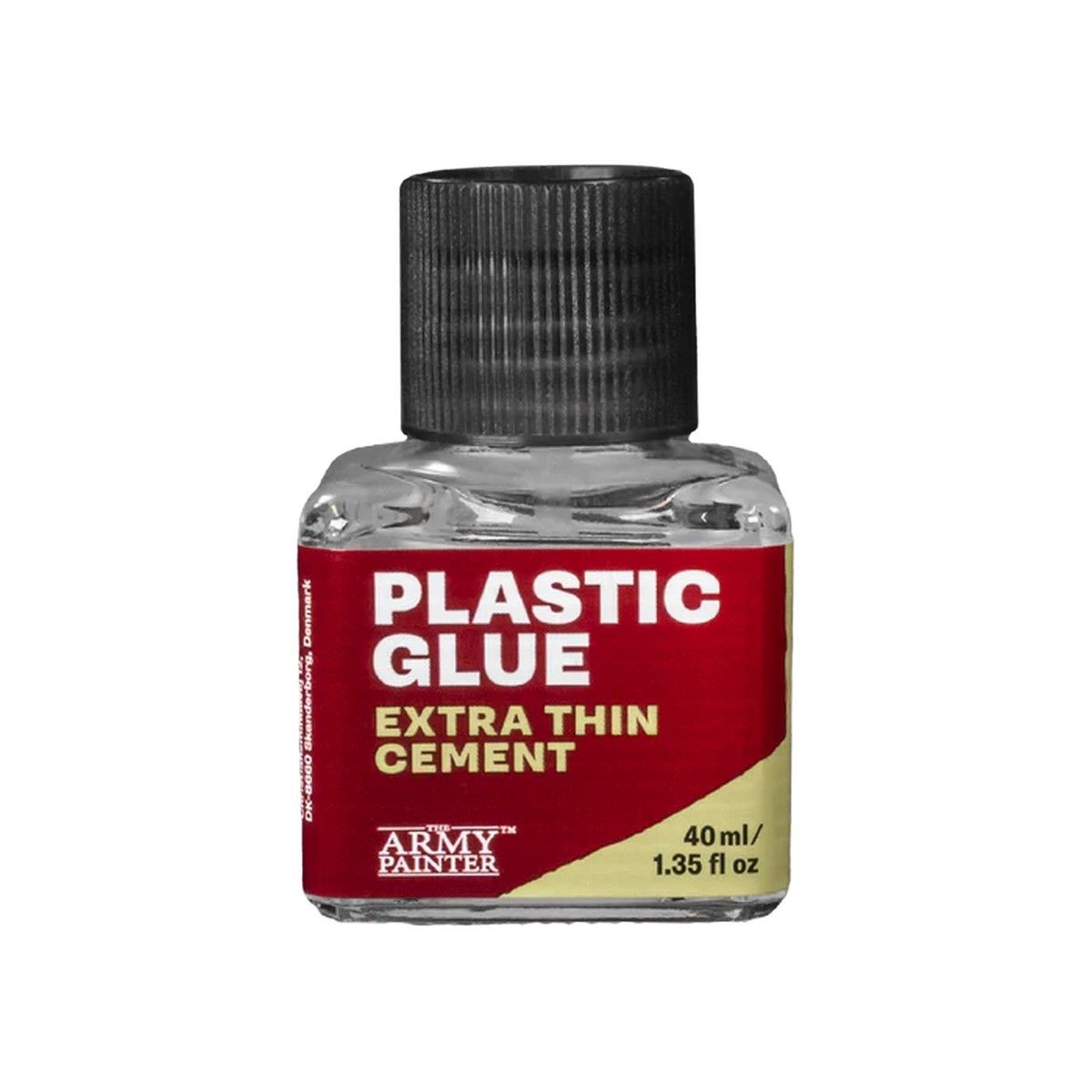
The alternatives worth a look
AK Interactive run the most complete cement line here: Extra Thin Cement for capillary work, Quick Cement Extra Thin for a faster grab, and Plastic Cement Standard Density for gaps. Their party trick is refills - the 200ml Extra Thin and the 200ml Standard Density top up an applicator bottle for a long time, which changes the maths if you build in volume.
Green Stuff World cover the same ground cheaply with a cement for plastics, a blue-tinted version that shows you where you have been, and a slow cement that stays open long enough to reposition a stubborn part.
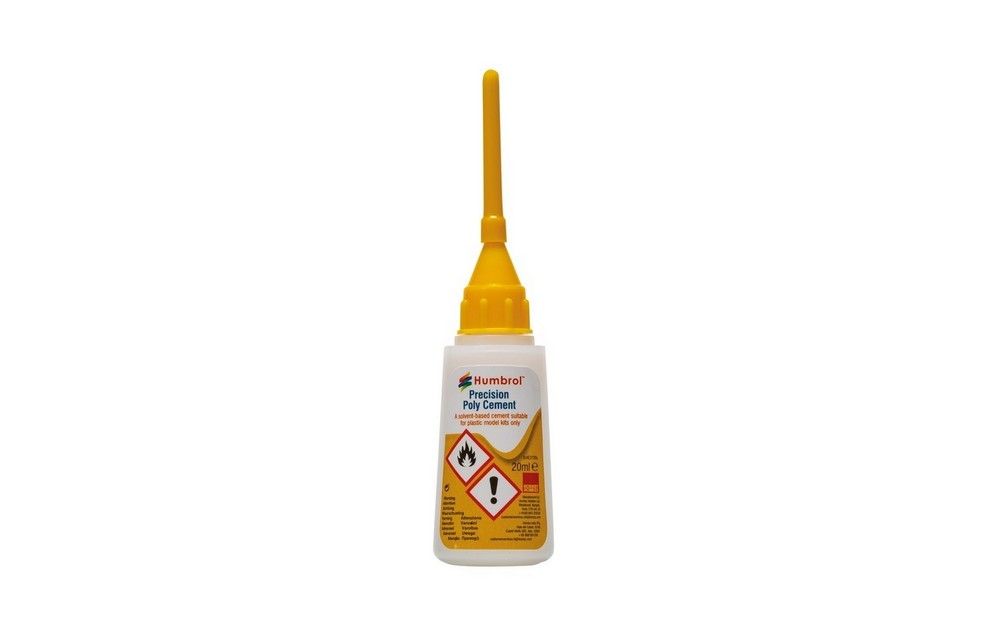
Humbrol is the one hiding in plain sight: Precision Poly Cement is a proper polystyrene cement in a 20ml tube with a fine needle, and it is usually among the cheapest things on the shelf. Their Balsa Cement is a different chemistry for balsa wood - do not buy it for a plastic kit.
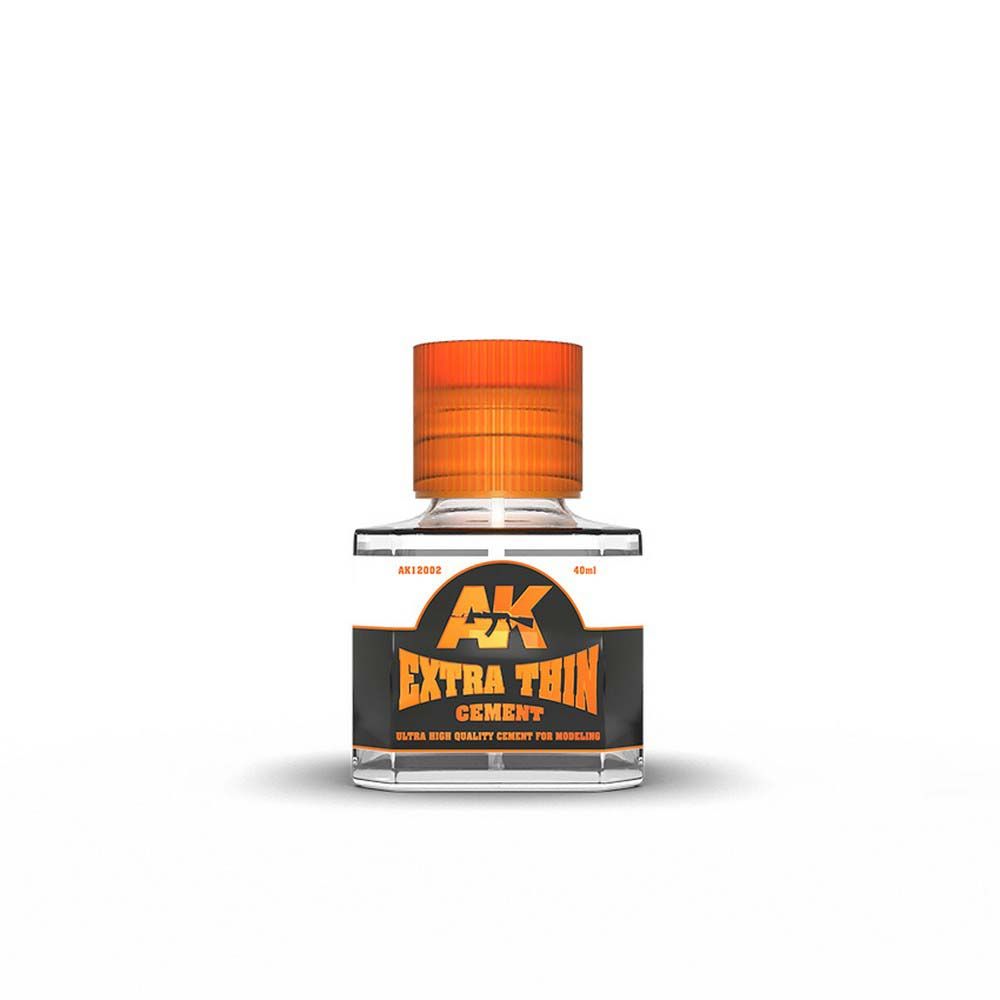
Extra thin polystyrene cement, capillary applicator, 40ml
AK Interactive
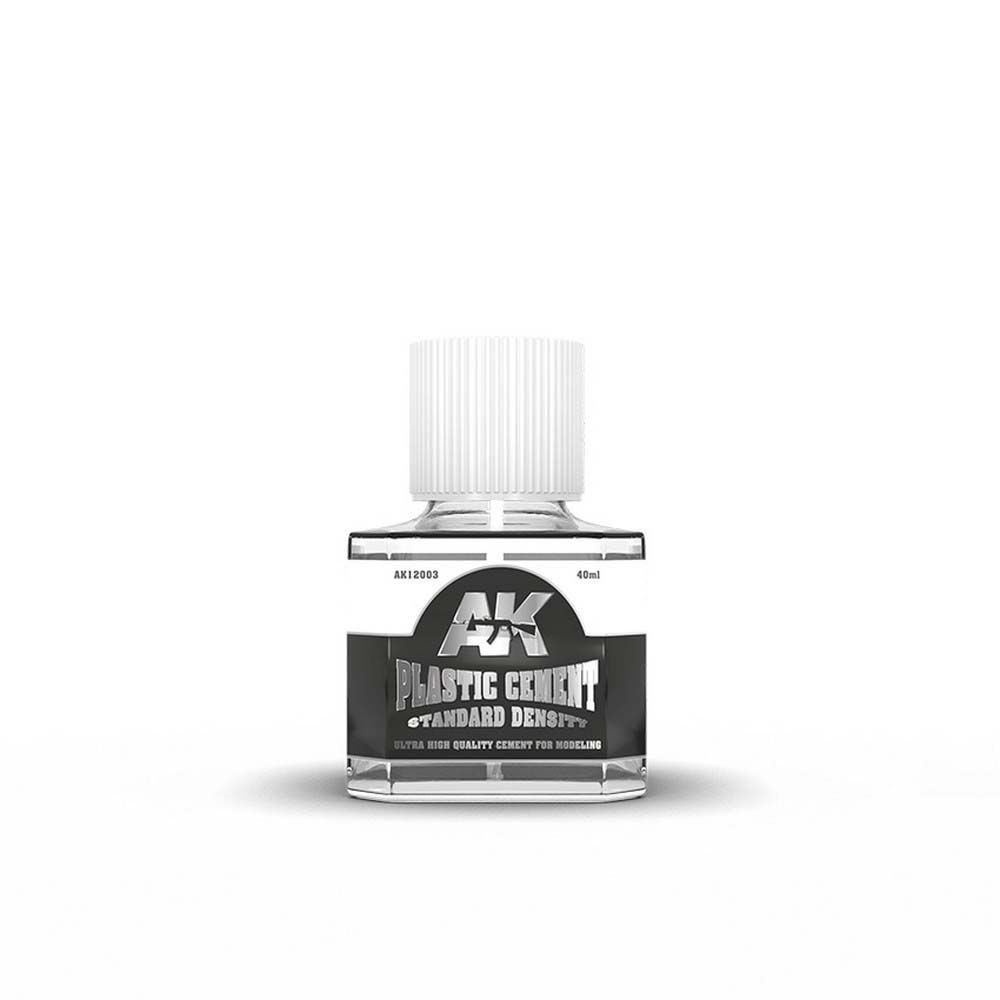
Standard-density plastic cement for polystyrene kits
AK Interactive
Polystyrene cement for plastic kits, 40ml
Green Stuff World

Super glue is for everything cement cannot touch
Cyanoacrylate - CA, super glue - bonds by curing in place rather than melting anything, so it is what holds resin, metal, 3D prints and any mixed-material join, including a plastic arm onto a resin torso.
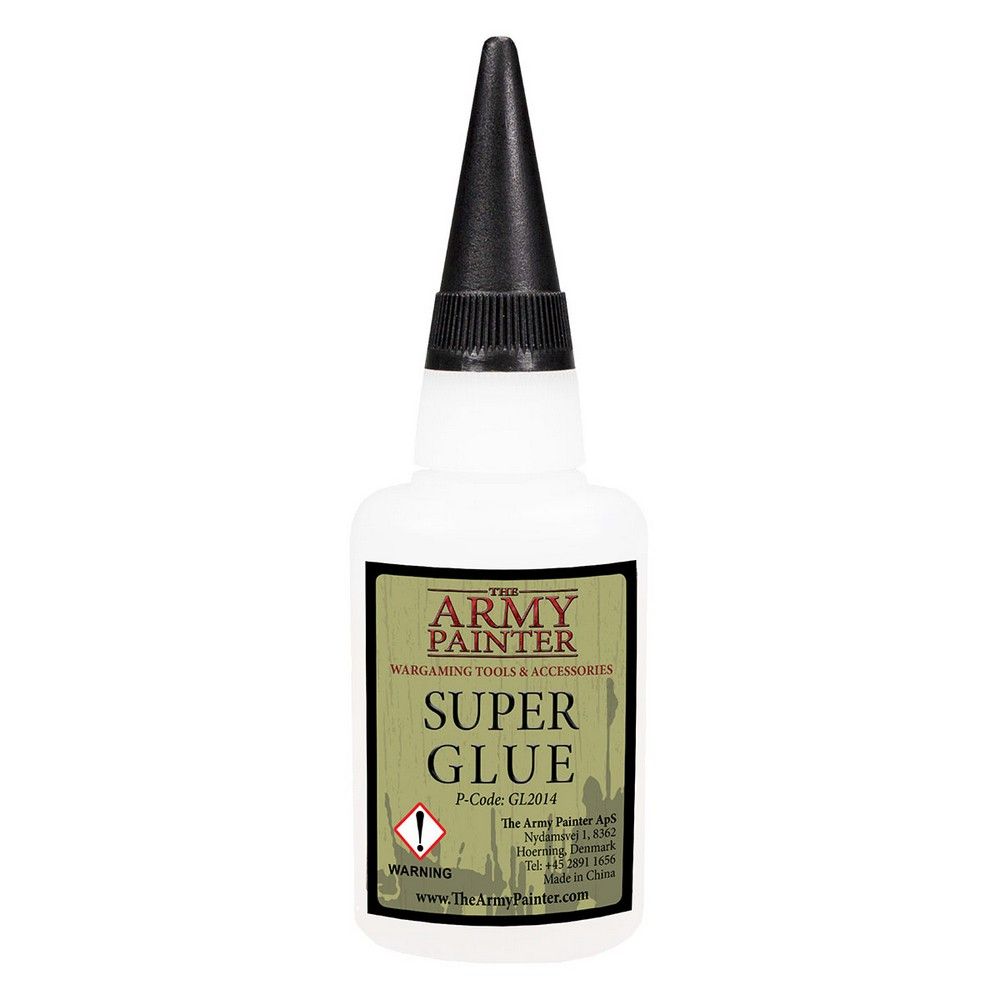
- Thin CA wicks like cement but sets far harder, and it is unforgiving: a badly aligned part is aligned badly forever. Green Stuff World's 20g bottle and The Army Painter's precision-tipped 24g are the workhorse sizes; the 3g triple pack exists because a big bottle usually gums up before it empties.
- Gel CA does not run, which makes it the one for vertical joints and for anything you need to hold and adjust. Green Stuff World's gel is the straightforward pick.
- Magnets deserve their own bottle. AK's Magnet Cyanoacrylate is formulated for setting magnets into a socket, where the bond has to hold against a part that is actively trying to pull itself out.
Nozzles clog, and a clogged nozzle is how most of a bottle gets wasted. A pack of precision tips is a small purchase that pays for itself.
Never put CA near clear parts. Curing cyanoacrylate gives off a vapour that fogs clear plastic permanently - canopies, lenses, gemstones. Use a dedicated crystal glue instead: AK Crystal Magic and Green Stuff World's Acrylic Crystal Glue both dry clear and leave glass alone.
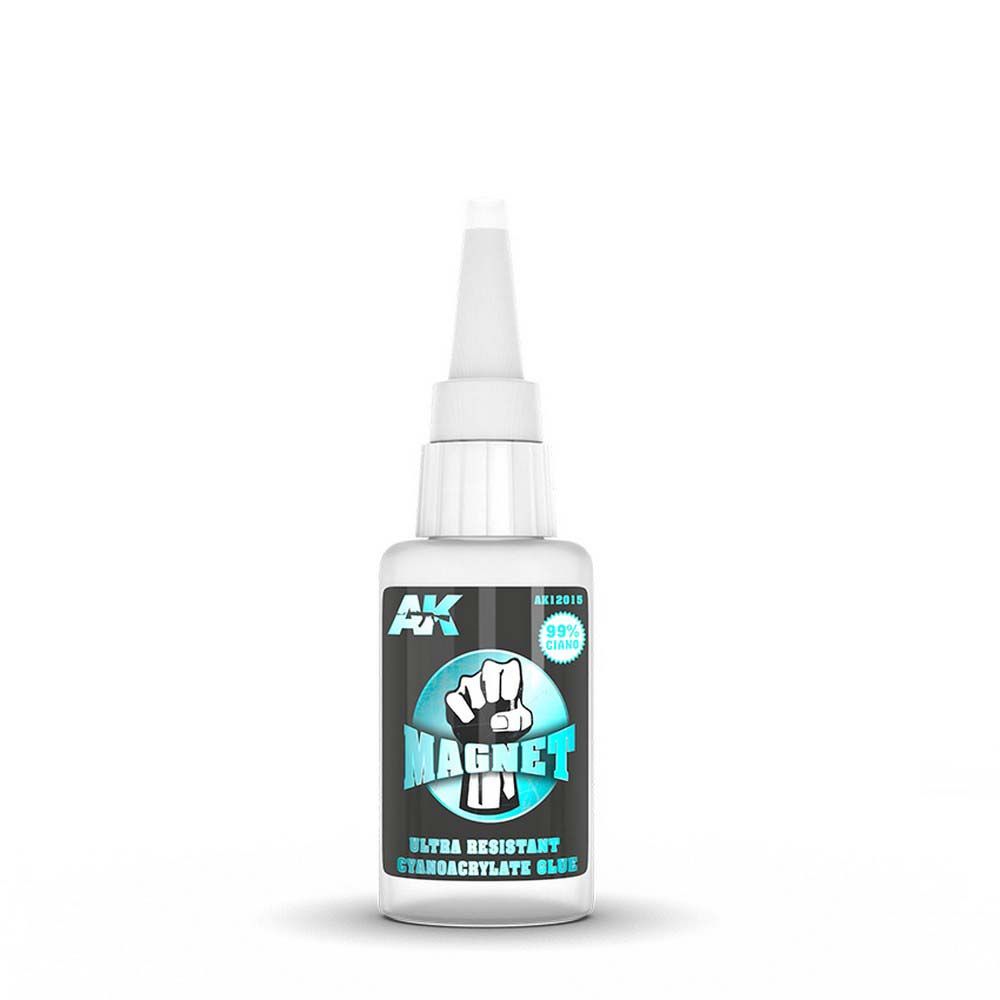
Cyanoacrylate for bonding magnets into miniatures
AK Interactive
Gaps, accelerants and undoing mistakes
Thin cement fills nothing - that is the trade for the clean joint. Three ways round it:
- A thicker cement on the gappy seam and a thin one everywhere else.
- CA plus a filler powder. Bond Enforcing Dust packs a gap and cures the glue around it into a solid, sandable plug. It is the fastest structural gap fix there is.
- Putty, for anything wide enough to see - a different job, and a different aisle.
Accelerant (activator, or kicker) flashes CA off in seconds. AK's Flash and Green Stuff World's 200ml spray are the two here, and there is also a glue-and-accelerator pack if you are starting from nothing. Use it sparingly: a snap-cured bond is more brittle than one left to set on its own, and over-spraying can leave a white frosted bloom on the surrounding plastic.
For the inevitable, keep a debonder. Green Stuff World's releases cured CA - fingers included - and AK's Eraser Cleaner lifts the excess that has already hardened where you did not want it.
PVA, epoxy and the basing shelf
PVA - white craft glue - is not a structural adhesive and should never hold a limb on. What it is unbeatable at is basing: it grips sand, grit, flock and tufts, dries clear, thins with water and cleans off a brush. AK's Wolverine PVA and Green Stuff World's 125g and 250g bottles cover it, and Army Painter's Battlefields Basing Glue is the same idea sold for the job. Our basing guide covers what to stick down with it.
Two-part epoxy is the last resort with a real use: heavy metal models where the joint carries weight. Green Stuff World's 30ml epoxy mixes to a bond stronger than any CA and gives you minutes of working time to get a heavy arm sitting right - at the cost of mixing, clamping and waiting.
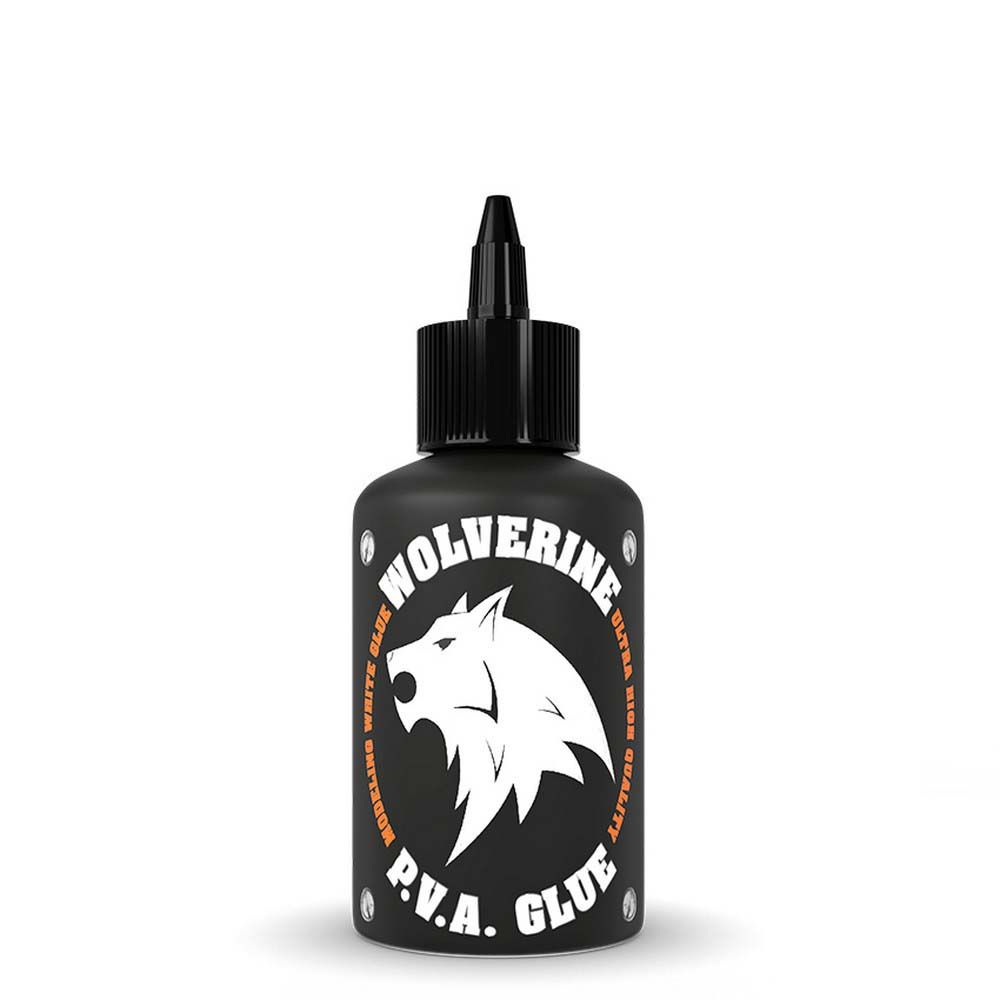
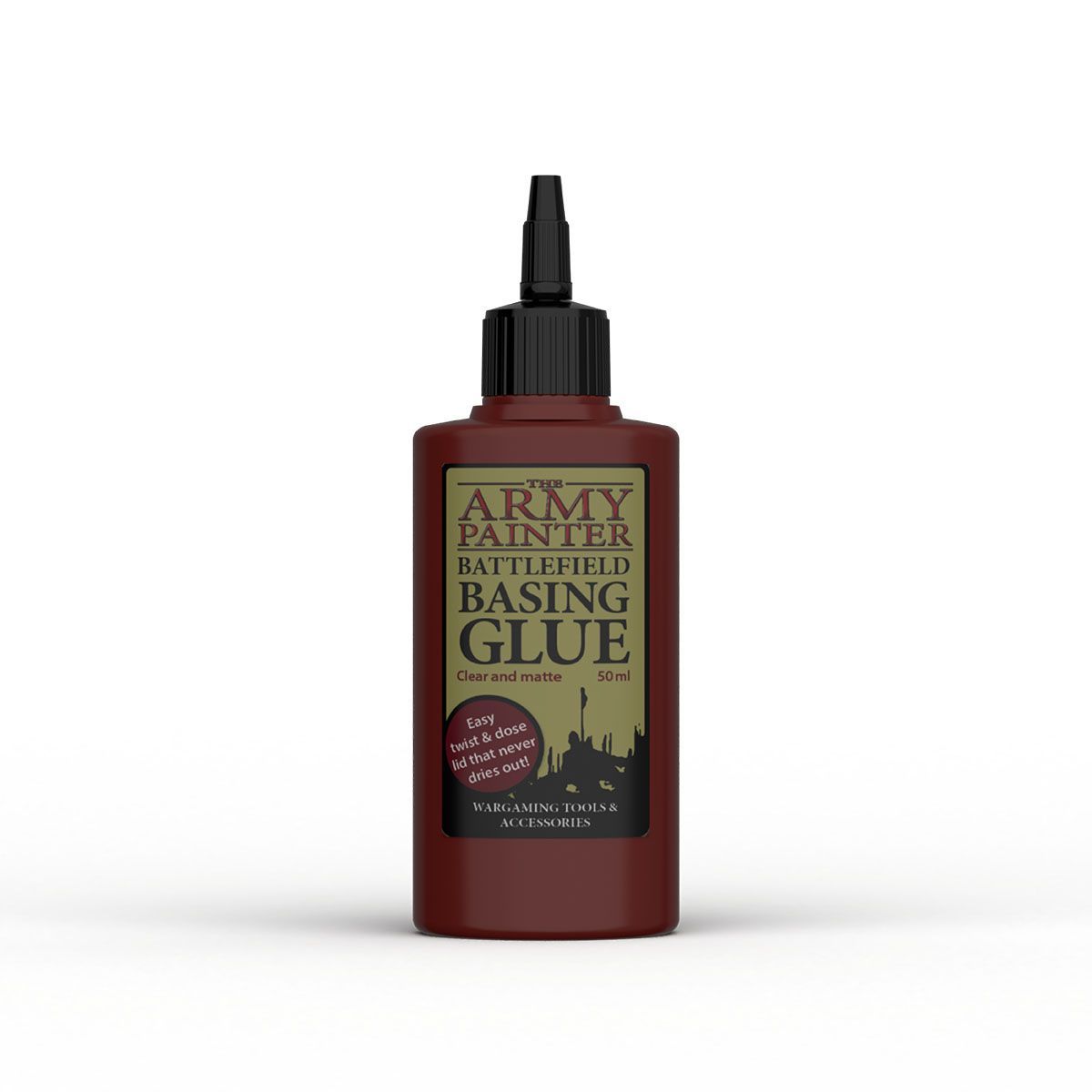
PVA-type basing adhesive for sand, grit, flock and tufts
Army Painter
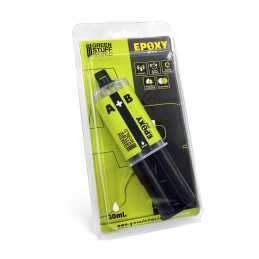
Two-part epoxy adhesive for metal and resin, 30ml
Green Stuff World
Safety, briefly
None of this is dangerous and all of it deserves a bit of respect.
- Ventilate. Cement solvents and CA vapour both build up in a closed room. An open window is enough; a fan pointed away from you is better.
- CA bonds skin instantly. Keep the debonder within reach and never force fingers apart - and keep both well away from your eyes.
- Accelerator is an aerosol solvent. Spray it away from your face and never over a wet paint job.
- Cap it. Thin cement evaporates through a loose lid and CA cures in a bottle left open, which is how half a bottle disappears with nothing built.
Tips
- Dry-fit first, then cement. Extra thin is applied to a closed seam - if the parts do not sit right dry, glue will not fix it.
- Cement for plastic, CA for everything else. Resin, metal and 3D prints will never take cement, however long you hold them.
- Thin for joints, thick for gaps. Buy one of each rather than compromising on a medium.
- Never CA near clear parts - the vapour fogs them permanently. Use a crystal glue.
- PVA is for the base, not the model. It holds sand and tufts and nothing that bears weight.
- Buy the small CA bottle unless you build constantly. Cyanoacrylate has a shelf life and most bottles are thrown away part-full.
Every glue named here is on the glues and adhesives shelf, where you can compare current prices across the shops we track before you commit to a bottle.
Shop plastic cement and glues
One thin cement and one super glue cover nearly every model you will ever build.
We earn a small commission from qualifying purchases at no extra cost to you.