
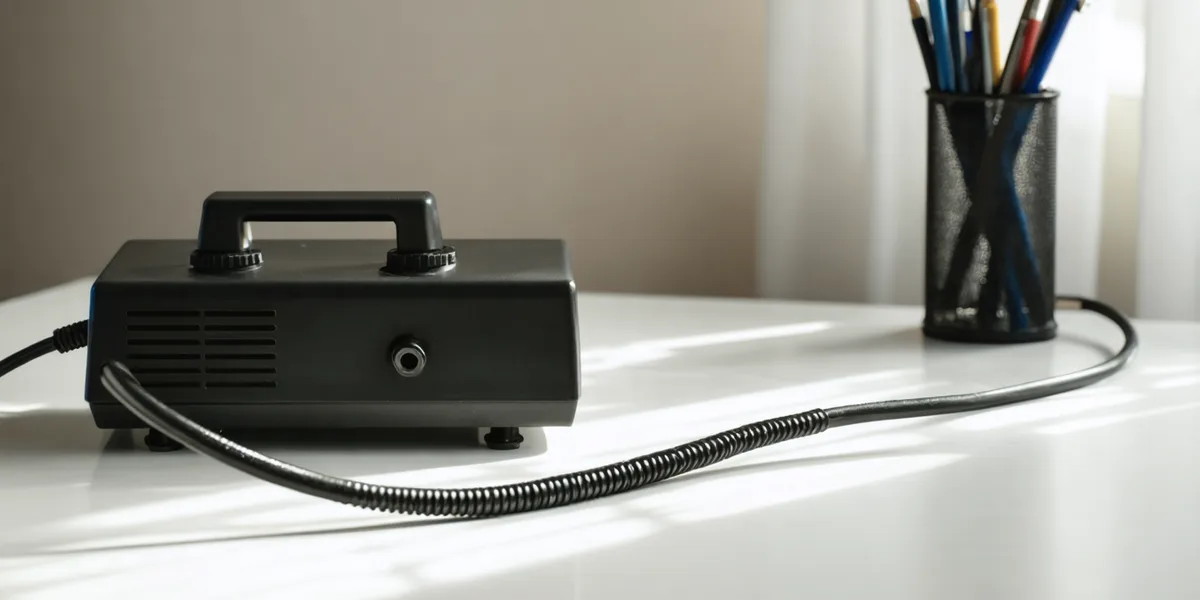
Almost every airbrush review is about the airbrush. Then the brush arrives, the compressor turns out to be the thing you actually live with - the noise in the room, the pulse in the spray, the water that appears in the paint on a humid evening - and the upgrade nobody talked about is the one you end up making. The compressor matters as much as the brush, and it is the cheaper half to get right first time.
This is what the specs mean, in the order they matter, and what to buy. Every machine mentioned is on one page with current prices from the shops that stock it: airbrush compressors compared.
Tank or tankless: the pulse
This is the first real decision, and everything else follows from it.
A tankless compressor sends air straight from the piston or diaphragm to your hose. At the pressures miniature painters use - roughly 15 to 25 psi - you can often feel the pulse of each stroke in the spray, most visibly on a long, slow pass over a flat panel. The motor also runs continuously for the whole session, which means it gets hot, and heat is what eventually kills a small compressor.
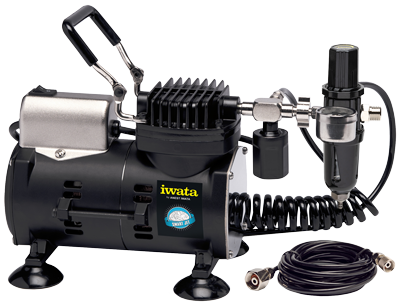
A tank - even a small one built into the handle - is a buffer. The motor fills it, the tank feeds the airbrush at a smooth, steady pressure, and the pulse disappears. The tanked machines we track say so plainly: Green Stuff World's Airbrush Compressor with Tank, Gaahleri's Dual Drive GT-918 with a one-litre tank, and Iwata's two Handle-Tank models, the Smart Jet Plus and the Power Jet Plus.
Tankless is not a mistake. For priming, basecoating and zenithals - which is most of what an airbrush is for on miniatures - a good tankless machine with a regulator is completely adequate, and the small ones are a fraction of the size. But if you paint for hours, or you want the smoothest possible low-pressure work, the tank is the upgrade that shows.
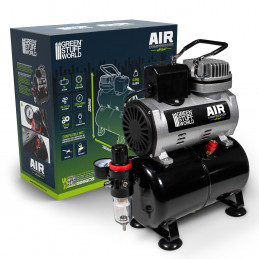


compressor with 1 L air tank · auto start/stop, on at 43 PSI, off at 57 PSI · under 44 dB · two independent outlets
Gaahleri

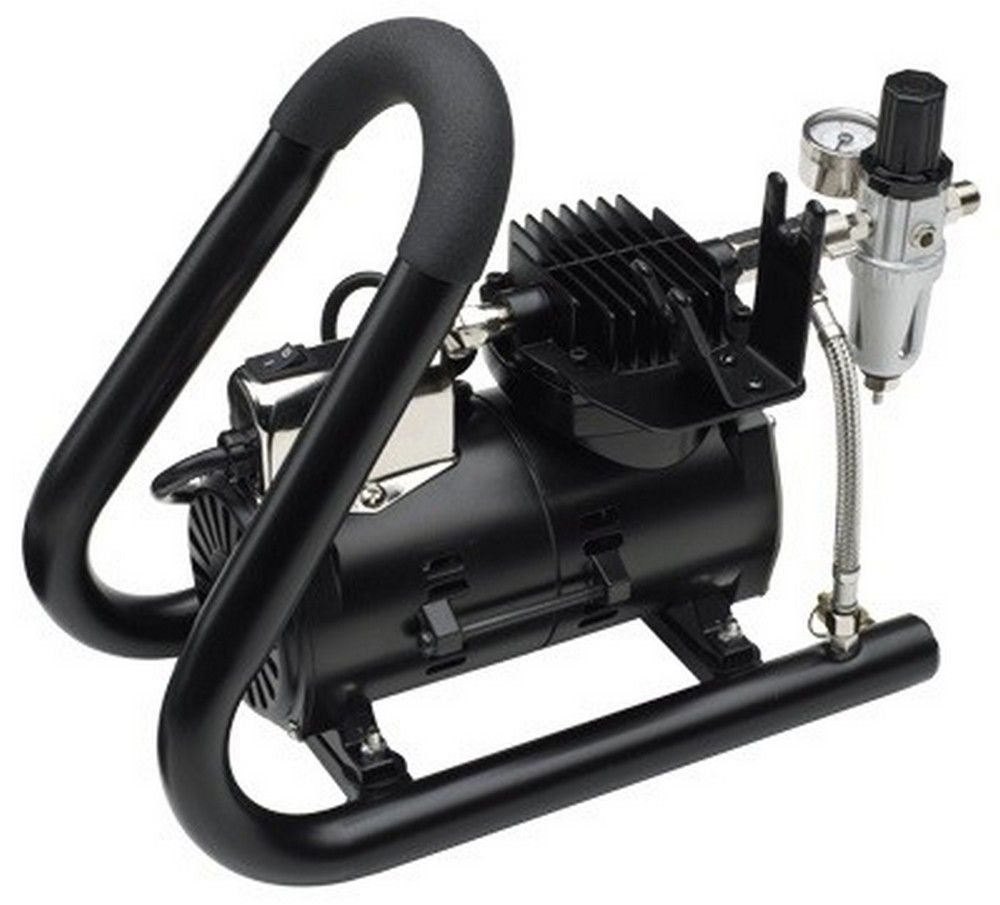
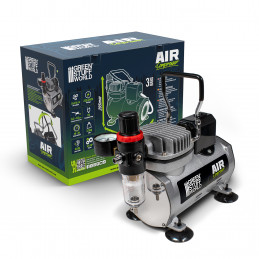
Green Stuff World
Auto start/stop
A tank brings a pressure switch with it, and the pressure switch is half the reason to want the tank. The motor runs until the tank is full, then it stops - and stays stopped until you have sprayed enough air to drop the pressure back to the cut-in point. Gaahleri publish the exact figures for the GT-918: it starts at 43 psi and stops at 57 psi.
What that buys you is not subtle:
- The room goes quiet between passes. Most of a painting session is not spraying, and an auto-stop machine is silent for most of it.
- The motor stays cool. A compressor that runs 20% of the time lasts far longer than one running 100% of it.
- Nothing to remember. No switching off between colours to spare the motor.
If a machine has a tank and no auto start/stop, the tank is doing only half its job. Check for both.
Noise, in numbers that mean something
Noise is quoted in decibels, and it is the spec most likely to decide whether you can paint in a shared house at ten at night.
For reference: a quiet room is around 30 dB, normal conversation about 60 dB, and the scale is logarithmic - a 10 dB rise is heard as roughly twice as loud. So the difference between a machine at 44 dB and one at 65 dB is not a fifth louder, it is a different situation.
The published figures we hold: Gaahleri's tanked GT-918 is rated under 44 dB, the tankless Turbox Mini under 48 dB at a metre, and Gaahleri's own Serenair mini is rated 65 dB - the compact diaphragm minis run louder than the bigger tanked piston machines, which is the opposite of what the size suggests. Where we do not hold a maker's dB figure, the comparison table shows a dash rather than a number we made up.
Two things that are not on any spec sheet and matter as much: put the machine on the floor rather than the desk, and put something soft under it. A hard desktop turns the whole surface into a soundboard, and an anti-vibration mat costs almost nothing.

tankless compressor, single outlet · 8-36 PSI rated, 10-20 PSI working · under 48 dB at 1 m · digital PSI/Bar readout, three preset modes
Gaahleri

The moisture trap is not an accessory
Compressing air heats it; the air then cools in the tank and the hose, and the water that was vapour becomes liquid. It arrives at the nozzle as a droplet in the middle of a smooth coat, and it gets blamed on the paint roughly every time.
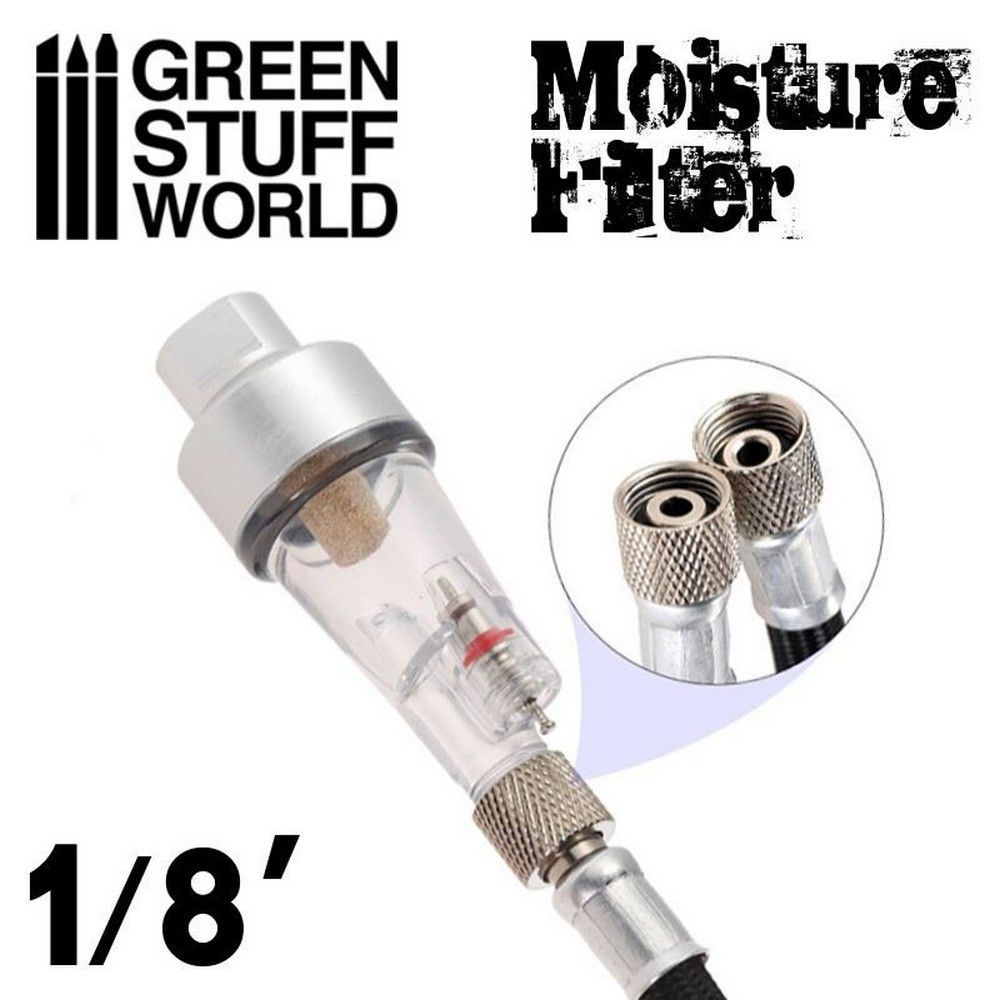
A trap is a small in-line filter that catches that water before the brush does. Some compressors include one; many do not, and it is the cheapest genuinely necessary purchase in airbrushing. Two shapes:
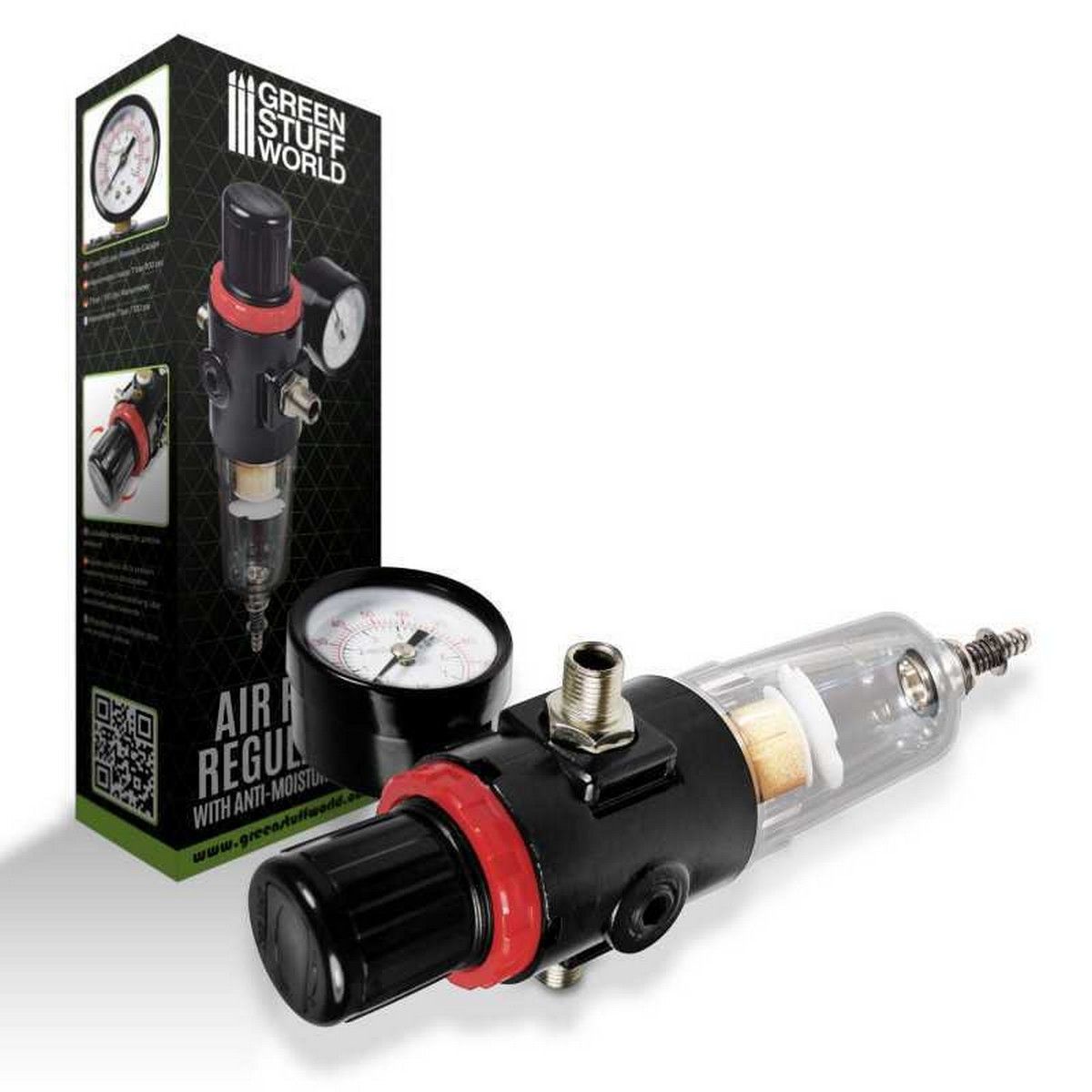
- On the compressor, usually combined with the regulator and the gauge, so one part gives you a set pressure and dry air. Iwata's Air Regulator/Filter/Gauge is this pattern.
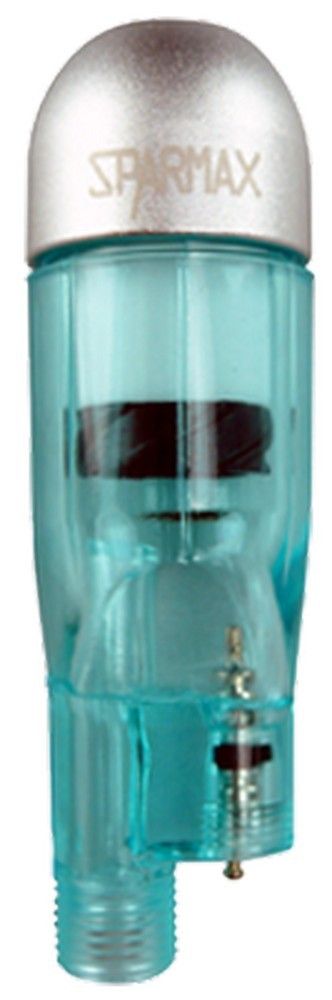
- In the line, a small trap that screws in near the brush. Sparmax's Silver Bullet is the classic, Green Stuff World's Moisture Air Filter is the budget one, and Gaahleri's Water Trap is the US-rail equivalent.
Humid climates and hot rooms make this worse; if you are getting unexplained spatter on an otherwise good day, check for water before you re-thin anything.
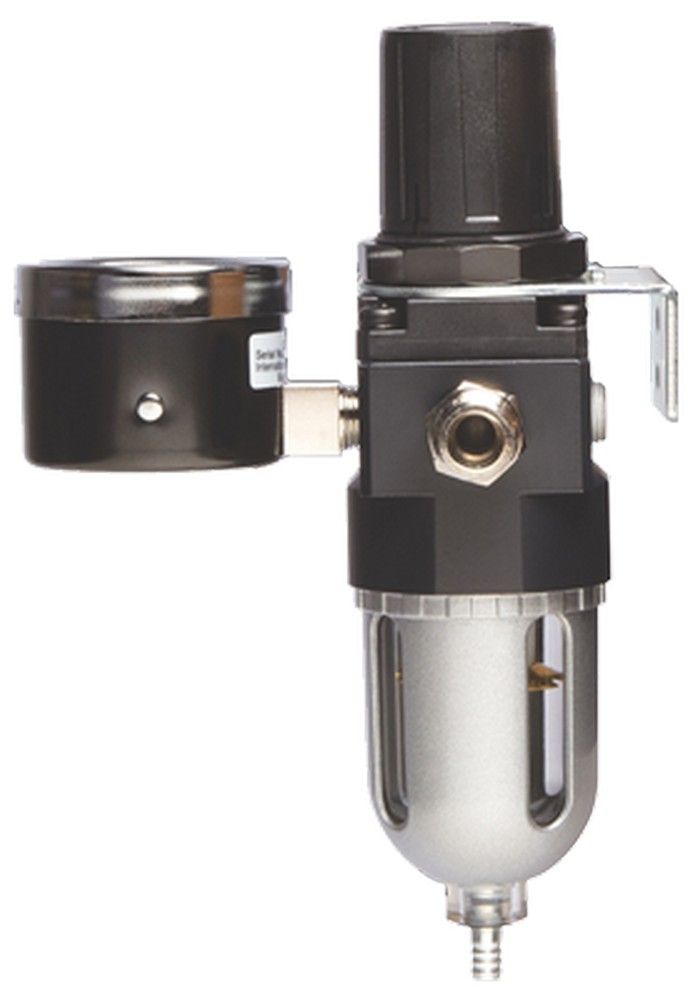
moisture trap, regulator and gauge
Iwata

Pressure, outlets and fittings
Pressure. Miniature work lives between about 15 and 25 psi - lower for fine lines and thin glazes, higher for primer and varnish. Almost any hobby compressor reaches that easily, so a big maximum-psi number is not a reason to buy; what you want is a regulator you can set and a gauge you can read. A semi-industrial machine rated to 116 psi is not eight times better at painting a Space Marine.
Outlets. Two independent outlets let you keep a primer brush and a detail brush loaded at once and switch without cleaning either. The GT-918 and the Serenair both have two; Gaahleri's AirHub Pro adds four ports with independent pressure control on each, which is the same idea bolted onto a machine that has one.
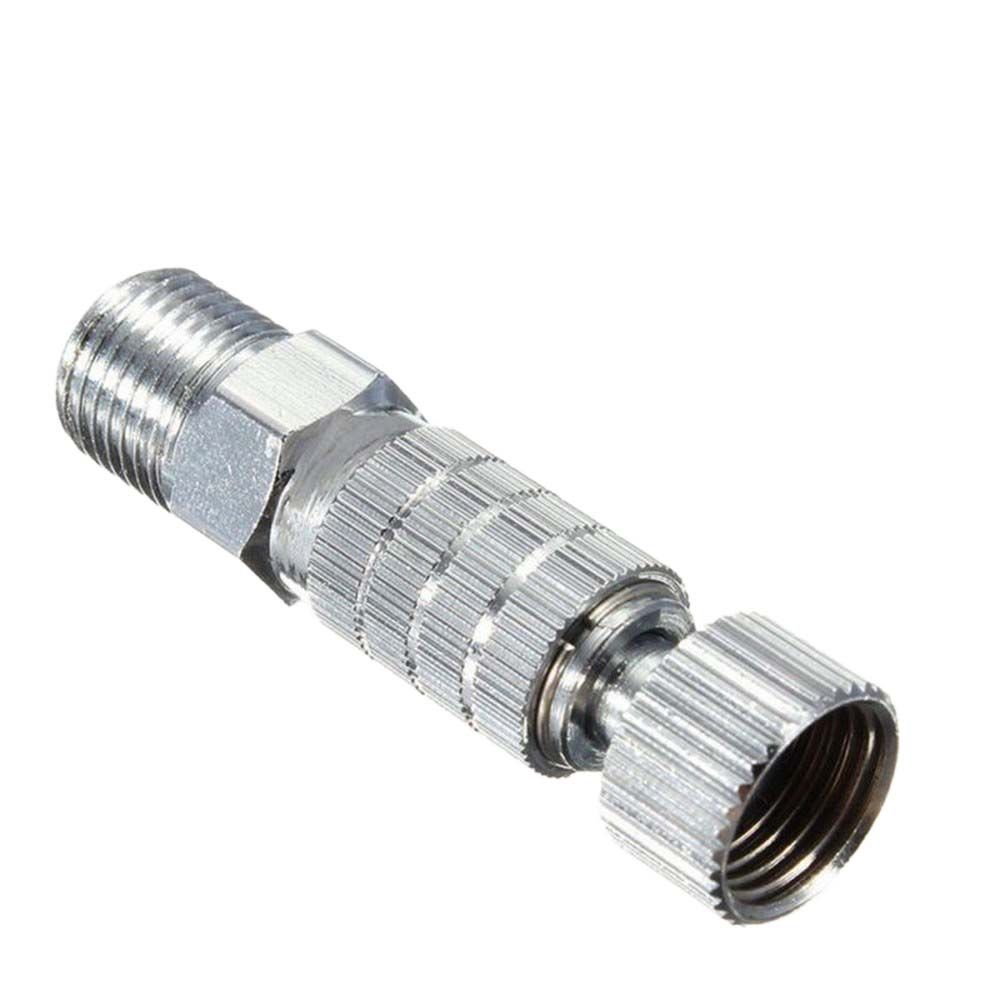
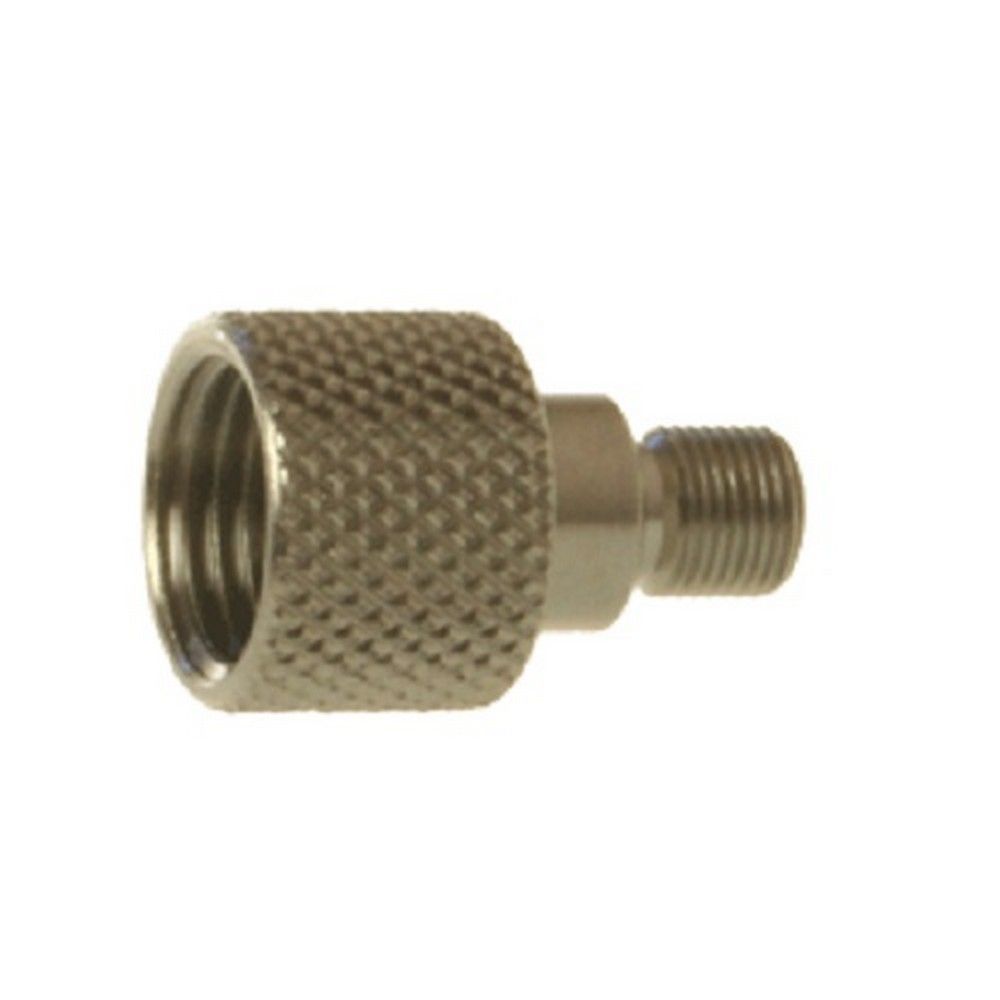
Fittings. Hobby airbrushes are 1/8 inch BSP. Compressors mostly are too, but not always, and Badger's thread is its own thing - check what is in the box before you buy, because a missing adaptor is an annoying week's wait for a two-pound part. A quick-release coupler is a worthwhile early addition either way: it turns changing brushes from unscrewing a hose into a click.

four-port airbrush stand and air manifold · independent pressure control on each port
Gaahleri
What to buy
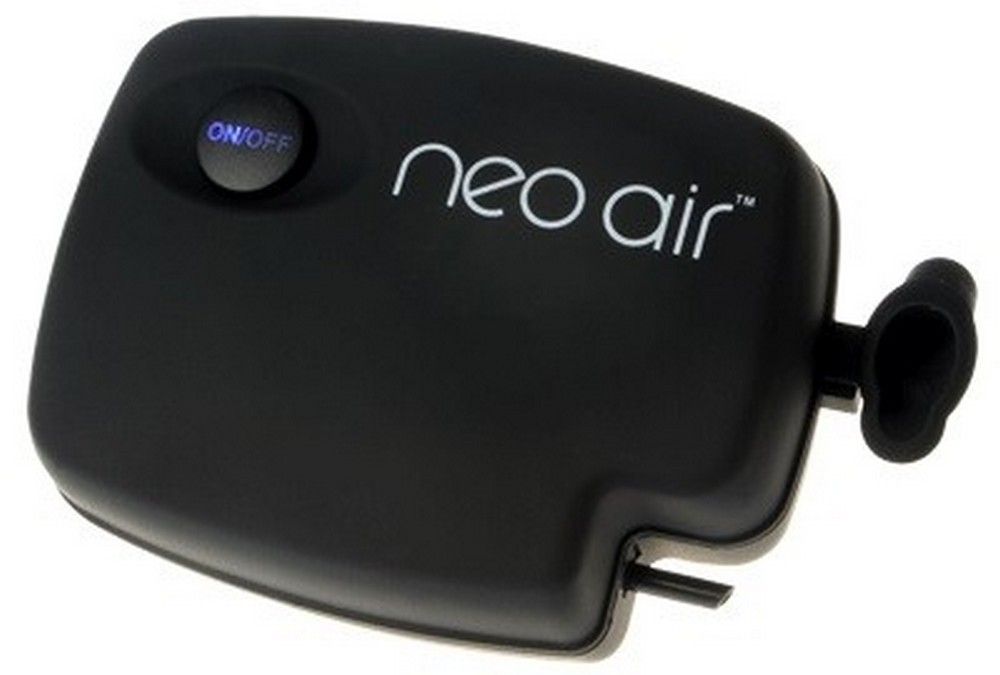
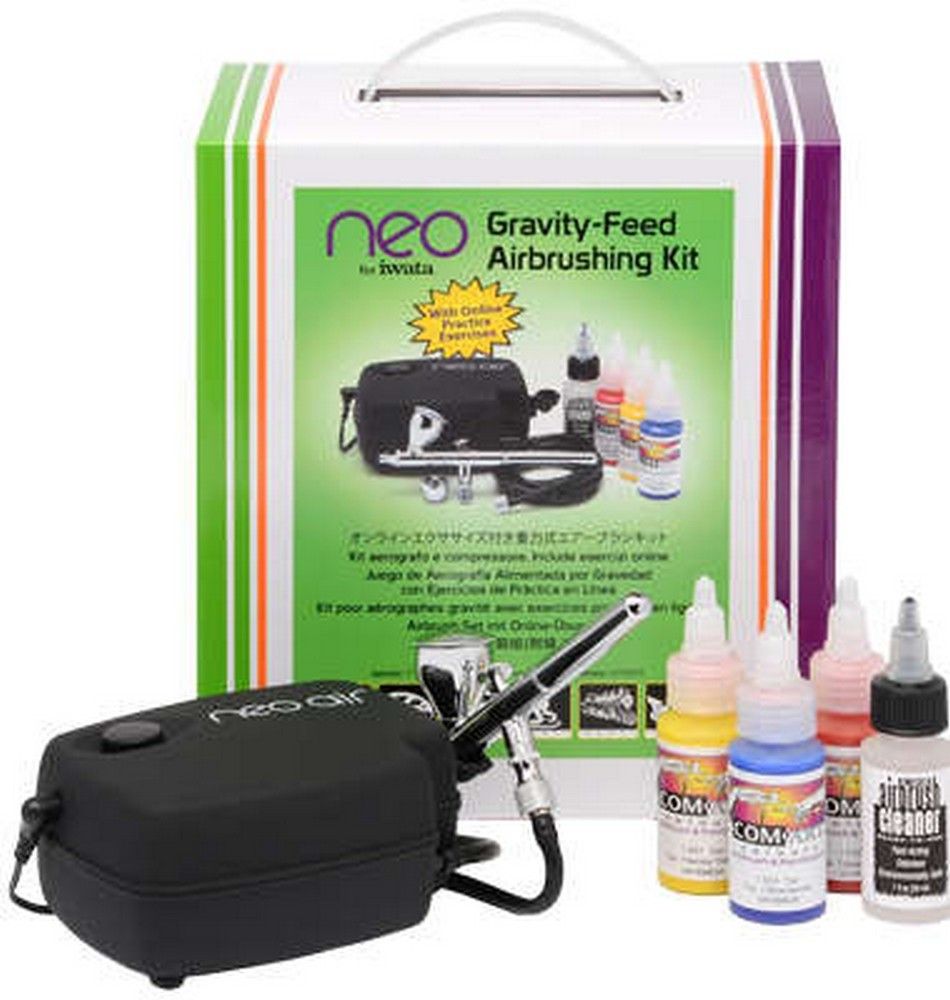
On the smallest budget. A compact tankless machine with a regulator, and an in-line moisture trap alongside it. Iwata's Neo Air mini and Green Stuff World's Small Airbrush Compressor are both this class. You will hear the pulse at very low pressure and you will hear the motor; neither stops you priming an army.
The sensible one-machine buy. A tanked, auto-stop compressor with a regulator, gauge and trap. Gaahleri's Dual Drive GT-918 and Green Stuff World's Airbrush Compressor with Tank are the affordable end of this; Iwata's Smart Jet Plus Handle-Tank is the same idea from the range most miniature painters already own an airbrush from. This is the machine you stop thinking about.
If you paint in a shared room. Prioritise the dB figure and auto start/stop over everything else, and put it on the floor on a mat. A quiet tanked machine that switches itself off is the difference between painting at night and not.
If you run two airbrushes. Two independent outlets, or one outlet and a manifold. Worth it sooner than most people expect: a dedicated primer brush that never sees a fine colour saves more cleaning than any tool.
Buying the airbrush at the same time? The kits pair a machine with a brush and a hose for less than the two apart - Gaahleri's Serenair kit and Iwata's Neo Air with Neo Gravity are both this. Fine as a first setup; just know you are choosing the compressor by whatever brush is attached to it.

Where these actually come from
Worth saying plainly, because the honest answer differs by country and the prices on this page follow whichever market you are reading in:
- Iwata's ladder - Neo Air, Ninja Jet, Silver Jet, Sprint Jet, Smart Jet, Smart Jet Pro, the two Handle-Tanks, Power Jet Pro and Maxx Jet - reaches us through Wayland Games in the UK. It is the deepest choice in sterling by a distance. Two of them, the Ninja Jet and the Smart Jet, are also stocked in the US by Noble Knight.
- Green Stuff World sell their own compressors direct, from a single storefront that prices in pounds, euros and dollars - so their tanked and small machines are a real option in all three.
- Gaahleri is maker-direct and priced in dollars. It is a US supply line for compressors, not a UK one: at our last stock check every non-US plug variant of every Gaahleri compressor was out of stock. Their Serenair kit does reach the UK, through Green Stuff World. Their bigger Apex Force machine is worth knowing about as the top of the range and we do not list it, because it was sold out everywhere when we checked - we would rather leave it off than sell you a dead link.
- Badger and Ghost Brush come through Noble Knight, stock-verified before we list them - US only.
Tips
- Buy the tank before you buy the third airbrush. It changes more about how the setup behaves than another brush will.
- A trap and a regulator are not optional extras. Budget for them with the machine, not after the first ruined coat.
- Floor, not desk, and something soft underneath. The cheapest 10 dB you will ever get.
- Check the thread and what is in the box. 1/8 inch BSP is the hobby standard; Badger is the exception.
- Ignore the maximum psi. You will use a quarter of it. A readable gauge and a smooth regulator beat a big number.
- Clean the brush, not the compressor. Nine out of ten "the compressor is weak" faults are dried paint in the paint path - the routine is in how to clean an airbrush, and the pots, brushes and traps are on the cleaning and air-path shelf.
Compare compressors
Every machine above on one page, with the maker specs we hold and current prices from each shop that stocks it.
We earn a small commission from qualifying purchases at no extra cost to you.