
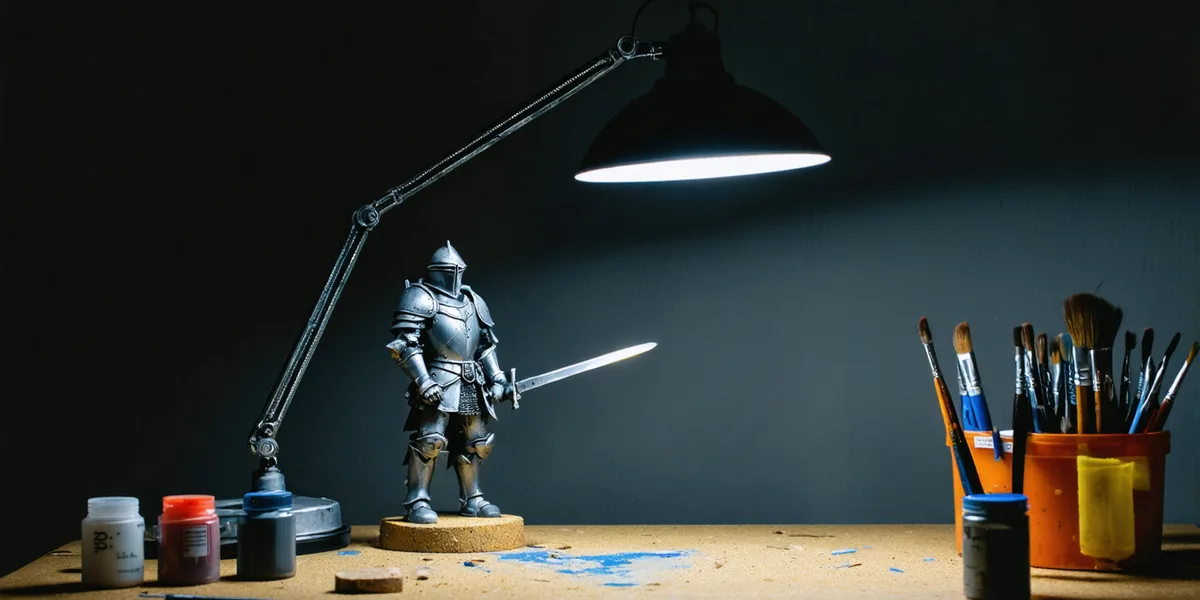
A lamp is the only purchase that changes every colour decision you make. A highlight mixed under a warm ceiling bulb is a different colour in daylight, and a shade you chose at 11pm can look wrong on the shelf the next morning. Painters spend years upgrading brushes and paints while working under the light the room came with. This is what actually matters in a lamp, what the numbers mean, and what to buy - the shelf is at hobby and daylight lamps, with live prices from every shop we track.
The three numbers, in order of importance
Colour rendering (CRI). The Colour Rendering Index scores, out of 100, how faithfully a light shows colours against a reference source. Daylight is 100 by definition. A cheap LED bulb often sits around 80, and the colours it renders worst tend to be deep reds and skin tones - exactly what you are squinting at on a face or a cloak. This is the one number to insist on. 90+ is good, 95+ is what the task-lighting makers build to. If a listing does not quote CRI at all, assume it has nothing to boast about.
Colour temperature (kelvin). How warm or cool the light looks - a separate thing from CRI, and the two are constantly confused. A household warm-white bulb is around 2,700K, neutral office white around 4,000K, and "daylight" LEDs sit roughly 5,000-6,500K. For painting you want somewhere in the neutral-to-daylight band so you are not mixing under an orange cast. Note the trap: a lamp can be 6,500K and still render colour badly. Cool is not the same as accurate.
Brightness. Easy and cheap by comparison, and the number the marketing leads with because of that. Lumens are the lamp's total output; lux is how much of it lands on your model at a given distance, which is the more useful figure when a maker publishes it. More light also lets your eyes close down a little, which sharpens your near focus - one reason good lighting can postpone buying a magnifier entirely.
Daylight lamps vs the bulb you already own
An ordinary bulb is not useless, it is just dishonest about colour. Three things go wrong:
- Colours shift. A warm bulb pushes everything a little orange, so you over-correct - highlights mixed too cool, blues too pale, and a model that looks grey under a shop's lighting.
- Ceiling light is the wrong shape. A bulb above and behind you throws your own head's shadow across the model at the moment you lean in to paint an eye.
- Photos come out wrong. Low-CRI light gives cameras nothing to white-balance against, and a well-painted model photographs flat and muddy under it.
A dedicated daylight lamp fixes all three because it is a task light: high rendering, positioned low and to the side, close enough that its own light overwhelms the room.
Clamp, desk or floor?
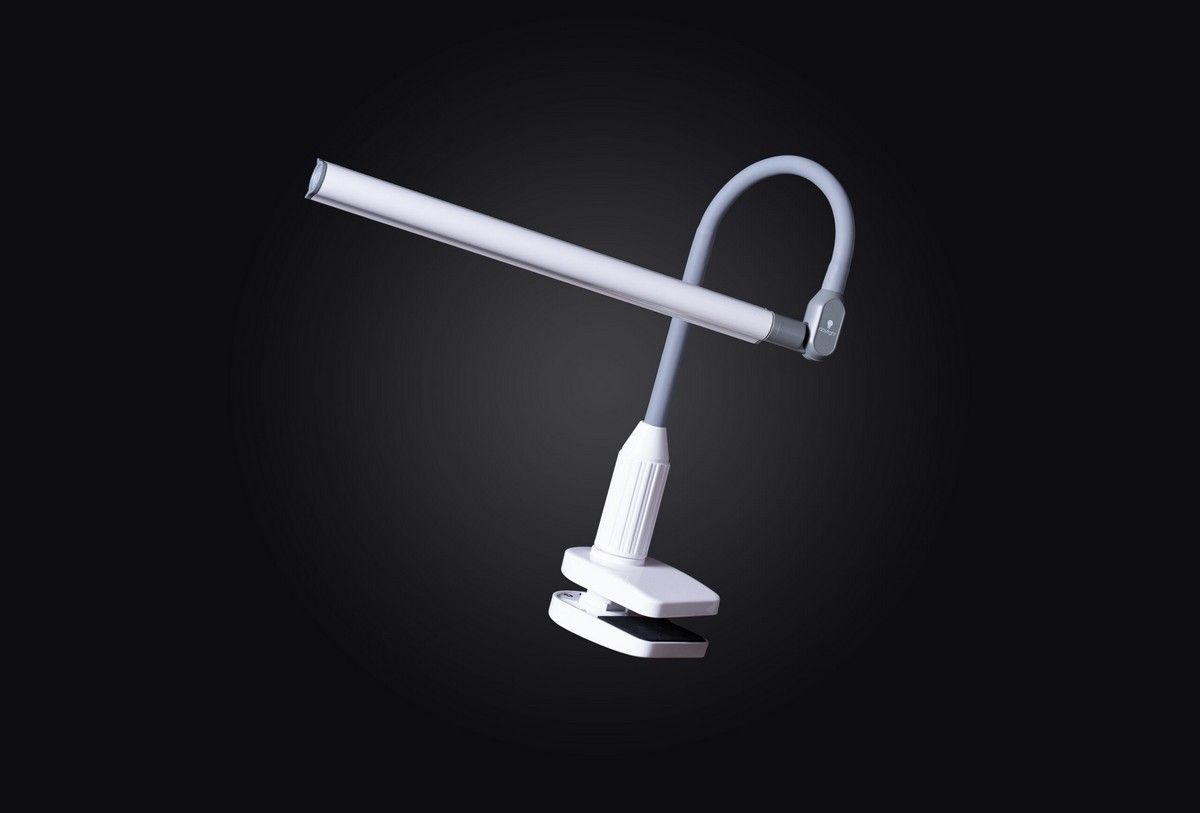
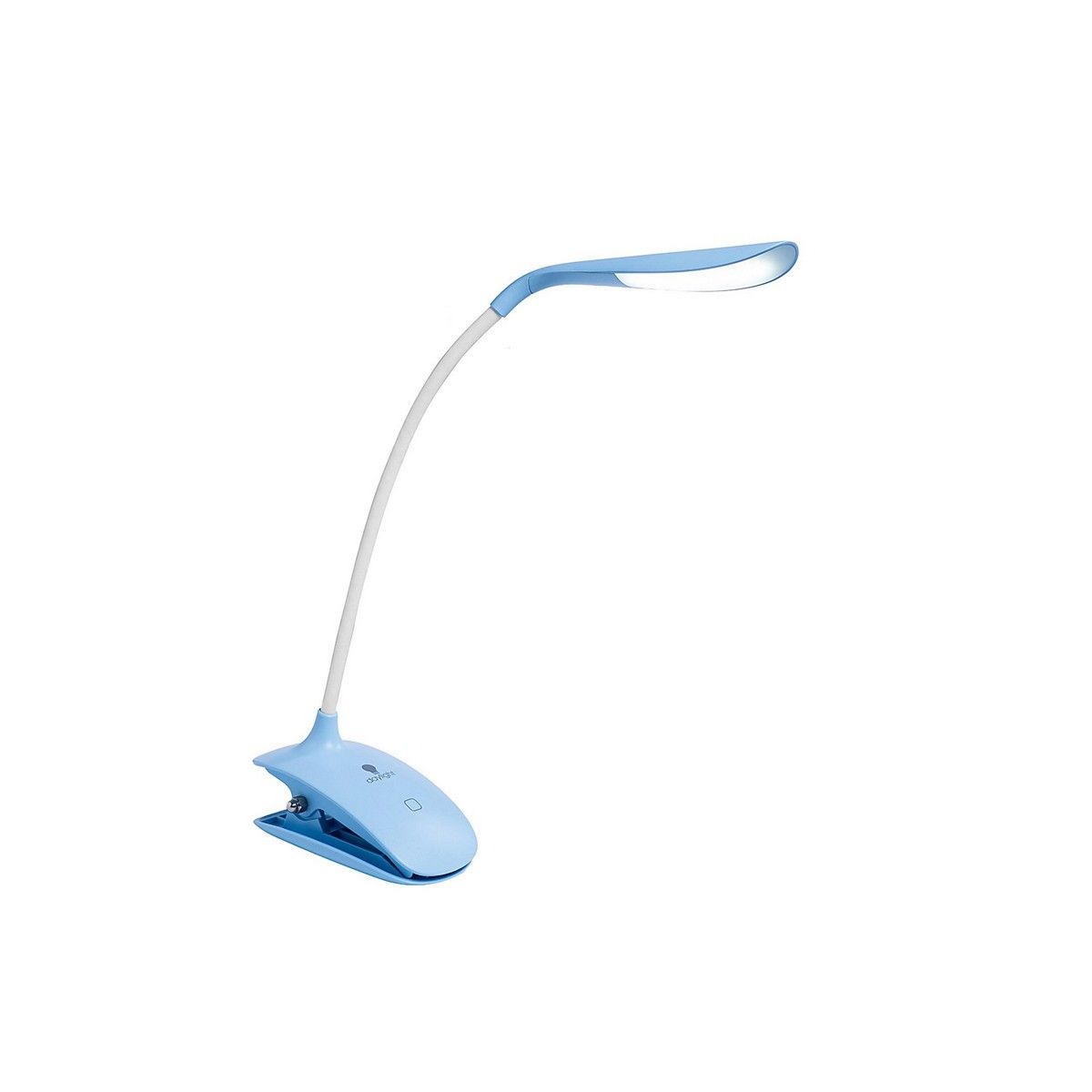
Clamp lamps free your whole desk and put the head exactly where you want it. They need a bench edge of the right thickness, so measure before buying. The Daylight UnoPro Clamp Lamp is the straightforward version of this - a 95+ CRI head on a flexible arm and a desk clamp.
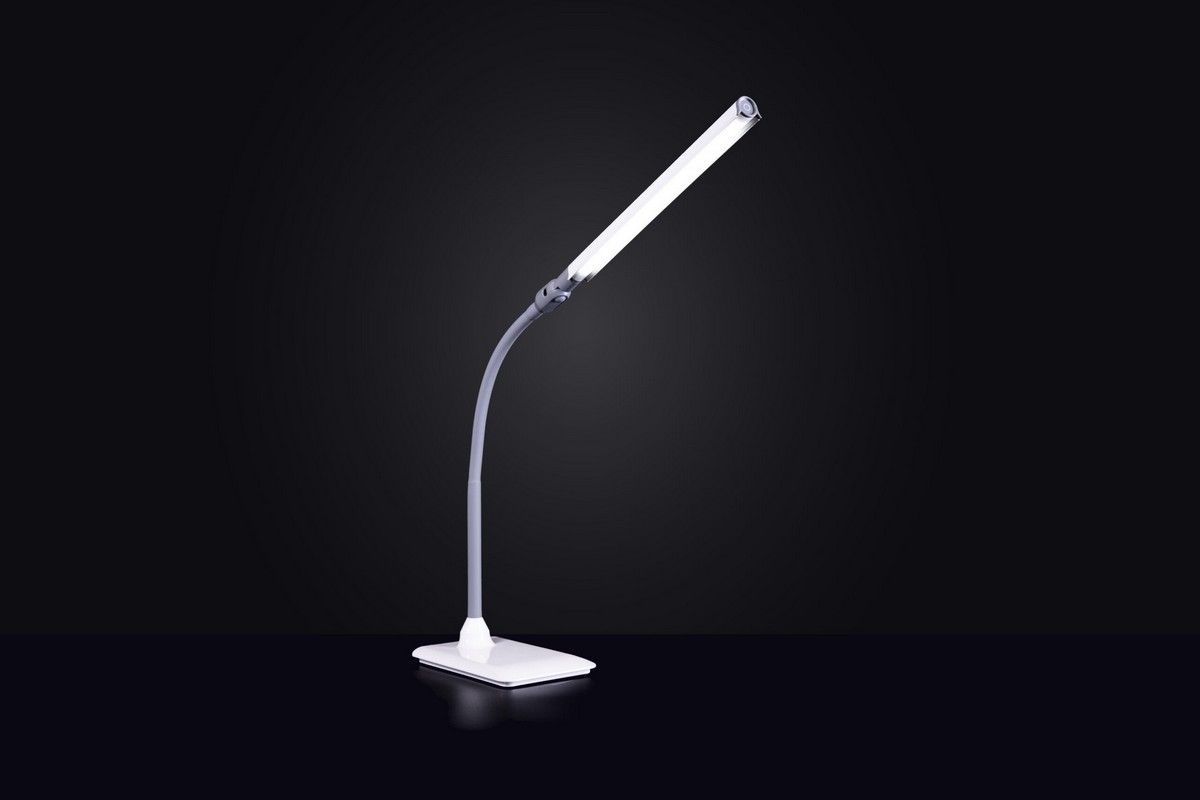
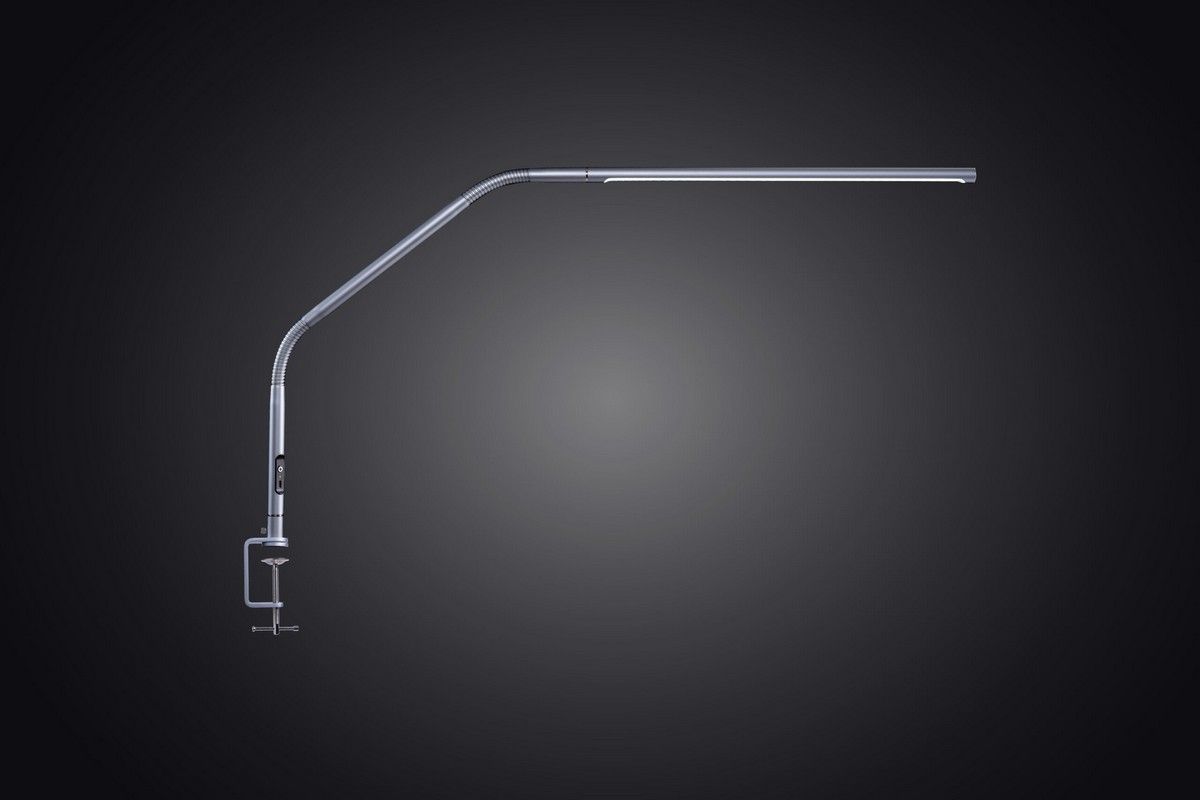
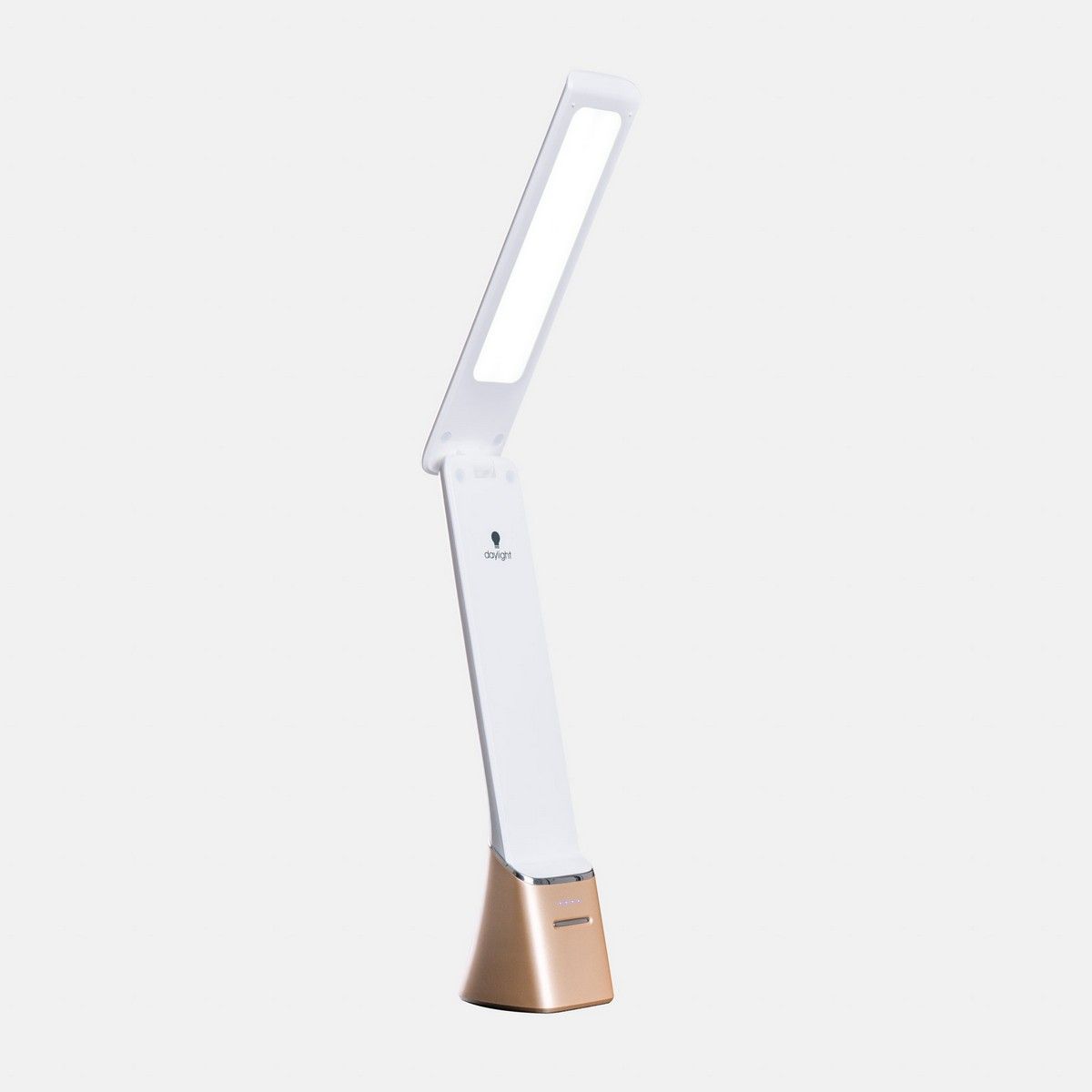
Desk and table lamps stand on a weighted base and move with you, which suits a hobby desk that is also a dining table. The same head is sold that way as the Daylight UnoPro Table Lamp; the Slimline 4 is the taller 6,000K desk lamp with an anti-glare diffuser, and the Libra is a compact 95+ CRI table lamp with three colour temperatures and a wireless charging pad in the base.
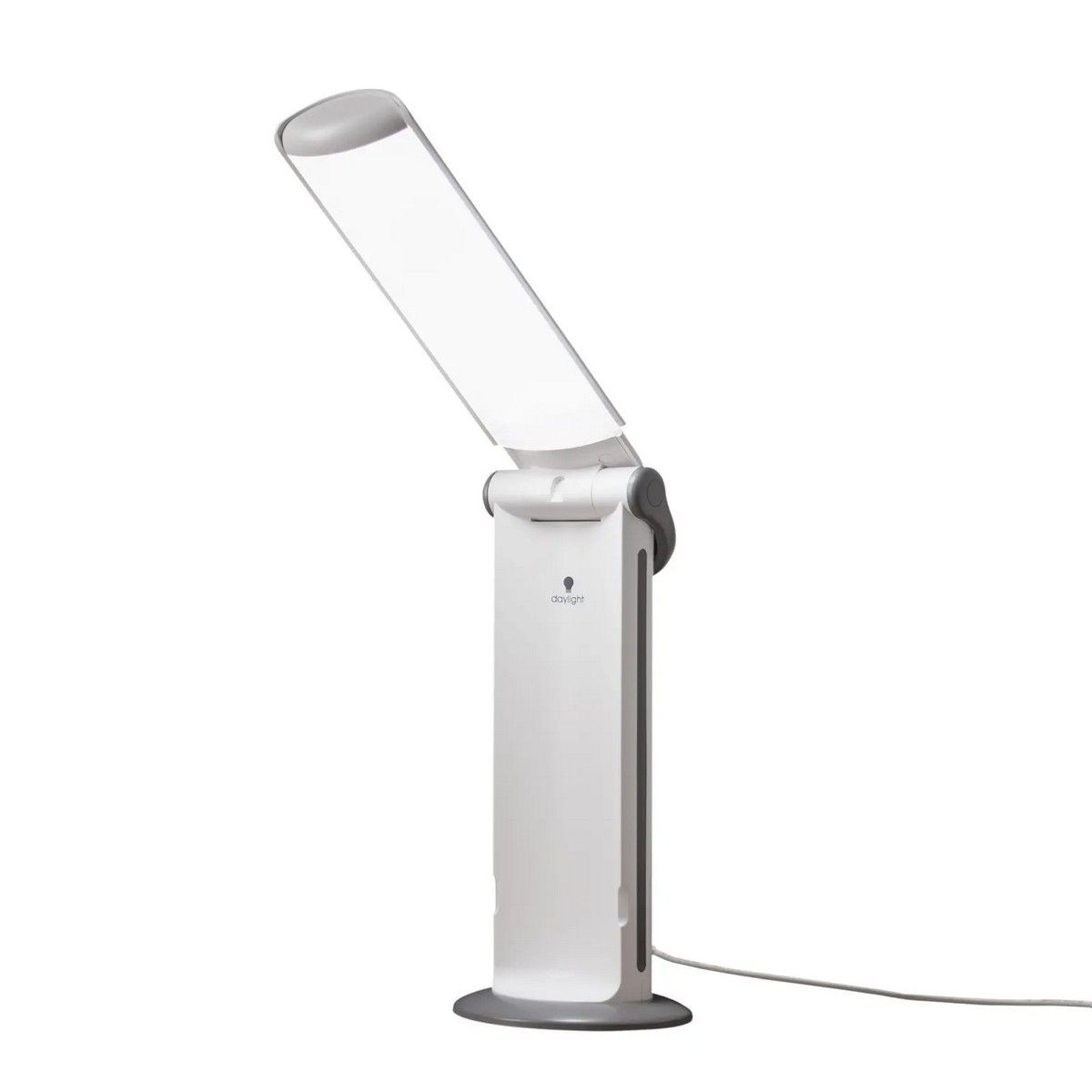
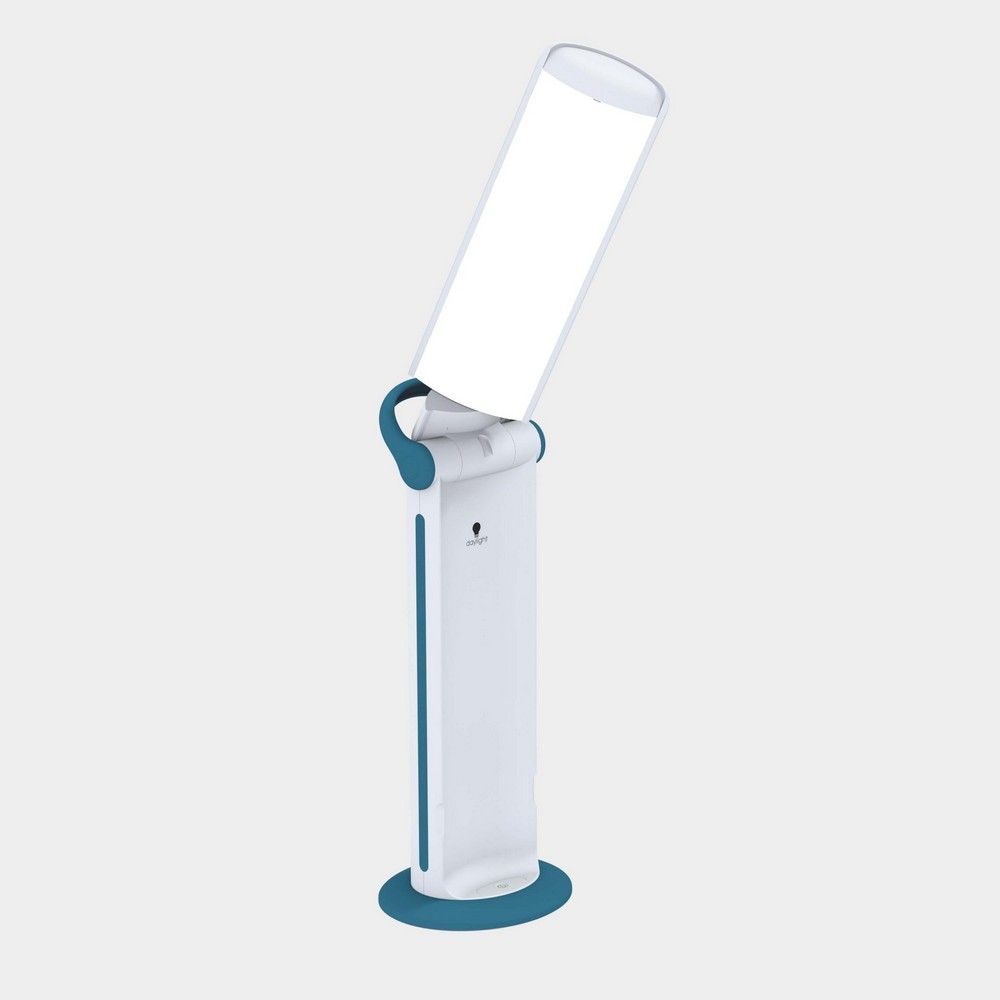
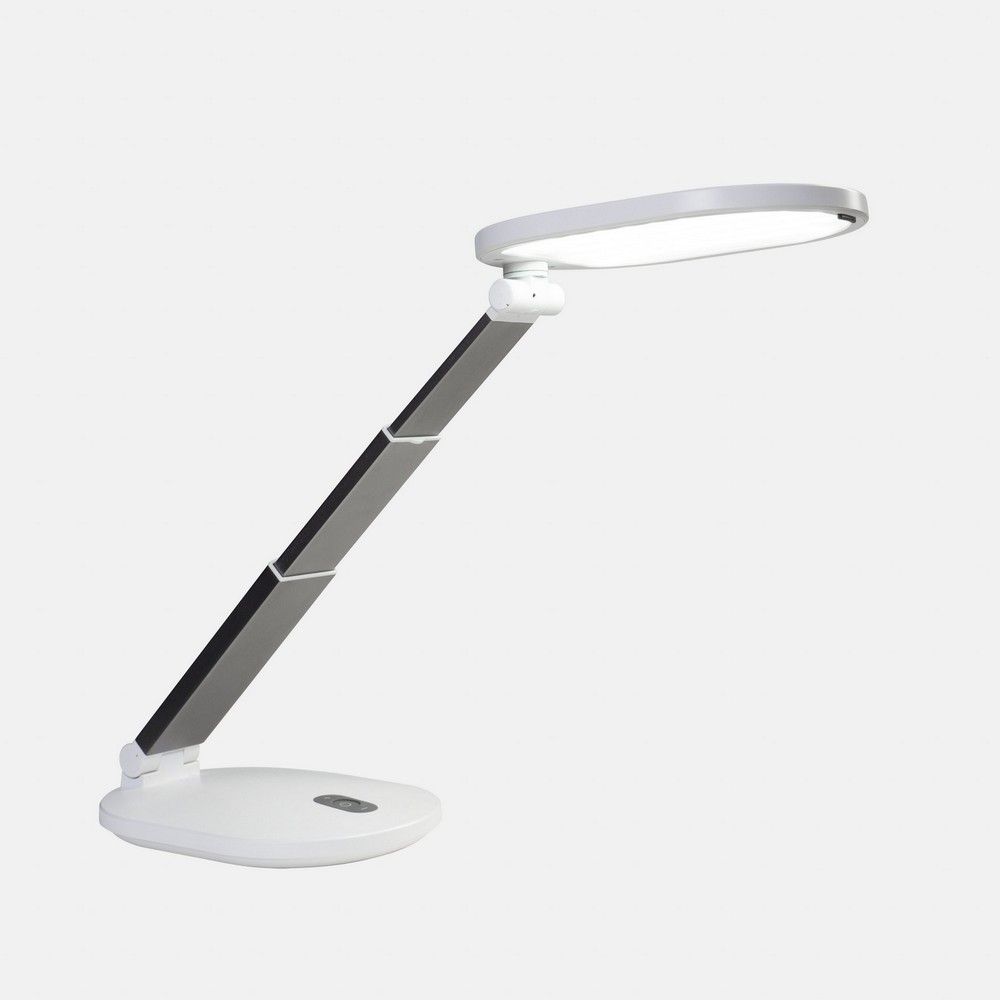
Folding and cordless lamps are the answer if you paint on the sofa or at a club. The Twist 2 is the mains version of Daylight's folding bench lamp and the Twist 2 Go is the same lamp on a battery - roughly a full evening's run time, and the honest buying question between the two. The Foldi Go folds flat into a carry case, the Smart Go is the small rechargeable task light, and the Smart Clip-On clips a dimmable 6,000K head onto a shelf or a board where no base will fit.
Big workstation lamps are for a permanent hobby desk. The Lumi has a wide shade and a metre of reach, and the Luminos is the brightest and widest-spreading of the range - overkill for one 28mm model, genuinely useful over an army in progress or a display case build.
Something different: the Green Stuff World Hobby Arch LED Lamp is an arch you place over the work rather than beside it, a 78-LED strip on a dimmer. Because the light comes from a long line rather than a point, it throws far softer shadows than any single-head lamp - the closest thing on the shelf to a lightbox for painting in.
Everything above sits on one page with current prices side by side: compare hobby lamps.


Shadow control is a second lamp, not a brighter one
One lamp, however good, casts one hard shadow. That shadow is useful - it is how you read the shapes you are about to highlight - but a hard edge across a face makes fine work guesswork. Three fixes, cheapest first:
- Move the lamp lower and to the side, roughly where you want the light in the finished paint job. Lighting from directly above flattens detail.
- Use a wide shade. A big diffused shade is a softer source than a small bright one, which is the whole argument for the workstation lamps and the arch.
- Add a second, dimmer light on the other side to lift the shadow without killing it. A clip-on or one of the cordless lamps above is plenty - the fill does not need to match the key light.
Magnifier lamps: less magnification than you think
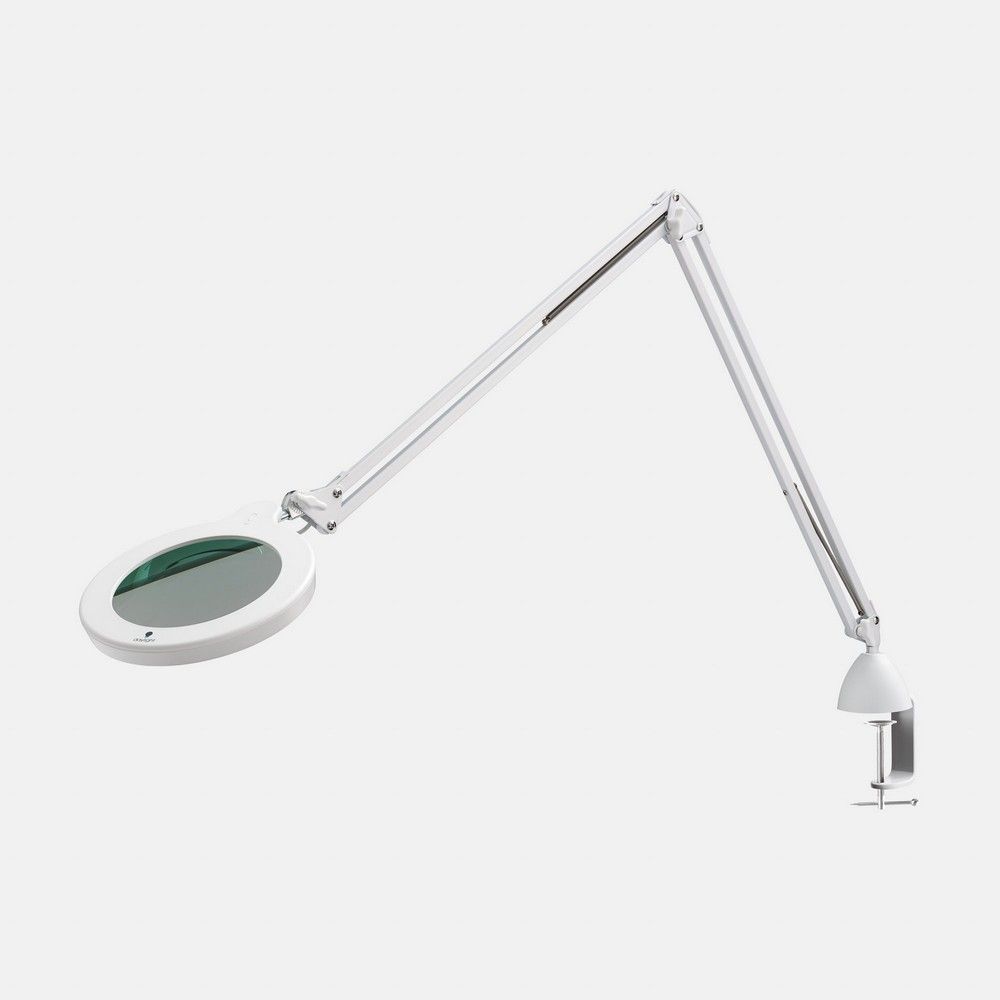
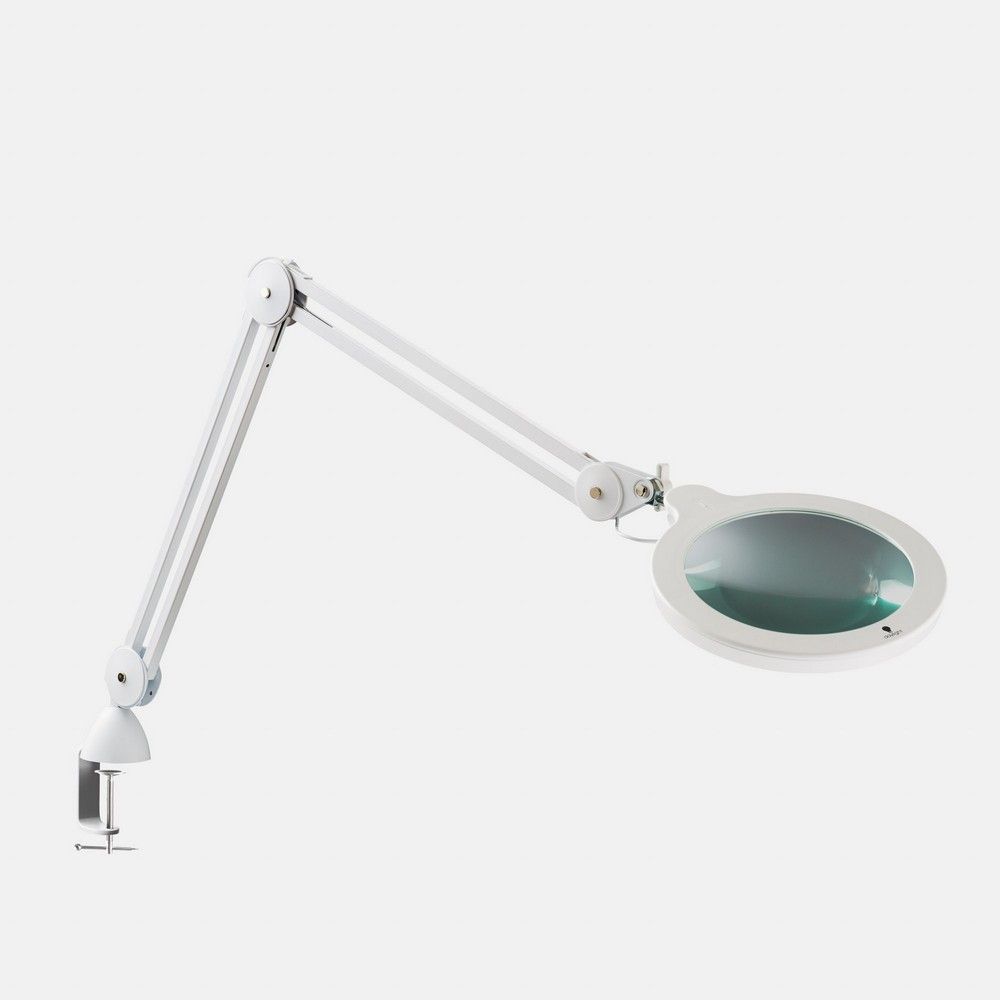
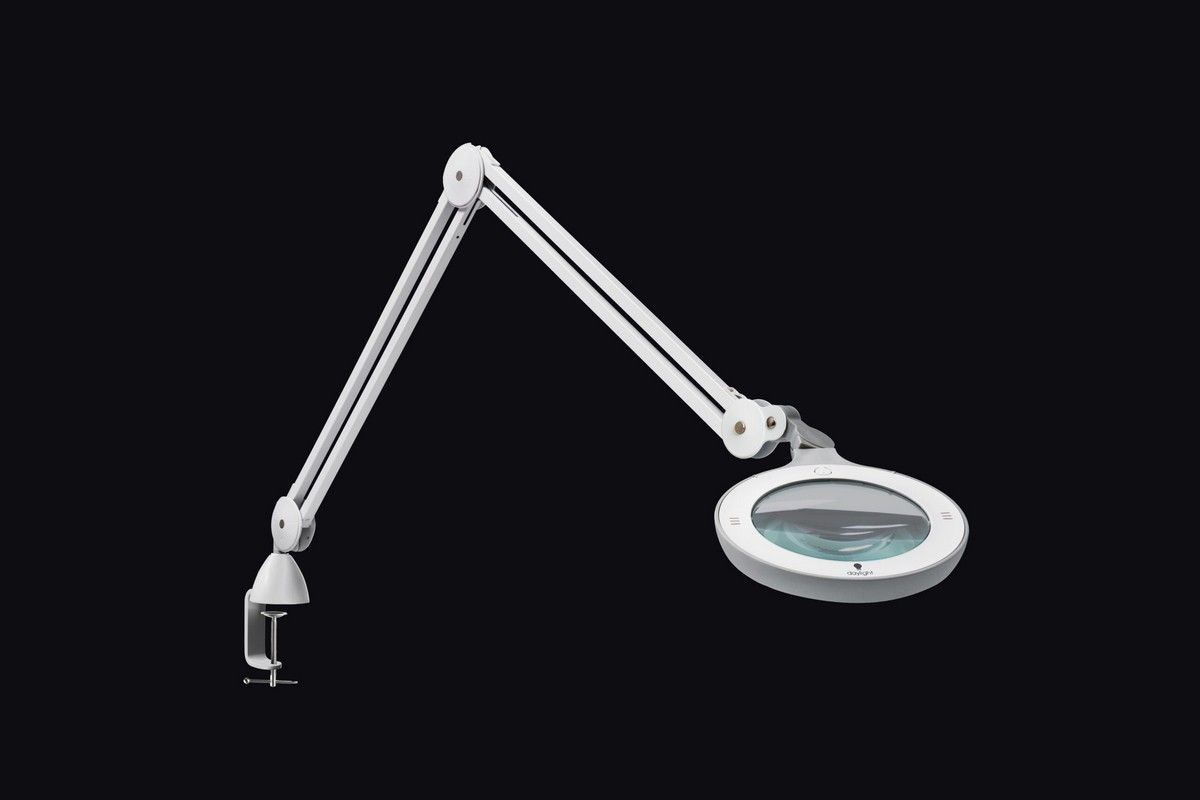
Magnifying lamps are lamps and magnifiers in one, and they are worth it if you have stopped being able to see what you are painting. The mistake almost everyone makes is buying too much magnification. Strong lenses have a short focal length, so they pull your face down onto the model and give you a stiff neck and a headache within the hour.
How the numbers work. Lens strength is quoted in dioptres (D) or in magnification (x), and they convert: magnification is dioptres divided by four, plus one. So a 3D lens is 1.75x, a 5D lens is 2.25x, and a 12D lens is 4x. 1.75x is the sensible working strength - enough to paint an eye, with a comfortable arm's-length distance.
- Spring-arm magnifying lamps are the desk standard. The Daylight MAG Lamp S has a 12.7cm glass lens at 1.75x; the MAG Lamp XL is the same strength across a much larger 17.7cm lens, which matters more than magnification does - a big lens means you can move your head without losing the image.
- A lens with an inset. The Omega 5 pairs a 1.75x glass lens with a 2.25x insert, so the extra power is there for the eye and gone again for the cloak. The Omega 7 trades the insert for a bigger 17.5cm acrylic lens and 95+ CRI light.
- Clamp and floor versions. The Magnificent Pro on a clamp frees the desk; on a floor stand it stands beside a chair, which suits painting away from a proper bench.
- Cheap and cheerful. The Green Stuff World Magnifying Desk Lamp is a 2x glass lens with its own dimmable LED ring, and the Tamiya Work Stand with Magnifying Lens puts a 2x lens, six LEDs and tool holders on one base.
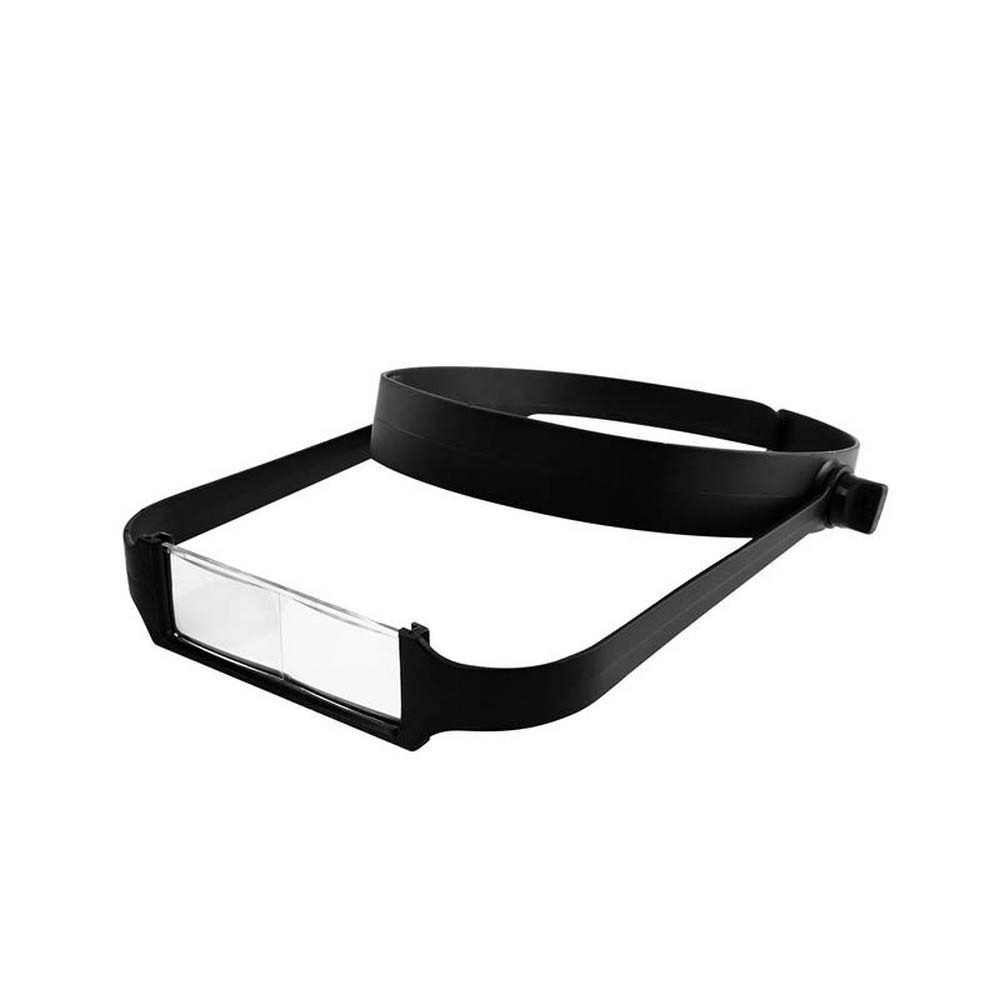
- Worn rather than mounted. A visor like the Vallejo Lightweight Headband Magnifier keeps both hands and the whole desk free, at the cost of looking like a jeweller. The Daylight Yo-Yo is the pocket version for checking work rather than doing it.
The full shelf, with lens sizes and prices compared: magnifiers and visors.
What to buy
On a budget. One clip-on or cordless daylight lamp, positioned low and to your painting side. This is the cheapest meaningful upgrade in the hobby and it beats a more expensive lamp used from the wrong angle.
The sensible desk buy. A 95+ CRI bench lamp on a clamp or a weighted base - UnoPro, Twist 2 or Slimline 4 territory. Buy the mount that fits your desk rather than agonising over the head.
If you paint away from a desk. A rechargeable folding lamp. The Twist 2 Go and Foldi Go are the same class of light without the cable.
If you cannot see the detail. A 1.75x magnifying lamp with the largest lens you can afford, not the strongest. Try better light first - a lot of "I need a magnifier" turns out to be "I need more lux".
Tips
- CRI first, brightness second, kelvin third. A listing that quotes lumens and nothing else is telling you what it is proud of.
- Light from the side, not overhead. You want a shadow, just not your own head's.
- Never judge a mix under a warm bulb. Match your painting light to the light the model will be seen in.
- Buy the mount, not just the head. Several lamps here are one design sold on a clamp, a base or a floor stand - measure your desk edge before you choose.
- Do not over-magnify. 1.75x with a big lens beats 4x with a small one for anything you paint for more than ten minutes.
Shop hobby lamps
A high-CRI daylight lamp changes every colour decision you make - compare the shelf for current prices.
We earn a small commission from qualifying purchases at no extra cost to you.