


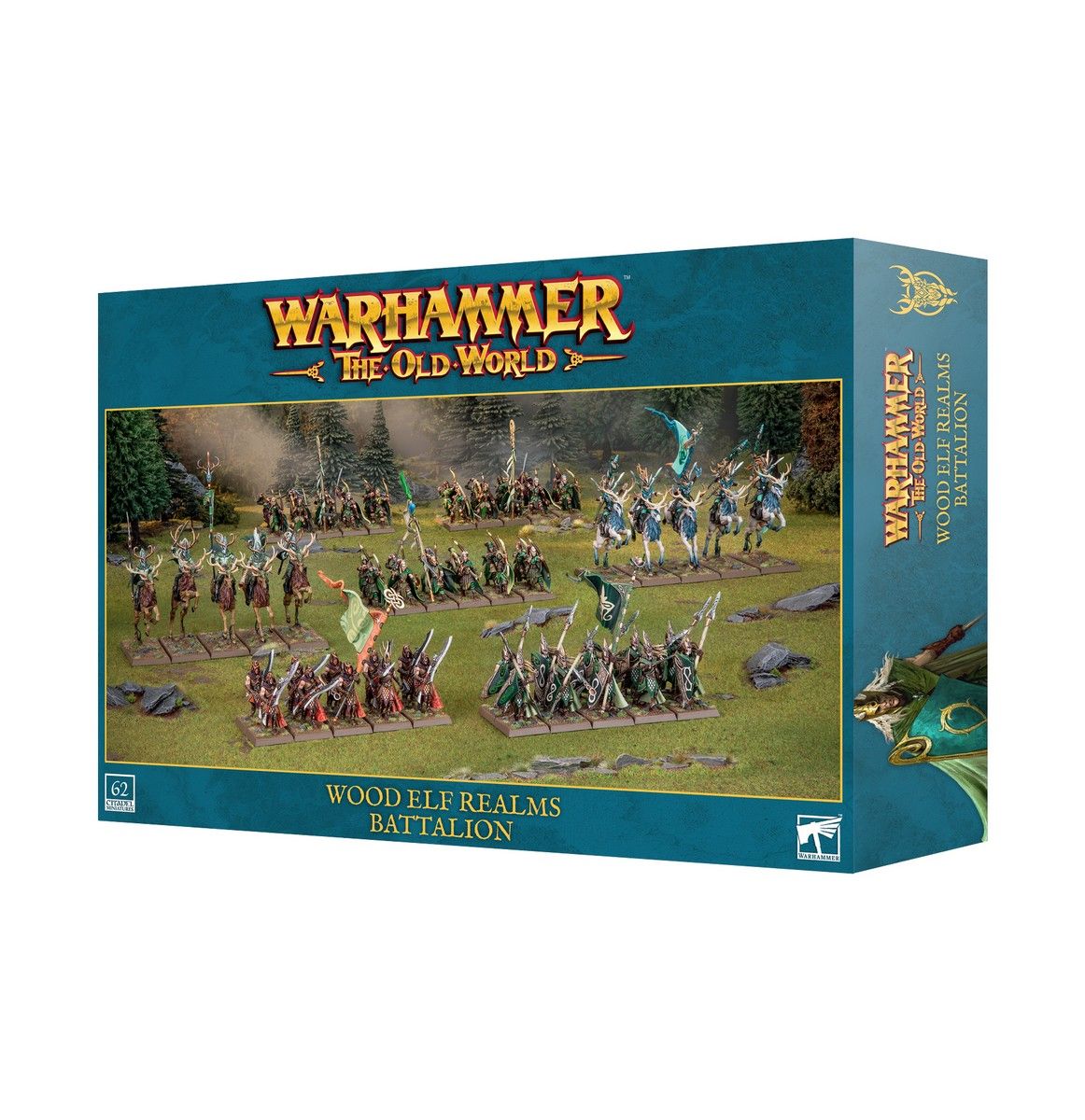
Wood Elves are the army where the base is half the model. Everything about the scheme - the greens, the browns, the one flash of autumn - only works because it sits on a forest floor, and a Glade Guard on bare plastic looks like a man in a green coat. Plan the basing before you open the first pot, and the rest of the army becomes much easier to judge.
The other thing to decide early is which season you are painting. Deep summer Athel Loren is dark green and near-monochrome; autumn is russet, gold and brown with green only in the shadows. Both look superb. Mixing them across a warhost looks like indecision.
The signature look
Layered greens on cloaks and tunics - not one green, three or four - with warm brown leather, bark-toned wood, pale elven skin, and a single autumn colour used sparingly on cloak linings, leaf motifs, plumes and fletchings. Bronze rather than gold for jewellery, usually with a touch of verdigris. Nothing on a Wood Elf should look manufactured.
The forest greens
The vivid Athel Loren green, for cloaks and tunics:
- Basecoat Caliban Green, two thin coats.
- Shade Biel-Tan Green in the recesses, or Agrax Earthshade if you want the shadows warmer and more earthy.
- Layer Warpstone Glow across the raised folds.
- Highlight Moot Green on the topmost edges, with a final Nurgling Green catch on characters only.
For a muted, camouflaged green that reads more like a scout than a swordsman, run Deathworld Forest, shade Athonian Camoshade, layer Elysian Green and highlight Ogryn Camo. Loren Forest and Straken Green slot into the same ramp if you want an intermediate step.
The trick is to use both ramps in the same unit. Cloak in the vivid green, tunic in the muted one, hood in a third - Castellan Green works well as the darkest of the three. A rank of archers painted in one flat green looks like a uniform, and these are not soldiers.
Autumn as a spot colour
Cloak linings, leaf ornament, plumes and arrow fletchings carry the warm colour:
- Bright autumn - Skrag Brown, shade Fuegan Orange, layer Troll Slayer Orange, highlight Fire Dragon Bright.
- Deep russet - Mephiston Red, shade Agrax Earthshade, layer Wild Rider Red.
- Gold-leaf - Zamesi Desert, shade Casandora Yellow, layer Flash Gitz Yellow.
Keep it to roughly a tenth of the model. The whole point of the spot colour is that the eye lands on it, and it stops working the moment there are three of them.
Bark, leather and bronze
Wood, bows, staves and Dryad limbs: Dryad Bark, wash Agrax Earthshade, drybrush Gorthor Brown along the grain, then a light pass of Karak Stone on the raised bark. Add a stipple of Nurgling Green in the crevices as moss. Drybrushing is doing nearly all the work on Treemen and Dryads, and they are quick as a result.
Leather, belts and boots: Rhinox Hide, Agrax Earthshade, then Mournfang Brown on the raised edges. Fletchings in Zandri Dust into Ushabti Bone read clearly against the dark green.
Jewellery, torcs and glade banner fittings: Warplock Bronze, Agrax Earthshade, Sycorax Bronze on the edges, and a small amount of Nihilakh Oxide stippled into the recesses. Bronze with verdigris says "grown here" in a way that clean gold never does.
Skin stays pale and cool: Rakarth Flesh, Reikland Fleshshade, up to Pallid Wych Flesh, with Kislev Flesh on the lips and knuckles.
The fast route
Undercoat Wraithbone and let contrast paints do the ramp. Militarum Green over the cloaks, Wyldwood on all the wood and bark, Snakebite Leather on straps and quivers, Gryph-hound Orange on the autumn leaves, Guilliman Flesh on the skin. Then go back with one drybrush of Karak Stone over the bark and one Moot Green edge on the cloaks - two minutes that lift the whole thing off "washed" and onto "painted".
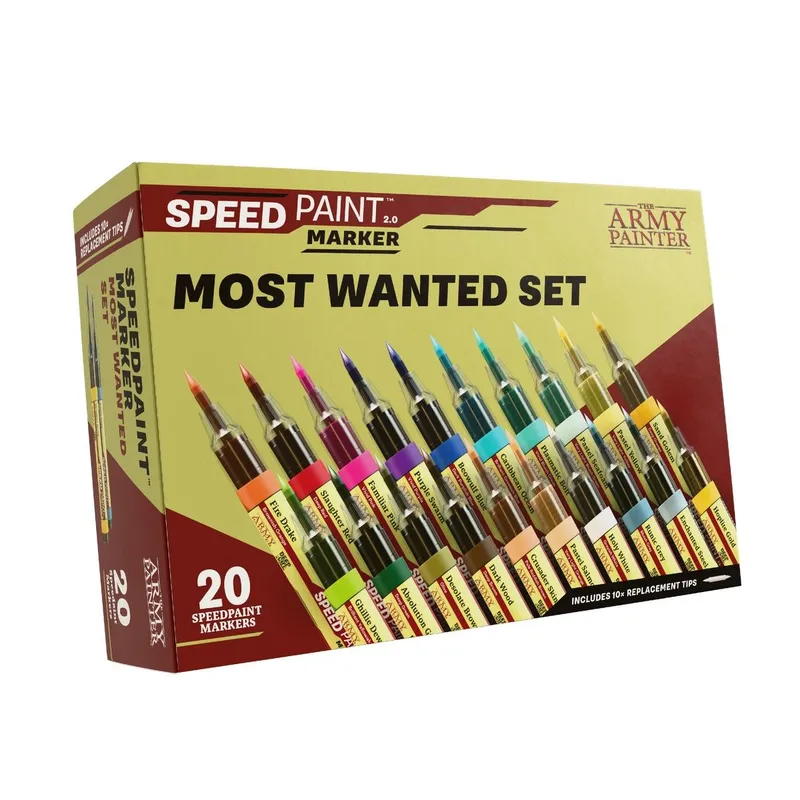
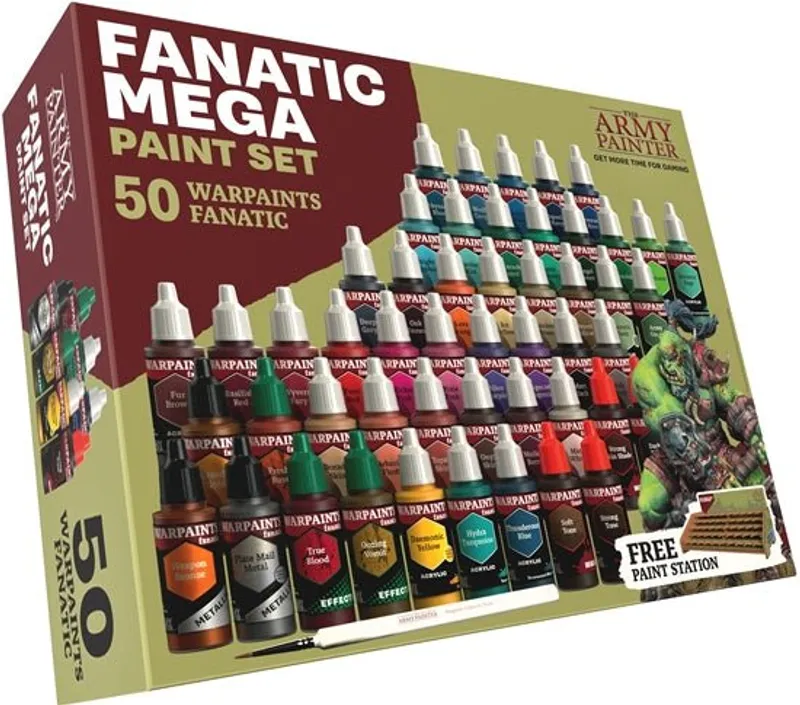
Army Painter shelves cover the same ground with Angel Green, Elf Green, Oak Brown and Lava Orange.
Basing
This is where the army is won. Build up texture paste or fine sand, paint it Rhinox Hide, drybrush Gorthor Brown and then Karak Stone. Add static grass in two tones, a few clumps of dark foliage, and - the detail that sells it - leaf litter, either commercial punched leaves or tiny fragments torn from a dried tea leaf, glued in ones and twos rather than scattered. A couple of exposed roots made from twisted wire or offcuts of sprue, painted with the bark recipe, ties a Treeman's base to a Glade Guard's. The basing guide covers the texture work in more detail.
Tips and common mistakes
- Three greens, not one. The single most common Wood Elf mistake is painting cloak, tunic and base in the same pot. Value separation is what makes the model readable.
- Do not let the base go green too. A green model on a green base disappears. Keep the ground brown and let the grass be an accent.
- Bronze, not gold. Bright gold jewellery pulls these models towards a High Elf palette and away from the forest.
- Ration the orange. One lining, one plume, the fletchings. That is the whole allowance.
- Matt varnish everything. Any sheen on greens and browns reads as plastic immediately.
Try the balance of forest green and autumn in the scheme generator before you commit the warhost.