


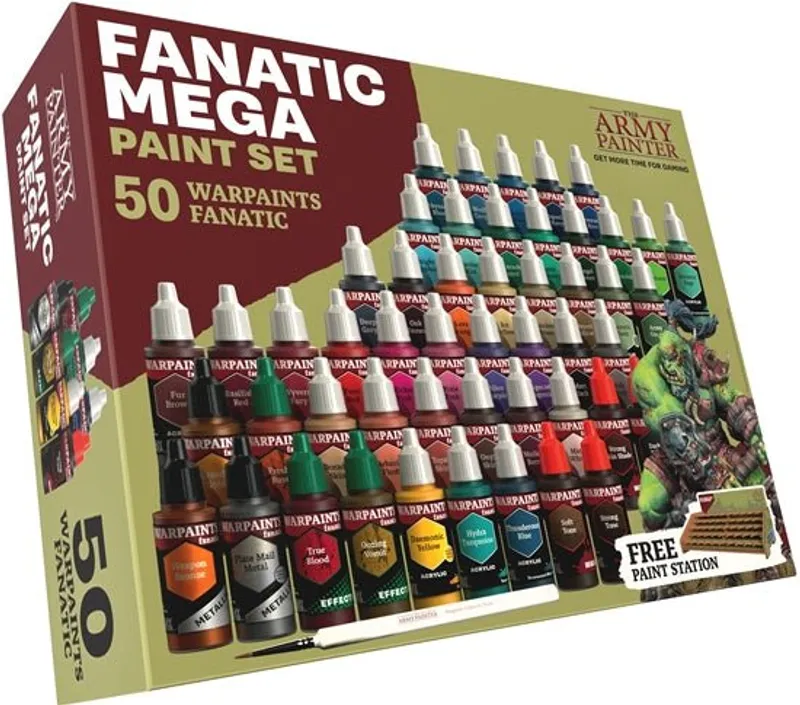
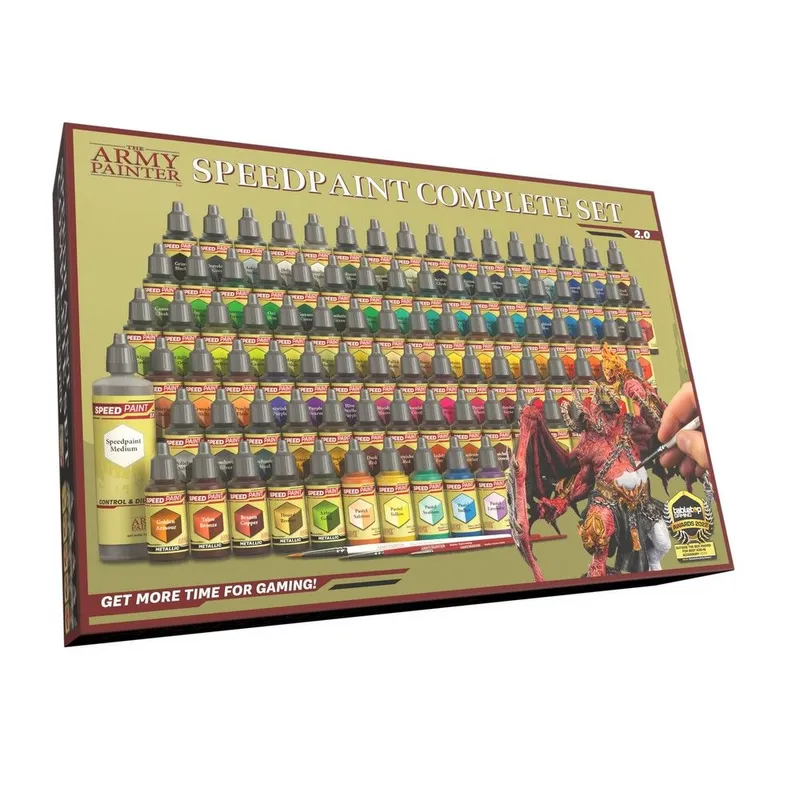
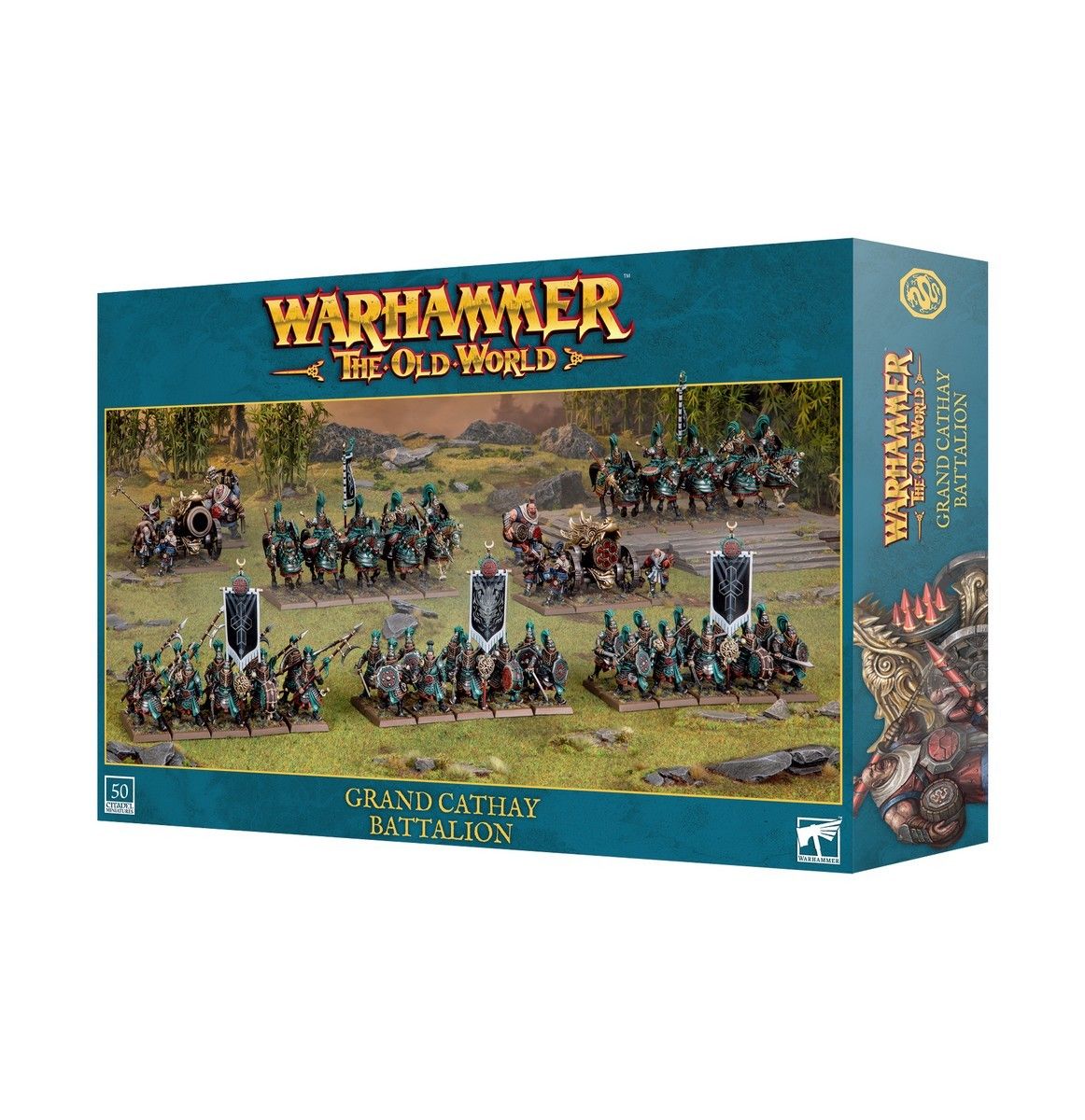
Grand Cathay is the newest and smallest of the Old World ranges, which makes it an unusually pleasant place to start. There are few enough kits that you can hold the whole scheme in your head, the armour is made of large lacquered plates that take a clean highlight, and the palette is only three colours doing very distinct jobs.
Those three are jade, gold and red, and the reason the army looks the way it does is that they are not blended into one another. The jade is a hard surface, the gold is line work, and the red is fabric. Keep those textures separate and the models look lacquered rather than merely green.
The signature look
Deep jade-green plate with a sharp, almost white highlight along the top of each lamellar scale; warm imperial gold on rims, studs, dragon motifs and helm crests; and celestial red on banners, sashes, silks and lacquered wood. Skin is warm, cloth beneath the armour is bone or cream, and the whole model finishes gloss on the armour and matt everywhere else.
The jade lacquer
Undercoat black. Lacquer is a dark, saturated surface and it needs a dark start.
- Basecoat Incubi Darkness, two thin coats. It will look almost black in the pot and correct on the model.
- Shade Nuln Oil in the joins between lamellar plates, or Coelia Greenshade if you want the shadow to stay green rather than neutral.
- Layer Kabalite Green over each plate, leaving the base colour showing as a border around every scale.
- Layer Sybarite Green on the upper half of each plate, a smaller area again.
- Edge-highlight Gauss Blaster Green along the top edge of each scale, and put a very short catch of White Scar on the corners of shoulder plates and helm crests.
Then gloss varnish the armour and nothing else. This is the step most people skip and it is the one that turns green paint into lacquer. The edge highlighting guide covers keeping that step-five line thin enough to read as a reflection.
For a cooler, more oceanic jade, run the same structure through Stegadon Scale Green, Sotek Green, Temple Guard Blue and Baharroth Blue. It suits the Celestial Dragon Guard and the more ethereal units.
The fast route
Undercoat Wraithbone, give the plate one coat of Terradon Turquoise contrast, and edge it with Sybarite Green. Two steps, and the contrast pooling in the lamellar joins does the shading for free. Gloss it and it stands up next to the layered version at tabletop distance. Akhelian Green contrast gives a deeper, bluer result over the same undercoat.
Army Painter shelves cover this with Angel Green and Crystal Blue; Vallejo painters can build the ramp from Emerald and Turquoise up to Pale Blue.
Imperial gold
Cathayan gold should be warm, not brassy. Basecoat Retributor Armour, shade Reikland Fleshshade rather than a brown wash - it keeps the metal glowing - then layer Auric Armour Gold on the raised areas and finish with the smallest possible catch of Stormhost Silver. On the larger gold surfaces of the war machines and the Dragon-blooded characters, drop in Balthasar Gold shaded Agrax Earthshade for a deeper, older-looking metal, and reserve the bright ramp for edges and ornament.
Weapon blades and armour beneath the lacquer: Leadbelcher, Nuln Oil, Ironbreaker on the edges, a fine line of Runefang Steel along the cutting edge.
Celestial reds and silks
Banners, sashes, lacquered hafts and shield fields:
- Basecoat Mephiston Red.
- Shade Carroburg Crimson - a crimson wash keeps the red rich, where a brown one drags it towards rust.
- Layer Evil Sunz Scarlet across the raised cloth.
- Highlight Wild Rider Red on the topmost folds and the leading edge of a banner.
Blood Angels Red or Flesh Tearers Red over Wraithbone does the same in one coat, which is worth it on the large banner surfaces this army carries. Undershirts, sleeves and rope in Zandri Dust shaded Agrax Earthshade and layered Ushabti Bone give the red something quiet to sit against.
Skin is warm: Bugman's Glow, Reikland Fleshshade, Cadian Fleshtone, Kislev Flesh on the brow and nose. Hair and beards in Abaddon Black drybrushed Eshin Grey, or Rhinox Hide into Mournfang Brown.
The jade constructs
Terracotta sentinels and the animated jade war machines want stone rather than lacquer, and they are a different recipe: basecoat Incubi Darkness, drybrush Kabalite Green and then Nurgling Green all over rather than layering panel by panel, then stipple Nihilakh Oxide into the recesses and along the joints. Leave them matt. The contrast between a matt, chalky jade construct and the gloss lacquer of the warriors around it is one of the best effects in the range, and it costs nothing but a change of varnish.
Tips and common mistakes
- Gloss the armour, matt everything else. This is the single decision that makes Cathay look like Cathay. One finish across the whole model throws the effect away.
- Start jade from a dark base. Painting Kabalite Green straight over grey gives you a flat mint colour with nowhere to shade to.
- Leave a border of the base colour around every scale. Layering right to the edge of each plate loses the lamellar texture that the sculpts are built around.
- Keep the gold as line work. Large gold areas fight the jade for attention; gold should trace the design, not fill it.
- Ration the red to fabric. Red on armour panels turns the scheme muddy - the whole palette depends on red meaning cloth.
Try the balance of jade, gold and red in the scheme generator before you commit the host.