
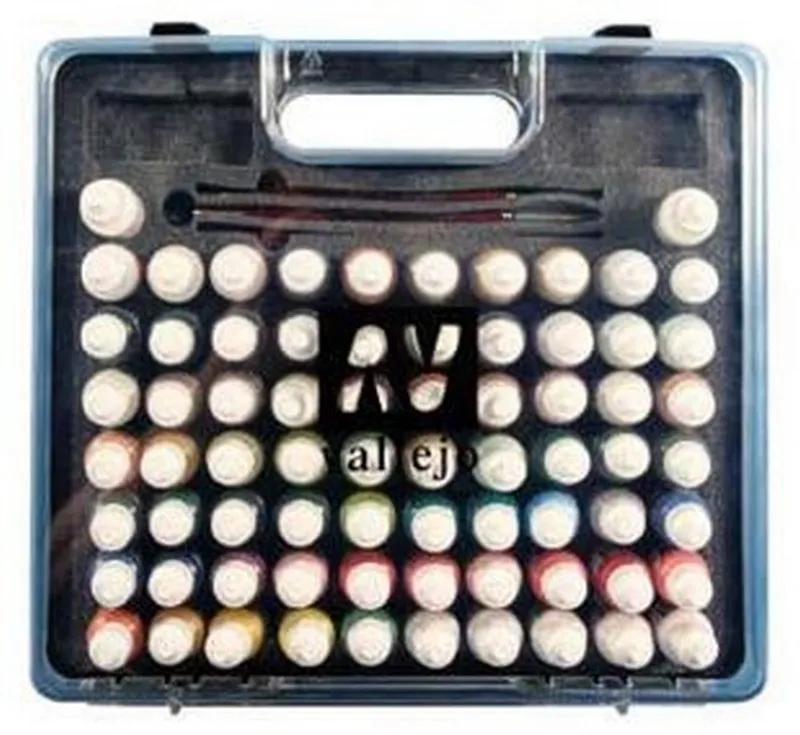

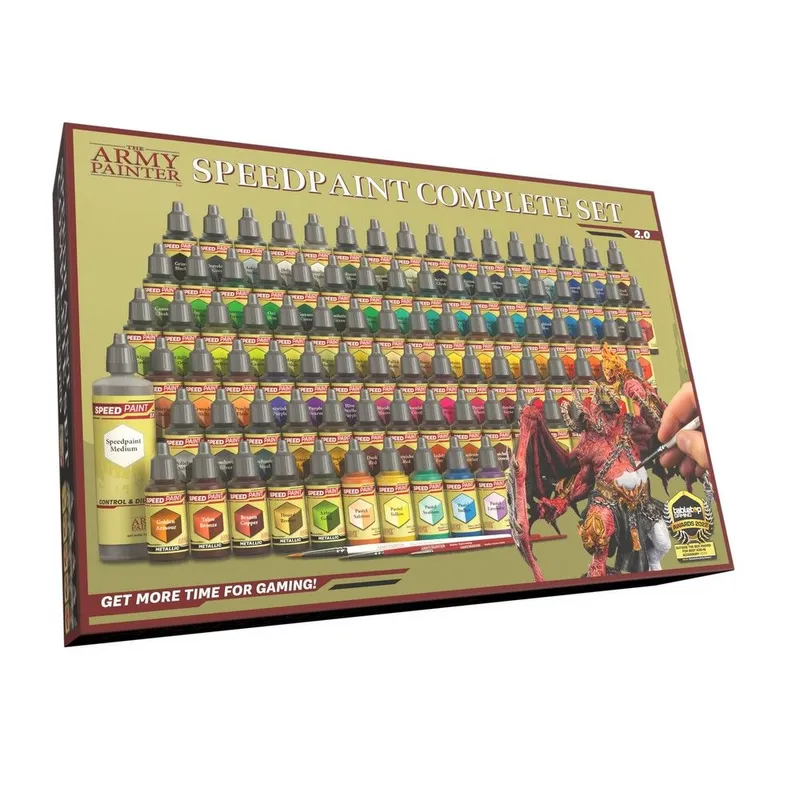


Heresy-era Space Marines are painted differently from their 40k descendants for one reason: the armour is simpler. MkII, MkIII, MkIV, MkV and MkVI plate is made of broad, unbroken surfaces with very little filigree, so there is nowhere for a wash to hide and nothing to distract the eye. Get the flat plates right and the model is finished; rush them and no amount of trim work saves it.
The shared method
Every Legion is painted the same way. Only the colour changes.
- Undercoat black, or grey for a pale livery. Chaos Black from an aerosol, or Vallejo Black through an airbrush, gives you an even surface on plates this large.
- Basecoat in thin coats. Two or three thinned passes beat one thick one - brush texture is the commonest fault on Heresy plate, and it is permanent once it dries.
- Panel-line the recesses. Rather than washing the whole model, run Nuln Oil or Agrax Earthshade into the joins between plates with the tip of a brush. The flats stay clean, the armour gains structure.
- Edge highlight sparingly. One thin line on the hard edges, in a lightened version of the base colour. Legion plate is angular; the edges do all the work.
- Metals. Leadbelcher for weapon casings and bare mechanisms, shaded Nuln Oil and edged Runefang Steel. Trim in Balthasar Gold, shaded Agrax Earthshade and brought up with Runelord Brass. Army Painter Plate Mail Metal and Greedy Gold are direct substitutes.
- Weather it back. Sponge Rhinox Hide chips on the leading edges, dot a few with Leadbelcher, then dust the boots and greaves with a Karak Stone drybrush.
Then pick your Legion
The site holds all eighteen Heresy liveries as presets - browse them on the Horus Heresy schemes page. Several of them will surprise you if 40k is your reference point:
- Death Guard wear bone-white, not rot. Zandri Dust, shaded Seraphim Sepia, layered Ushabti Bone and edged Screaming Skull, with olive plates in Castellan Green highlighted Elysian Green.
- World Eaters are the War Hounds: white armour over Corax White and White Scar, with deep blue pauldrons in Macragge Blue, shaded Nuln Oil, edged Calgar Blue.
- Thousand Sons are crimson and gold, not blue. Mephiston Red, shaded Carroburg Crimson, layered Evil Sunz Scarlet, with Retributor Armour trim.
- Word Bearers start the Heresy in undyed grey and only later take the crimson.
- Sons of Horus have no 40k equivalent at all: Incubi Darkness basecoat, Sons of Horus Green over it, Temple Guard Blue on the sharpest edges.
How long it takes
This is a batch-painting army, and it is quick per model once the colour is settled - a squad of twenty moves through each step in one sitting. What costs time is the plastic-and-resin mix: Heresy ranges lean heavily on resin for characters, Terminators and heavy support, so budget an evening for washing, mould lines and pinning before a brush touches anything. Uniformity is the goal, so decide your recipe on one test model and then never change it mid-army.
Tips and common mistakes
- Thin your basecoat. Flat plates show every ridge of thick paint at arm's length.
- Line, don't drown. An all-over wash on MkIV armour leaves tide marks across the flats.
- Transfers over freehand. Legion iconography is repeated hundreds of times; decals set with gloss and matt varnish are faster and neater than painting it twice.
- Weather to a consistent level. A squad where one model is filthy and the rest are clean reads as unfinished, not as a campaign force.
When you are happy with the palette, open this scheme in the generator to swap paints between brands or dial in your own Legion's colour.