
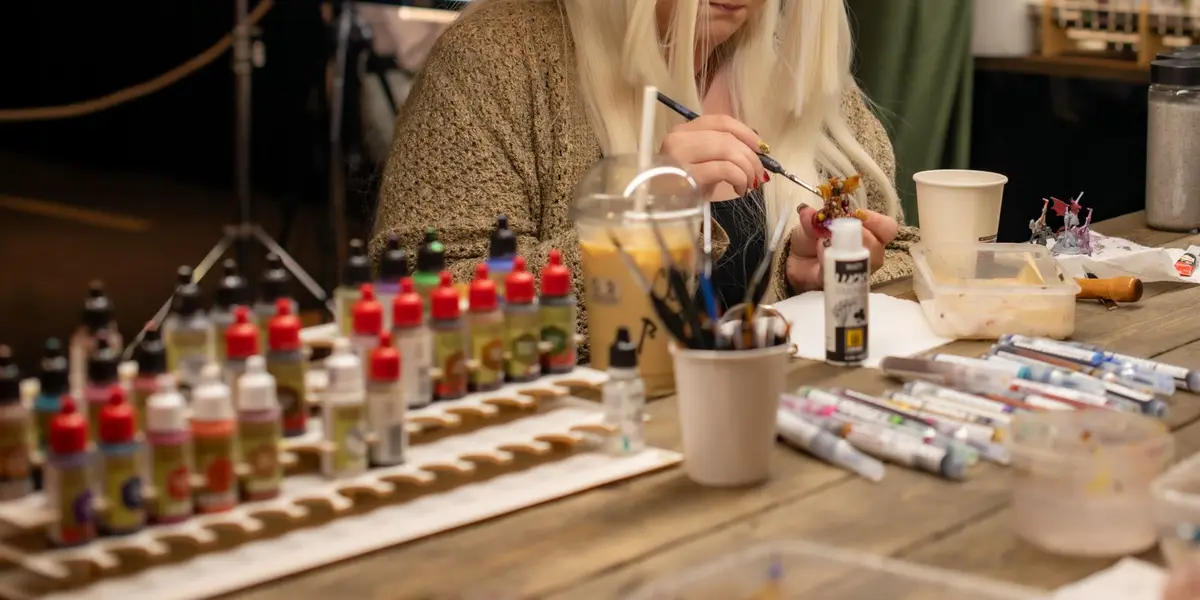
Wet blending is how you get a smooth, seamless transition from one colour to another - the gradient down a cloak, a sunset painted onto a banner, or a glowing power sword fading from deep colour to white-hot at the tip. It is the showcase technique of the hobby: the one that separates a competition piece from a table-standard army, and the one that takes the most practice to make look effortless.
The principle is simple even though the execution takes patience: place two colours next to each other on the model while both are still wet, then work the join between them back and forth until the line between them disappears. Nothing about it is complicated in theory. What makes it hard is timing - acrylic paint dries in minutes, and you are racing that clock every time you start a section.
What it is
Instead of building a gradient from many thin, dry layers the way you would for NMM or a long highlight ramp, wet blending merges two (or three) colours while they are physically wet on the model, so the pigments themselves mix at the boundary rather than sitting in separate hard-edged bands. Done well there is no visible line at all - just colour smoothly becoming another colour, the way a sunset does not have a seam between orange and blue.
This is also why it needs different tools to the rest of your painting: acrylics are formulated to dry fast on a normal palette, which is exactly what you don't want here. Everything in this guide is built around fighting that drying time.
When to choose it over the alternatives
- Choose wet blending for large, smooth, organic surfaces where you want a gradient with no visible steps - cloaks, robes, banners, skin, and object-source lighting such as glowing swords, eyes or fire.
- Choose edge highlighting instead for hard, flat-panelled surfaces like armour plates, where a crisp line reads as a real edge catching light rather than a smooth colour change.
- Choose drybrushing instead for texture rather than colour - fur, rope, rubble - where speed matters more than a seamless gradient.
- Choose washes and shades first, in most schemes. A wash still does the fastest, most reliable job of establishing recesses; wet blending is what you do afterwards on the large open surfaces a wash cannot shape on its own.
- Choose non-metallic-metal painting instead of wet blending a metal surface. NMM deliberately wants hard transitions in places - a mirror has a horizon line, not a smooth fade - so trying to wet blend a sword blade usually looks wrong. The two techniques share brush control but want opposite results on a metal edge.
Many showcase models use wet blending on the cloak or cloth and edge highlighting on the armour right next to it, and the contrast between a soft gradient and a hard line is part of what makes both read well. See the techniques guide for how the full set fits together.
What you need
- A wet palette. Close to essential rather than optional - it keeps paint workable far longer than a dry palette or a piece of card, which is the single biggest factor in whether a blend succeeds.
- A medium or flow improver, to extend working time and help the paint move without thinning away its pigment strength.
- A drying retarder, for larger blends where even a wet palette's open time is not quite enough.
- A soft, well-loaded brush, unlike the tight, wiped-almost-dry brush edge highlighting wants - wet blending needs the brush carrying paint, not starved of it.
- Patience for small sections. A whole cloak in one sitting is a recipe for a half-dried, dragging mess; plan the model into patches you can each finish in a couple of minutes.
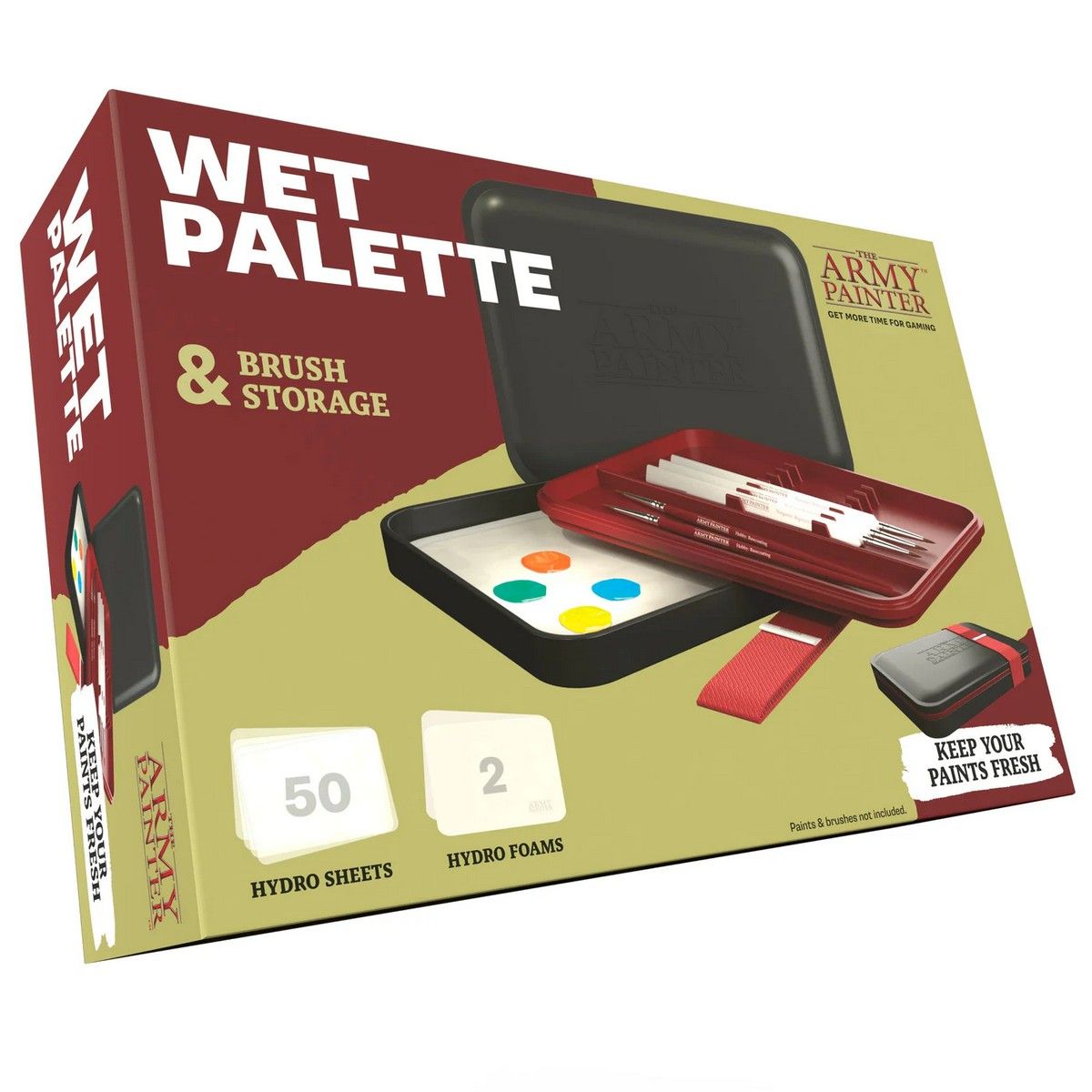
Sealed wet palette, wargamer format
Army Painter
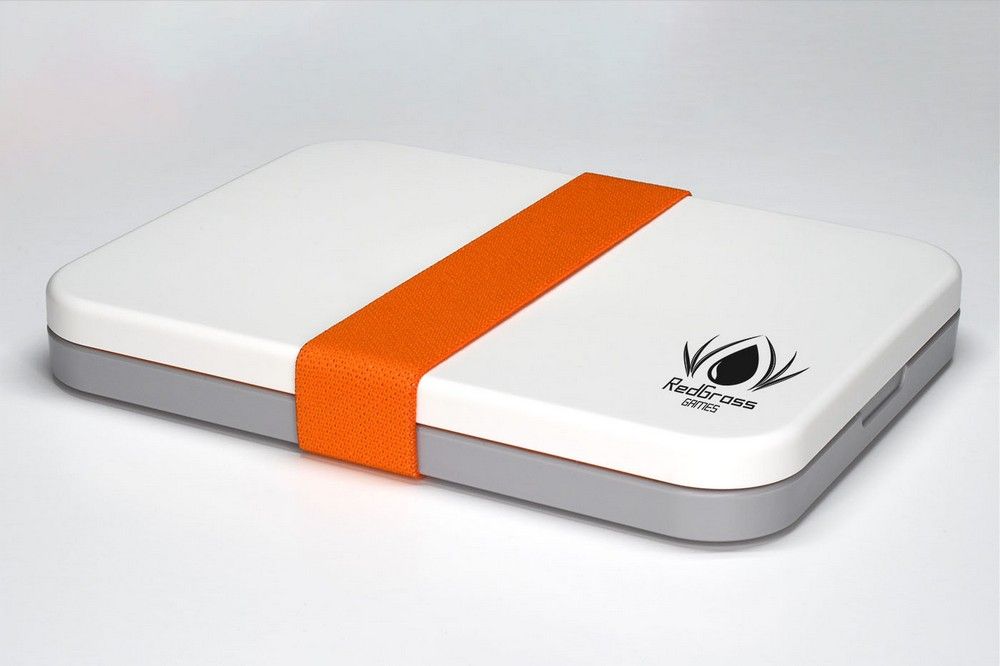
Sealed wet palette, Painter Lite size
Redgrass Games
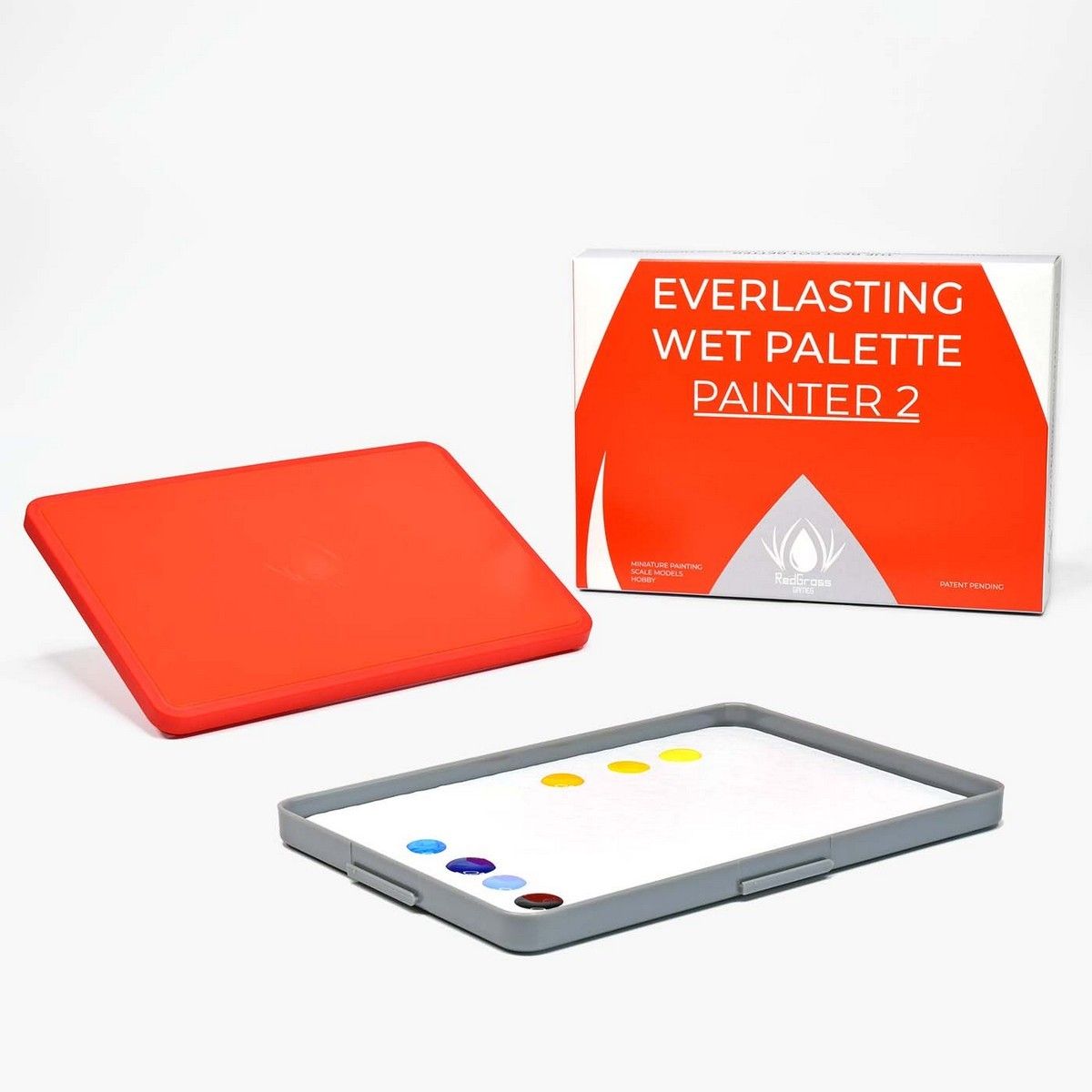
Sealed wet palette, Painter V2
Redgrass Games
Sealed wet palette, 182x132mm work area, tray with lid
Green Stuff World
Citadel (Warhammer Paints)
Vallejo
Reaper
AK Interactive
Step by step
- Prime and basecoat the area first, and let it dry fully. Wet blending happens on top of a finished basecoat, not on bare plastic.
- Set up your wet palette with fresh water and parchment, and lay out your two (or three) colours as separate puddles rather than pre-mixed - you blend them on the model, not on the palette.
- Thin each colour slightly with water, medium or flow improver so it moves easily off the brush without losing pigment strength.
- Plan the section before you start. Decide exactly where the darkest colour sits, where the lightest sits, and roughly where the middle of the transition falls, so you are not deciding mid-blend with paint already drying.
- Place the first, darker colour over its portion of the area with a loaded brush, covering solidly.
- Place the second, lighter colour next to it while the first is still wet, leaving a narrow band where the two meet.
- Feather the join. With a clean, barely-loaded brush, stroke gently back and forth along the boundary, picking up a touch of each colour and dragging it into the other. Short, light strokes - you are nudging the wet paint, not scrubbing it.
- Work outward from the join in both directions if the transition still looks abrupt, pulling each colour a little further into the other's territory.
- Stop before it dries. The moment the surface starts to skin over, further blending drags rather than merges and makes things worse. If you run out of time, let it dry fully and glaze a thin coat of the midtone over the join instead of fighting wet paint that no longer wants to move.
- Assess from a distance once dry, and repeat the whole patch if the transition still shows a step - it is far easier to redo one small section than to patch a visible seam later.
Practice exercise before a real model
Wet blending on your first attempt should not be a model you care about, and it should not be a whole cloak either.
- Prime a flat offcut of sprue or a spare shield and basecoat it in your darker colour.
- Practise placing the lighter colour next to it and feathering the join, timing yourself to see how long you actually have before the paint skins over.
- Repeat five or six times, wiping back to basecoat between attempts, paying attention to how wet the paint needs to be when placed versus when feathered.
- Once a two-colour blend is reliable, add a third colour and practise a longer transition - the extra step is where most beginners' timing breaks down first.
This costs twenty minutes and teaches the one thing reading cannot: how long your specific paints, in your specific room, stay workable.
Cross-brand recipes
Each of these is a base colour, a highlight colour, and where the ramp benefits from it, a third step to blend between them. Building a ramp from a colour that isn't listed here? The scheme generator can build one from any base colour you give it, and the paint matcher finds the nearest match in another range.
Purple-to-pink cloak
A classic showcase transition - deep, saturated purple in the shadowed folds fading up to a pale pink-lilac on the surfaces catching light.
- Citadel: Xereus Purple in the shadows, blended up through Genestealer Purple and Kakophoni Purple to Fulgrim Pink on the raised folds.
- Vallejo: Dark Purple in the shadows, through Purple, up to Light Pink.
- Army Painter: Alien Purple in the shadows, through Hexed Violet, up to Pink Potion.
- AK Interactive: Deep Purple in the shadows, blended towards white on the lit folds.
Citadel (Warhammer Paints)
Citadel (Warhammer Paints)
Citadel (Warhammer Paints)
Vallejo
Vallejo
Army Painter
Red-to-orange fire cloak
The same structure used for painted flame and lava - a dark red base blending up through orange to the brightest point.
- Citadel: Khorne Red at the base, blended through Wazdakka Red up to Troll Slayer Orange at the brightest point.
- Vallejo: Dark Red at the base, through Orange Red, up to Light Orange.
- Army Painter: Dragon Red at the base, through Molten Orange, up to Lava Orange.
- AK Interactive: Blood Red at the base, blended up to Fire Orange.
Citadel (Warhammer Paints)
Citadel (Warhammer Paints)
Vallejo
Vallejo
Army Painter
Army Painter
Blue-to-white object-source lighting
For a glowing sword, eyes or a light source built into the model itself: deep saturated blue at the edges of the glow, blending all the way to near-white at its source. This is the transition non-metallic-metal painting uses for a blade's own reflections too, though there the transition is deliberately harder rather than wet-blended.
- Citadel: Macragge Blue at the edge of the glow, through Baharroth Blue, up to White Scar at the source.
- Vallejo: Dark Blue at the edge, blended up to White at the source.
- Army Painter: Ultramarine Blue at the edge, blended up to Matt White at the source.
- AK Interactive: Dark Blue at the edge, blended up to White at the source.
Citadel (Warhammer Paints)
Citadel (Warhammer Paints)
Vallejo
Vallejo
Army Painter
Army Painter
Common mistakes and fixes
- The paint dries before you can blend it. The most common failure, and the reason a wet palette is close to mandatory. Add a drying retarder in a warm or dry room, and work smaller sections.
- Scrubbing the join instead of feathering it. Heavy back-and-forth strokes drag pigment around and can lift the basecoat underneath. Use a soft, barely-loaded brush and light strokes.
- Trying to blend a whole cloak in one pass. Break large surfaces into patches you can finish before the paint skins over, with joins falling in natural creases.
- Too little paint on the brush. Wet blending wants a loaded brush, unlike edge highlighting's wiped-almost-dry one. A starved brush drags rather than moves paint.
- Colours too far apart in value. A huge jump is hard to blend smoothly in one step; add a third, intermediate colour rather than forcing two extremes together.
- Practising for the first time on the model that matters. The timing here can only be learned by doing it, and doing it wrong costs less on a spare offcut.
Questions people ask
Is it worth buying a wet palette for this? Yes - it is close to essential. A wet palette keeps paint workable for tens of minutes instead of a couple; without one you are fighting the clock on every single section. See the wet palette guide for what to buy or how to make your own.
How do I stop the paint drying mid-blend? Work smaller sections, add a retarder or medium to extend open time, and keep your palette itself damp. In a warm or dry room, all three matter more, not less.
Is this the same as the "wet-on-wet" technique oil painters use? Same principle, different clock. Oil paint can stay workable for hours, so oil painters can wet-blend at a relaxed pace; acrylic dries in minutes, which is why a wet palette, a medium and often a retarder exist - they borrow the oil painter's technique back for a paint that fights it.
Does adding rubbing alcohol to acrylic paint help with blending? No - it does the opposite. Alcohol evaporates quickly, so it makes acrylic dry faster, which is why some airbrush thinners contain it. Blending needs more working time, not less: use a retarder or a drying-retarding medium instead, and see how to thin paints for why alcohol isn't a good thinner for brushwork either.
What is the difference between wet blending and glazing? Glazing builds a gradient from many thin, dry, translucent layers over time; wet blending merges two wet colours in one sitting. Glazing is more forgiving and slower; wet blending is faster once you can do it, but punishes hesitation.
Can I wet blend metal, like a sword blade? Not usually to good effect - see non-metallic-metal painting. Metal wants some hard transitions where a mirror's reflection flips, so a fully smooth wet blend on a blade tends to look like painted plastic rather than steel.
Why does my blend look muddy instead of smooth? Usually too much scrubbing, which physically mixes the pigments into a third, duller colour along the whole join rather than leaving a clean gradient. Lighter feathering strokes, and stopping sooner, both help.
Wet palettes for blending
Wet blending is far easier with a wet palette keeping your paint workable.
We earn a small commission from qualifying purchases at no extra cost to you.