
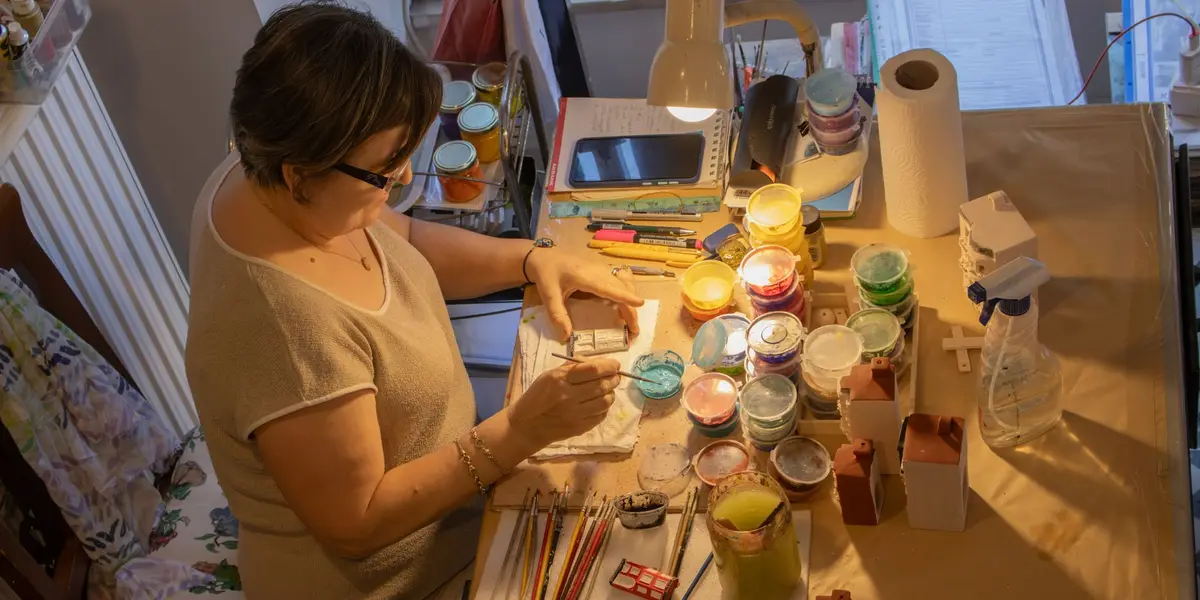
A wash and a shade are the same thing: a thin, dark, free-flowing paint that runs into the recesses of a model and pools there, adding depth, definition and shadow in one pass. If you only learn one miniature-painting technique, make it this one - it is the fastest way to make a flat basecoat look painted, and it does most of the visible work on metal, fur, cloth and anything with fine detail.
It is also the technique most beginners get half right. The idea - "paint goes in the cracks" - takes thirty seconds to understand. Getting a clean result every time, rather than a tidemark ring on the one flat panel you needed to stay clean, takes a bit more care. This guide covers what a wash actually is, when to reach for one instead of a glaze or a drybrush, step-by-step application, and cross-brand recipes for the jobs a wash is asked to do.
What a wash actually is
A wash is ordinary pigment carried in a thin, free-flowing medium with a much higher liquid-to-pigment ratio than a basecoat paint. That thin medium has low surface tension, so instead of sitting where you put it, it runs downhill and pools wherever the model's surface dips - a panel line, the base of a fold, the gap between two bolts. As the water evaporates, the pigment that was carried into the recess stays there, concentrated, while the flat surfaces the paint ran off carry almost none. The result reads as shadow because it is shadow: darker paint sitting where light would struggle to reach.
Most commercial shades are formulated to dry matte, to resist being dragged back out of the recess when you paint over them - which is what lets you highlight straight over a dried wash.
Wash vs shade vs glaze vs contrast paint
These are all thin paint applied in a similar way, but they do different jobs:
- A wash and a shade are the same thing. "Wash" is the generic term; "Shade" is Citadel's name for its own range. An ink is close enough to use the same way - usually more concentrated and glossier.
- A glaze shifts colour rather than shading a recess. It is spread evenly over a whole area instead of being encouraged to pool, and it is the tool behind non-metallic-metal-painting and wet blending - a wash chases the model's geometry, a glaze ignores it.
- A contrast-style paint (Citadel Contrast, Army Painter Speedpaint) tries to do a wash's shading and a basecoat's coverage in one coat over white or grey primer. It is a different chemistry, not just a thinner wash, and it is thinned with its own medium rather than water - see how to thin paints and our Contrast paints buying guide.
- Drybrushing is the opposite instinct - almost no medium, catching only the raised edges. Many schemes wash the recesses, then drybrush the raised detail straight afterwards - see drybrushing.
All-over or targeted - which to use
- All-over wash - flood the whole area and let it settle. Fast, and it suits anything textured: fur, rope, chainmail, rubble bases, infantry hordes painted at speed. It is also the usual finish over a drybrushed rock or gravel base - see basing miniatures.
- Targeted wash - load the brush lightly and place paint only into panel lines and recesses, letting the model's own geometry pull it along. This is what clean armour and large flat plates want, because an all-over flood leaves a visible tint on the flat too.
What you need
- A wash or shade matched to the job - warm for warm colours, cool for cool ones, covered in the recipes below.
- A detail brush with a good point for targeted work, kept separate from your basecoating brushes.
- An old, cheap brush, barely damp, for wicking excess pooling off a flat area before it dries.
- Kitchen roll to dab the wicking brush on between passes.
- A wet palette if letting a wash down further with water or a medium - it stops a thinned puddle skinning over before you have used it.
- Our paint matcher tool, if you already own a wash and want to check what it pairs with.
Step by step: applying a wash
- Basecoat first, and let it dry completely. A wash needs a finished surface to run across; bare plastic or resin absorbs it unevenly.
- Decide all-over or targeted before you load the brush - it changes how much paint you pick up and how you move.
- All-over: load the brush fully and flow the wash across the whole area, letting it find its own way into every recess. Targeted: load lightly and touch the tip to the recess itself - a panel line, the base of a fold, the shadow side of a buckle - and let capillary action carry it along the line.
- Watch where it collects. A wash keeps moving for a few seconds after you apply it - let it settle before deciding whether it needs correcting.
- Wick away anything pooled where you did not want it, using the barely-damp old brush before it starts to dry. Touch it to the puddle and let capillary action pull the excess in, rather than scrubbing.
- Let it dry fully - longer than a basecoat. The higher water content takes longer to evaporate, and disturbing it early drags pigment out of the recess.
- Re-establish anything the wash dulled. A light touch back with the highlight colour, or a fresh pass of edge highlighting, brings a flattened edge back.
Citadel (Warhammer Paints)
Citadel (Warhammer Paints)
Citadel (Warhammer Paints)
Citadel (Warhammer Paints)
Practice exercise: the pooling and tidemark test
This takes five minutes and shows exactly how much wash is too much, before you find out on a model.
- Paint three identical swatches of the same base colour on a spare sprue or piece of card - a flat area, no recesses needed.
- Apply the wash three ways: one flooded and left alone, one flooded and wicked back after ten seconds, one applied sparingly with just the brush tip.
- Compare once dry. The untouched swatch should show a visible ring where the puddle's edge dried last - a tidemark, the single commonest wash fault. The wicked swatch should dry even, and the sparing one should barely show - exactly the point on a real model: the recess does the work, not the flat.
Recipes
All-over wash for texture and hordes
A single, all-purpose brown-black shade, flooded over the whole model - the fastest legitimate way to add depth to fur, rope, gravel bases and any unit painted at tabletop speed, in the same spirit as slapchop.
- Citadel: Agrax Earthshade, neat.
- Vallejo: Sepia Wash, the same way.
- Army Painter: Strong Tone - the "dunk the whole model" wash from the Quickshade system, built for exactly this job.
- AK Interactive: Dark Wash, from the range built for wargames miniatures.
Army Painter
AK Interactive
Citadel (Warhammer Paints)
Targeted wash for clean armour
A cooler, blacker shade, let down with a medium so it moves slowly and stays put, applied only into panel lines and recesses.
- Citadel: Nuln Oil, thinned with Lahmian Medium to slow it down.
- Vallejo: Black Wash, let down with Vallejo Glaze Medium - 60ml for more working time.
- Army Painter: Dark Tone, cut with Wash Medium.
- AK Interactive: Black Wash, extended with Glaze Medium.
Army Painter
AK Interactive
Army Painter
AK Interactive
Vallejo
A warm shade and a cool shade
Matching the wash's temperature to what it sits over is the difference between a shade that reads as shadow and one that reads as a stain. Warm colours - bone, fur, gold, skin, red - want a warm brown wash; cool colours - blue, steel, white, purple - want a cool blue-black one.
Warm (bone, fur, warm metals, skin): Seraphim Sepia or Reikland Fleshshade (Citadel); Sepia Wash or Flesh Wash (Vallejo); Sepia Tone or Dark Skin Shade (Army Painter).
Cool (blue armour, steel, white, purple): Drakenhof Nightshade (Citadel); Blue Wash (Vallejo); Blue Tone or Dark Blue Tone (Army Painter); Deep Blue Wash or Blue Grey Wash (AK Interactive).
For eyes, gems and lenses, reach for a gloss shade instead of a matte one - Agrax Earthshade Gloss and Reikland Fleshshade Gloss pool the same way but dry shiny, reading as a wet reflective surface rather than a shadow.
Citadel (Warhammer Paints)
Army Painter
Army Painter
AK Interactive
Common mistakes and fixes
- Tidemarks. A ring of stronger colour on a flat area, left where the edge of a puddle dried last. Wick excess wash away with a barely-damp brush within ten to twenty seconds, before it skins over - or apply less on flat surfaces in the first place.
- Coffee-staining. An even brown tint instead of shadow in the recesses, usually from a wash thinned too far with plain water. Use the shade closer to bottle strength, or a proper commercial shade rather than a heavily diluted basecoat colour.
- Chalky bloom. A dull, powdery look once dry, most often from breaking down a ready-made wash with too much water. Thin with the matching medium instead when you need more working time - see how to thin paints.
- Applying over a wet or unfinished basecoat. The wash drags the basecoat around instead of sitting on top. Let it cure fully first.
- Flattened highlights. An all-over wash dulls any highlighting done before it. Wash before you highlight, or plan a light pass back over the highlight afterwards - see edge highlighting.
- Disturbing it while wet. Touching a model before the wash has set drags pigment out of the recess and smears it.
Questions people ask
What is the difference between a wash and a shade? Nothing - they are the same product. "Shade" is Citadel's brand name for its own washes; every other maker calls the same thing a wash.
Does a wash replace highlighting? No. A wash adds shadow in the recesses and does nothing to the raised, lit areas. Most schemes still finish with highlights or a drybrush over the top - see drybrushing for the fastest version of that pairing.
Can I make my own wash? Yes - thin any paint heavily with water and a touch of flow-improving medium and it will behave like a wash, though a ready-made one is more predictable. See how to thin paints for the ratios.
Why did my wash dry with a hard ring instead of soft shadow? That is a tidemark - too much wash sat too long on a flat area and dried from the outside in. Wick it back with a dry brush next time, within the first few seconds.
Do I need a different wash for every colour? Not every colour, but at least a warm one and a cool one. A brown wash over blue armour reads as dirt rather than shadow; matching temperature to the base colour is what makes a wash disappear into the model instead of sitting on top of it.
Washes and shades
A small set of washes (a black, a brown and a flesh tone) covers almost everything.
We earn a small commission from qualifying purchases at no extra cost to you.