
Almost every common beginner problem with acrylic miniature paint - clogged detail, a chalky finish, visible brush strokes, patchy coverage - traces back to one thing: paint applied too thick. Learning to thin your miniature paint properly, whether it is Citadel, Vallejo, Army Painter or another hobby acrylic, is the highest-leverage habit in the hobby, it costs nothing, and it underpins every other technique on this site.
This guide covers why miniature paint needs thinning at all, the different consistencies different jobs actually want, step-by-step mixing on a palette, two exercises worth doing before you touch a model, and consistency recipes across Citadel, Vallejo, Army Painter and AK Interactive, so it doesn't matter which range is in your drawer.
Why thin miniature paint at all
Acrylic miniature paint straight from the pot - Citadel, Vallejo, Army Painter or any other hobby acrylic - is formulated to survive on a shelf for years, not to flow off a brush onto a 28mm model. Applied neat it dries fast, sits proud as a visible ridge along every brushstroke, and fills the fine detail that makes a miniature worth painting in the first place - a raised rivet or an engraved panel line simply disappears under a thick coat. Thinning adds liquid to the paint so it flows smoothly, self-levels slightly as it dries, and lays down as a thin film that follows the surface rather than sitting on top of it.
Metallic paints are a partial exception: they carry solid metal flake suspended in the medium, and too much thinning - especially with plain water - can separate that flake from the carrier rather than just diluting it evenly. They still need thinning, just more carefully, and with the range's own medium rather than water where possible.
The four consistencies - and which job wants which
Almost every technique on this site is really the same skill - thinned paint applied with intent - at a different water-to-pigment ratio:
- Basecoat consistency - like milk. It should flow off the brush and self-level slightly but still cover in two thin coats. This is the everyday consistency for filling in a colour.
- Layer or highlight consistency - a little thinner than a basecoat, so each pass is closer to translucent and several stack into a smooth gradient instead of a hard line. This is what edge highlighting and wet blending both build on.
- Glaze consistency - close to watery, applied in several passes to shift a colour or unify a finished area without hiding what's underneath. This is the tool behind non-metallic-metal-painting, and the speed techniques in slapchop lean on paint this thin even more than ordinary layering does.
- Wash consistency - the thinnest of all, formulated (in a ready-made product) to flow and pool into recesses rather than cover evenly. Covered in full in washes and shades.
The one deliberate exception is drybrushing, which wants almost no medium in the mix at all - excess paint is wiped from the brush until it only catches raised, textured detail. See drybrushing for why that one goes the other way. Texture and basing pastes are another exception - see basing miniatures - they want body, not flow, to hold their shape.
What you need
- The paint you're thinning, and a palette to thin it on - a wet palette if you want a mixed batch to stay workable for more than a few minutes.
- Water, for most everyday thinning.
- A thinning medium or flow improver for metallics, large smooth areas, and any time you need more open working time than water gives you.
- A dropper, old brush or cocktail stick for adding liquid a little at a time rather than by guesswork.
- Our paint matcher tool, if you want to check what a specific pot pairs with before you thin it.
Citadel (Warhammer Paints)
Reaper
Army Painter
Step by step: thinning on a palette
- Put a small blob of paint on the palette - never thin in the pot. A diluted pot cannot be undone, and stored liquid paint is more prone to spoiling.
- Add your chosen liquid a drop at a time, mixing it fully into the paint before adding more.
- Mix thoroughly. An unmixed streak of neat paint through a thinned batch behaves like neat paint the moment your brush finds it.
- Test-stroke on a spare sprue or scrap of card, never straight onto the model. Check for ridging, patchiness or see-through coverage before you commit.
- Match it to the job - basecoat, layer, glaze or wash - using the consistency guide above.
- Reload often. Thinned paint dries in the well and on the brush faster than paint straight from the pot; top it up with a fresh drop of liquid the moment it starts to drag rather than push on with paint that has half-dried.
Practice exercises
Two thin coats versus one thick coat. Paint one half of a spare sprue with a single thick coat of any colour, and the other half with two thin coats, letting the first dry fully before the second. Compare them after both are completely dry: the thick half will usually show brush-stroke ridges and softened, partly filled detail; the two-thin-coat half should look smooth, even, and keep every line crisp. This is the most repeated piece of advice in the hobby because doing it once, side by side, is what makes it stick.
The consistency ladder. Take one pot and, on a palette, thin four separate small blobs of it to basecoat, layer, glaze and wash consistency in turn. Drag a brush through each: basecoat should leave a smooth, opaque line; layer should be a shade more translucent and level itself slightly; glaze should let the palette colour show through; wash should run on its own rather than sit where you dragged it. Doing this once with a paint you know well calibrates your eye for every pot afterwards.
Recipes: consistency targets by brand
The same four consistencies, using each range's own black as the example paint and its own medium where thinning goes beyond water.
- Citadel: Abaddon Black, thinned with water for basecoat and layer work; Lahmian Medium in place of some of that water for a glaze that needs to stay workable longer, or to extend a shade without breaking it down. For premixed washes rather than building your own, see washes and shades.
- Vallejo: Black, thinned with water day to day; Vallejo Thinner - 60ml for an even, predictable dilution; Vallejo Glaze Medium - 60ml when a glaze needs to hold its position rather than run.
- Army Painter: Matt Black, thinned with water for basecoats; Warpaints Mixing Medium for glazing and for extending a Quickshade wash without weakening its flow.
- AK Interactive: Black, thinned with water for basecoats; Glaze Medium for glazing and for letting down their acrylic washes.
Citadel (Warhammer Paints)
Vallejo
Army Painter
AK Interactive
Two special cases worth knowing:
- Contrast-style paints (Citadel Contrast, Army Painter Speedpaint) are not thinned like ordinary acrylics. Cutting them with water breaks the medium that makes them self-shade in one coat; if they need thinning at all, use Contrast Medium or Speedpaint Medium instead - see our Contrast paints guide for how they differ from ordinary acrylics.
- Retarder, added in a small amount alongside your usual thinner, slows drying rather than diluting the paint - useful for wet blending or NMM glazing in a warm room where paint is skinning over before you can work it. Both Vallejo's Retarder and AK Interactive's Retarder do this.
Citadel (Warhammer Paints)
Vallejo
AK Interactive
AK Interactive
Vallejo
Common mistakes and fixes
- Thinning in the pot. It cannot be undone, it invites contamination, and a whole pot of over-thinned paint is a bigger loss than one bad palette blob. Always thin on the palette.
- Chalky, matte bloom. Usually too much water breaking down the paint's own binder. Cut the ratio back, or replace some of the water with the range's own medium.
- Patchy coverage from an over-thinned basecoat. If two coats aren't covering, the mix is too thin for the job - thicken it slightly rather than reaching for a third or fourth coat.
- Metallic paint streaking or separating. Water alone can split the metal flake out of the carrier. Thin metallics with a proper medium, or thin them less than you would a normal colour.
- Paint drying on the brush mid-session. A normal palette dries out fast once paint is thinned. A wet palette is the standard fix and keeps a mixed batch workable for hours rather than minutes.
- One thick coat instead of two thin ones. Still the single commonest cause of clogged detail - see the practice exercise above if you haven't run it yet.
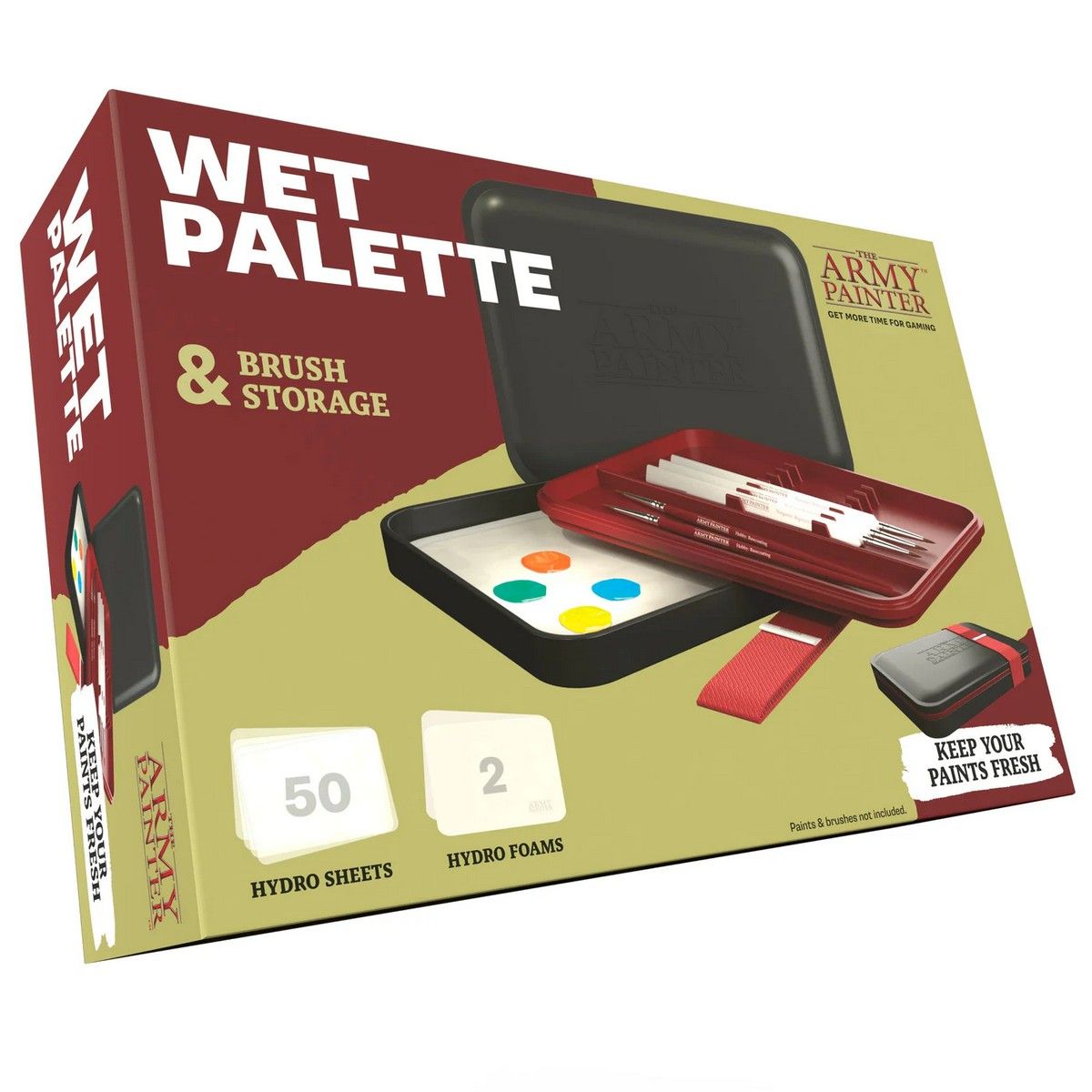
Sealed wet palette, wargamer format
Army Painter
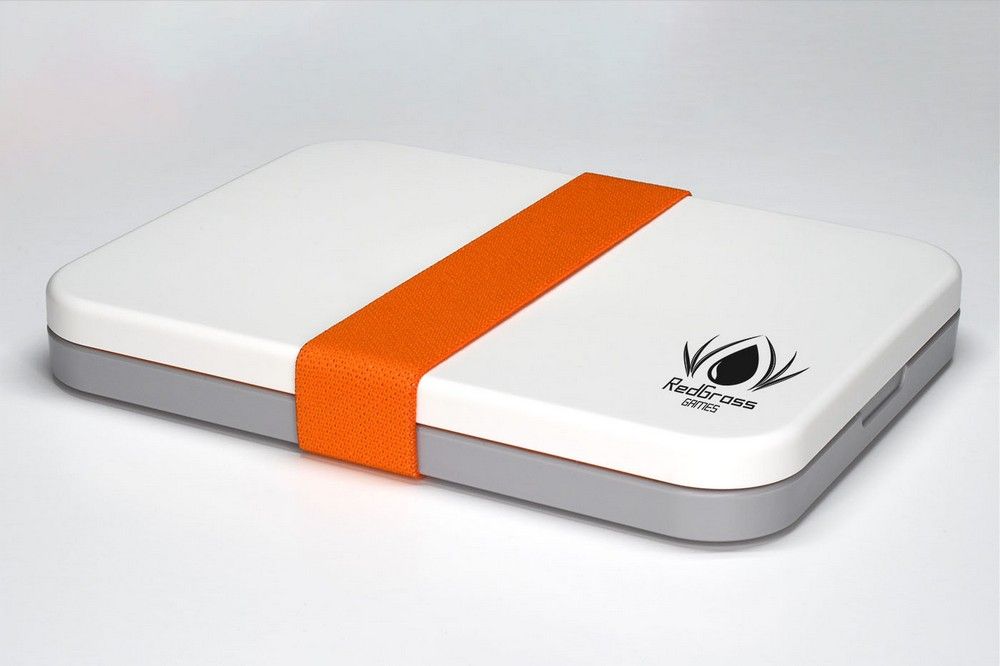
Sealed wet palette, Painter Lite size
Redgrass Games
Sealed wet palette, 182x132mm work area, tray with lid
Green Stuff World
Questions people ask
What's the right consistency for ordinary painting? Milk, not cream. It should flow off the brush and self-level slightly but still cover in two thin coats. If you can see straight through it, it's a glaze or wash consistency rather than a basecoat.
Should I thin with water or a medium? Water for most everyday jobs. Reach for a medium when you need the paint to hold its position longer (a controlled glaze), when you're thinning a metallic, or when you're extending a wash rather than diluting it with plain water.
Can I thin miniature paint with rubbing alcohol or paint thinner? Stick to water or the range's own medium. Isopropyl alcohol is sometimes used to strip paint off a model, but it can curdle some acrylics and is not what any maker formulates its paint to be thinned with. Household or automotive paint thinner is the wrong product entirely for a hobby acrylic.
Do Contrast and Speedpaint paints need thinning? Rarely, and never with water beyond a token amount - water breaks the mechanism that makes them shade themselves. Use the matching medium if they need loosening at all.
Can paint be thinned too much? Yes. Too thin for the job and a basecoat needs endless coats to cover, a glaze does nothing at all, and a wash carries so little pigment it leaves no shadow. The consistency ladder exercise above is the fastest way to see where that line sits for a paint you use often.
Why does my thinned paint dry chalky even though the colour looks fine wet? Almost always too much water relative to the paint's own binder. Reduce the water slightly, or swap some of it for the range's own thinning medium, which is formulated to dilute without breaking the finish down.
Wet palettes and mediums
A wet palette is the single best upgrade for keeping paint at the right consistency.
We earn a small commission from qualifying purchases at no extra cost to you.